













What the 15 November message claimed
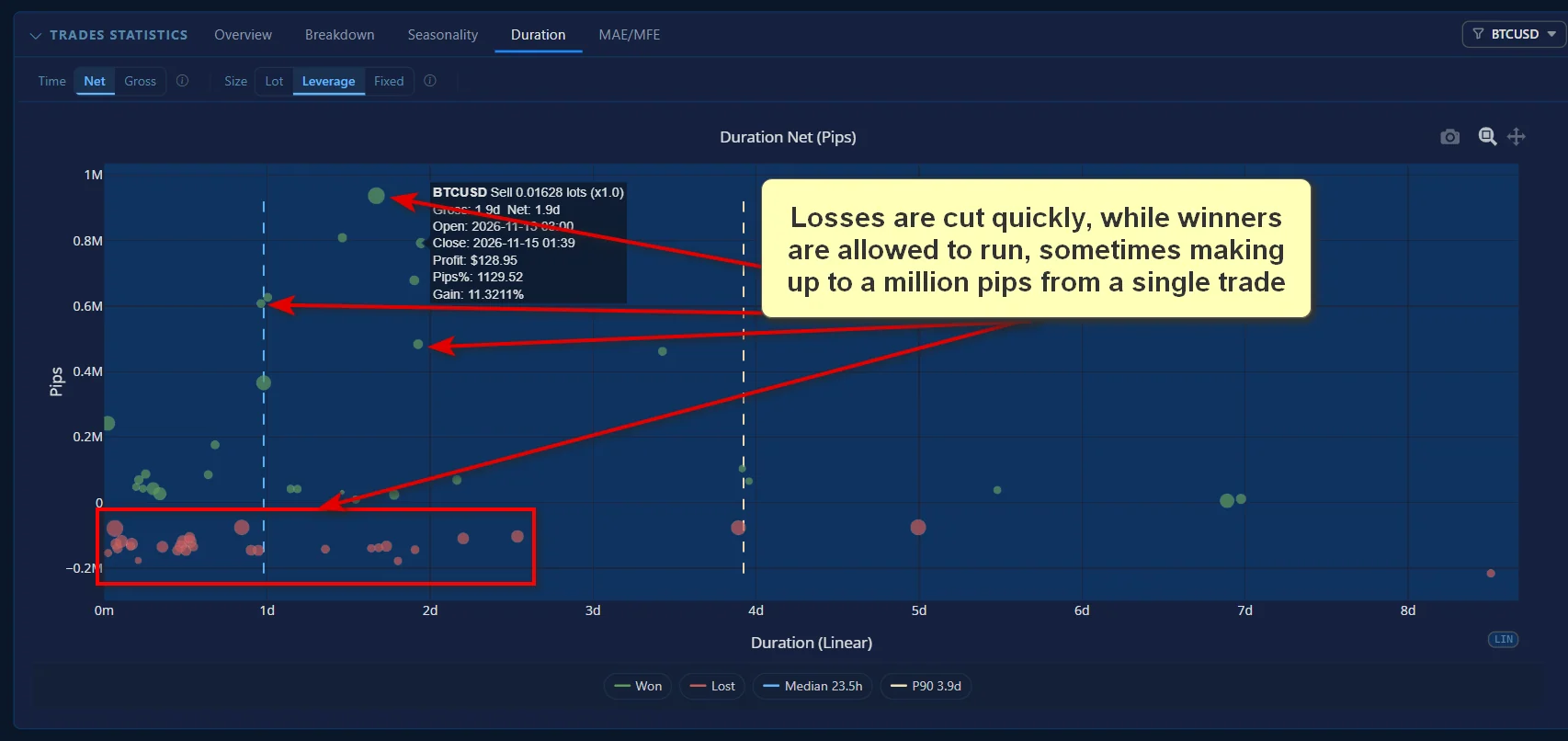
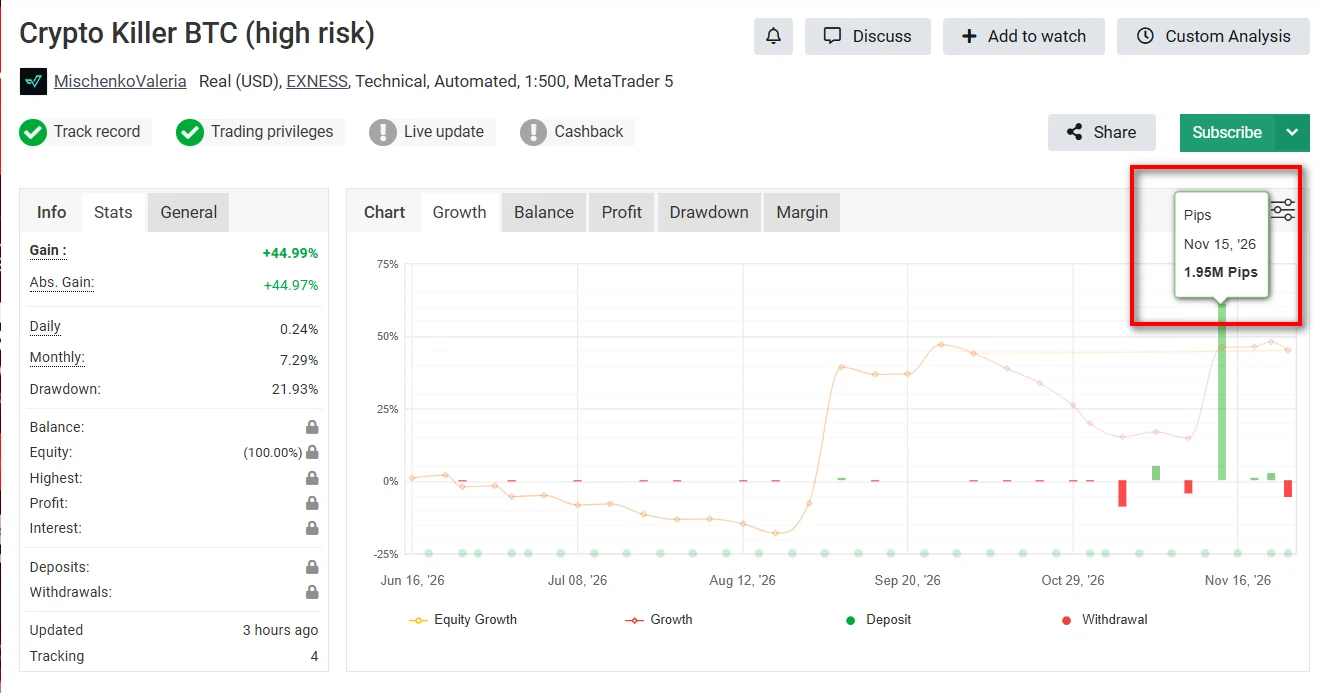
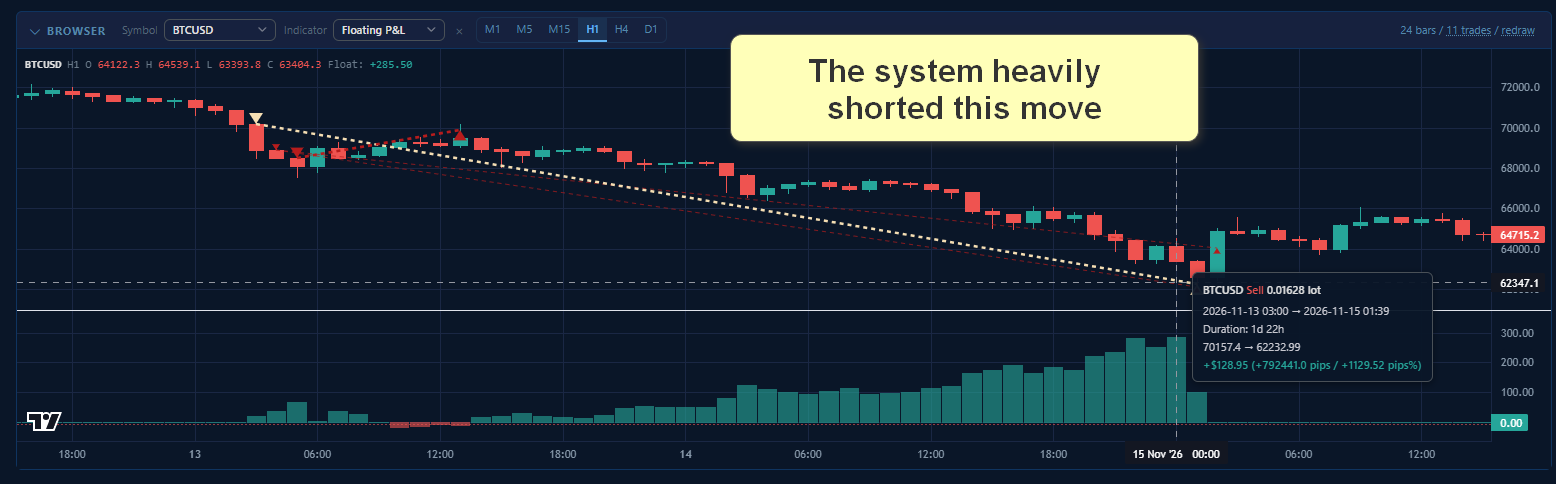
The vendor's email, headed We Made 2 Million Pips in One Day, states that the account closed nearly 2 million pips on 15 November. The same message concedes that Bitcoin did not move that far that day, and explains the figure through holding time: positions were opened two days earlier, on 13 November, after the system identified the start of a downtrend, and were still open when they closed.
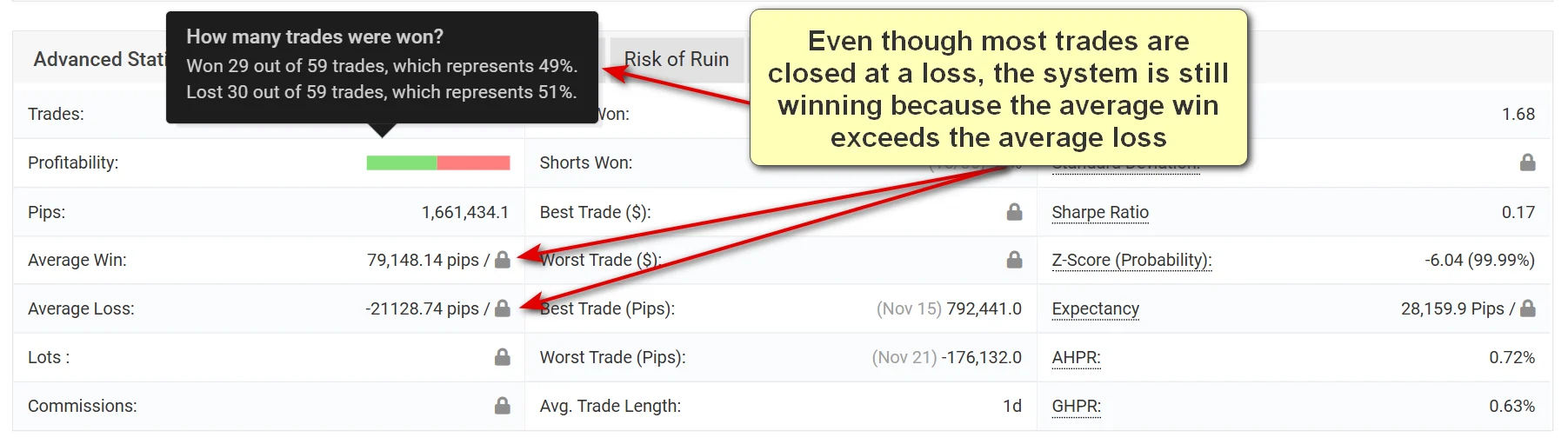
The email also describes pyramiding, meaning the system added to its position as the move extended, which is why several trades appear in the market at once. It states plainly that this logic tends to produce a low win rate, and that the system depends on average winners being much larger than average losers. Those are the vendor's descriptions of its own product, not audited statements.
What the robot is and what it trades
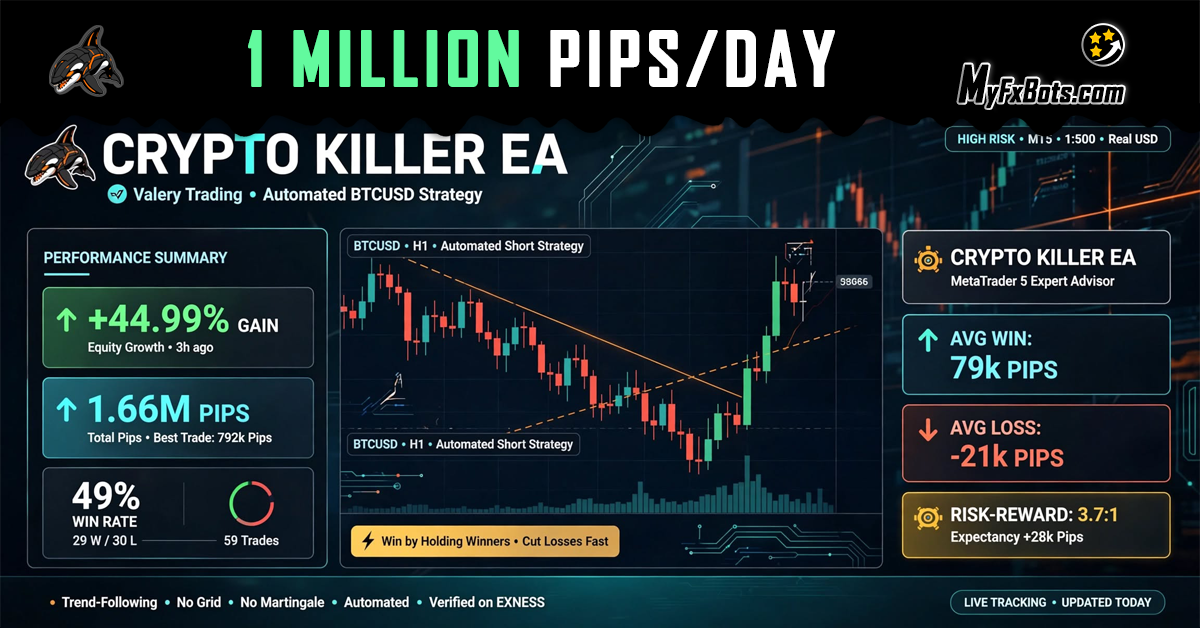
According to the product page, Crypto Killer is a fully automated Expert Advisor for MetaTrader 5 that trades BTCUSD and ETHUSD on the M1 timeframe. It is described as combining several Trend Following strategies with Forex Breakout entries into one portfolio, entering once a move has begun, cutting losing trades short, and letting winners run.
The specification sheet lists no Grid and no Martingale, four risk sets, a news filter, a stock-market crash filter, a New Year holiday filter, automatic GMT detection, a self-diagnostic system, and a statistics panel. It requires a VPS, is not FIFO or FTMO compatible, and the developer is named Valeriia Mishchenko. The site sells it inside the wider ValeryTrading portfolio rather than as a standalone product.
How the pyramiding logic works
Systems of this type do not try to buy the low. The email describes the process as identifying a potential move early and then staying with it, adding exposure while the trend persists. Exposure therefore grows into a move that has already confirmed itself, and the result is settled when the trend ends rather than at a fixed target.
That design has a recognizable footprint: many small losing trades, fewer large winners, and equity that moves in steps rather than along a smooth line. The vendor's own framing, a low win rate with winners larger than losers, matches it. It also means the two million pip figure reflects aggregate position size and holding period, not a single accurate forecast. Momentum of that kind is measured across the whole stack of open trades.
The live record and what its figures cover
The public record is MyFxBook account #12245402, which the vendor describes as a live money account verified with investor-password access and trading since June 2026. The product page summarizes it with the figures below; the statement itself, the trade list and the monthly breakdown are not reproduced in this article.
| Metric | Value |
|---|---|
| Lifetime gain | +42.2% |
| Average monthly | 6.8% |
| Average daily | 0.22% |
| Maximum drawdown | 21.93% |
| Months in profit | 2 of 6 |
| Track record | 6 months |
| Live since | June 2026 |
Two points follow from the numbers themselves. A six-month window with two profitable months out of six is a short and uneven sample. The product page does not restate a profit factor, a win rate, or an average win-to-loss ratio, although the email says that dynamic is visible on the MyFxBook page itself. The record also reports percentages, while the email reports pips; the two are not interchangeable, and pip totals on crypto instruments depend on the contract specification of the hosting broker, which the page does not name.
Where the sources disagree, and what to verify
Two discrepancies deserve stating plainly. The email says Crypto Killer is listed on MQL5 at an introductory price of $499, and that the price would increase within 24 hours of the message. The pricing page states a different arrangement: the seven Expert Advisors are not sold separately, and access costs either $1,497 per year or a one-time $4,997, with each EA listed at a nominal $2,800 inside the bundle. Neither source resolves which channel applies, and a 24-hour deadline cannot be checked after the event.
For a trader assessing it, the checks are concrete: confirm where the license is actually sold, read the MyFxBook trade history rather than the summary, ask which broker hosts account #12245402 and how its BTCUSD contract defines a pip, and run the four risk sets on demo before any live allocation. Independent Technical Analysis of the equity curve is more informative than any single day's pip total.
Pip arithmetic is broker-specific, which makes the hosting venue part of the evidence rather than a footnote. IC Markets is among the brokers traders compare when they check contract sizes and execution on crypto symbols, and its published specifications are worth reading against the account being followed. Whichever venue is chosen, verify swap treatment on positions held for several days, since the logic described above depends on holding through a trend rather than closing intraday.
The 15 November figure is a position-stacking event that the vendor itself explains, not a signal about Bitcoin's next move. What can be checked is narrower: a six-month MyFxBook record, a published specification sheet, and a price that the two sources do not agree on.