





Menu


This page may contain paid affiliate links. If you buy or register through them, MyFxBots may earn a commission or referral fee. See our disclaimer for details.


Waka Waka is one of the longer-running examples of Algorithmic Trading on the retail market: a grid system from Valery Trading for MetaTrader 4 and MetaTrader 5, trading three Antipodean crosses from a single chart. The longevity is real. What a buyer must weigh is the averaging ladder underneath it, the drawdown cut-off that ends a bad run, and the vendor's published records, which do not all tell one story.
Trading Idea
The premise is narrow. After a minor cross has stretched away from its recent average, it is expected to return far enough to close a basket in profit. Bollinger Bands set the outer levels, an RSI filter discards weak entries, and the system then holds and adds rather than accepting a loss. No direction is forecast. The wager is on Mean Reversion, financed by a balance large enough to carry the ladder until that return arrives.
Specifications
Execution and hosting are the two variables a grid cannot control from inside the terminal. Tickmill, and IC Markets handles the broker side, and TradingFX VPS keeps the basket alive when a home connection drops mid-ladder. Neither changes the strategy; both change what it is able to do.
The comparison table marks FIFO and prop-firm compatibility as yes, with an asterisk that the page never explains. The help centre supplies the missing note: compliance depends on changing the size of the second trade so that no two orders share a lot size, and on switching hedging off.
Valery Trading sells a purchase licence covering ten MetaTrader 4 or MetaTrader 5 account numbers, activated and rotated from the user dashboard, with demo activation unlimited. Buying on the website covers both platforms for life; buying through the MQL5 marketplace covers ten PC or VPS installations instead and only one platform, so the two routes are not the same licence.
A hedging account is required, and the listing calls the EA insensitive to spread and slippage while still advising a good ECN broker. Continuous operation on a VPS is expected, and the leverage note is explicit: at 1:30 only the low-risk set applies, with a $6,000 account named as the threshold for that combination, and $1,000 at 1:100 for anything up to the significant set.
Both builds exist and are listed separately on the MQL5 marketplace, each at the same version number, while a website purchase covers both in one licence. An MT5 user is therefore not stranded on an older MT4 build, and the reverse holds too.
A PDF guide of more than a hundred and twenty pages ships with the licence, alongside step-by-step installation videos and the set files for prop-firm configurations. First-time setup can also be handed to the vendor as a booked remote session rather than done by the buyer.
Valery Trading runs support through a help centre, an email address, a private Telegram group for each EA, and a bookable remote session over AnyDesk. Opening hours, time zones, and language coverage are not part of the published material, so response time is the thing to measure during the trial.
Updates are free for as long as access lasts, and the vendor recommends applying them. On a ValeryVPS, a desktop script refreshes every terminal; elsewhere, the archive is re-downloaded from the dashboard, and the EA is reloaded on the chart; marketplace buyers update through MQL5 instead.
The published floors are a $6,000 account for the low-risk set at 1:30 leverage, or $1,000 at 1:100 for anything up to the significant set. The vendor's own risk table pairs each set with a minimum starting balance, from $1,500 for the significant set upward, and labels the smallest balance as the entry point for the high-risk set.
A hedging account, an ECN or raw-spread account type, and a terminal left running continuously. Leverage is the binding constraint, because the vendor ties the usable risk set to it and states plainly that high risk cannot be run on a 1:30 account; a US-facing trader should settle FIFO handling before anything else.
The vendor's own hosting image runs Windows Server, and the marketplace listing declares Windows as the supported operating system. No macOS or Linux build is published, so a Mac user runs the terminal inside a Windows environment of their own or borrows a Windows VPS.
The download is an archive of .ex4 or .ex5 files copied into the terminal's Experts folder, with a guide and videos for the manual route. Two shortcuts exist: a pre-configured ValeryVPS where everything is already installed, or the marketplace route that keeps the build inside MQL5.
The licence includes a month of the vendor's VPS, prop-firm set files including custom ones on request, developer set files, the private Telegram group, and every future release in the same bundle. The set files are the part that matters, because they are what a challenge account is actually configured with.
A thirty-day money-back guarantee is stated plainly, promising a full refund with, in the vendor's words, no questions and no conditions. No trade count, activation limit, or live-account exclusion is attached to it, which is unusual enough to be worth confirming in writing before purchase.
AUDCAD, AUDNZD, NZDCAD Recommended: AUDCAD, AUDNZD, NZDCAD — "Use recommended pairs only. You don't need .set files, all settings are stored internally in the EA" (MQL5 listing). One M15 chart, AUDCAD recommended.
M15
Developed By
Valery Trading
About
Waka Waka

Reviewed By
MyFxBots Admin
Last Reviewed On
Tues, 10 Nov 2026
3rd Party-Verified Waka Waka's Live Trading Result Statements
Source: the performance panel on the vendor's product page and the Myfxbook record it draws from, the public account titled "Waka Waka Original"; both read on 10 November 2026. The tracker verifies the account through investor-password access, classifies it as real rather than demo, and places it on a leveraged MetaTrader 4 account at ICE-FX. The equity curve rises across the whole window the page displays, and the advance steepens rather than flattens in its later part.
Two limits are structural. The balance is small, so the account exercises the system's mechanics on a modest sum rather than its capacity to carry a deep ladder; and the displayed window opens later than the start date the vendor's page gives, so the tracker's own record does not cover the whole life of the account. One broker, one configuration, and one execution venue are what the record describes. Past performance does not predict future results, and the worst stretch of any grid is by definition the one that has not happened yet.
This is the tracker page behind the panel: a public Myfxbook record titled "Waka Waka Original", read on 10 November 2026. Myfxbook verifies it with investor-password access and labels it a real account; the broker is ICE-FX, the platform MetaTrader 4, trading is automated, and the leverage is high by retail standards. Deposits are recorded, and withdrawals are not, so the balance the page shows is a starting sum that compounded rather than one that was repeatedly drawn on.
The limits are those of any single tracker page. One account at one broker under one configuration; a balance small enough that lot sizes sit at the floor of what the platform allows, where each multiplier can only round up to the smallest permitted volume; and a custom analysis start, so the tracker's window is not the account's whole life. Verification means the trades happened, not that the account represents other accounts. Past performance does not predict future results.

Tracking Record Summary
Started On
May 17, 2021
Account Leverage
1:300
Profit Factor
1.57
Total Gain
+1,067.80%
Absolute Gain
+1,067.80%
Monthly Gain
3.76%
Daily Gain
0.12%
Total Pips
2,761.0
Total Trades
2,055
Profit Amount
$2,192.30
(%) Won Trades
2,761.0
Drawdown
23.84%
The statement does what a verified record should: it puts a real-money curve, a named broker, a platform, and an account type in front of a reader who can check them without the vendor. It also shows the mechanism working as described across a long window, with adverse moves absorbed by the ladder rather than stopped out. What it cannot show is how the same basket resolves when the balance is larger, when lot sizes are not pinned to the floor, or when an adverse move runs longer than any move inside this window.
The record establishes something narrow but real: the system has run through several market cycles on a monitored live account that the operator did not restart on a fresh balance, and the tracker's classification and verification can be checked by anyone without the vendor's help. What it does not establish is representativeness. A single account at a single broker, funded modestly and configured one way, says nothing about how the same ladder behaves on a different feed, with a tighter stop or at a larger size — and the vendor publishes further records of this same system whose shape is not this one. The holding period is part of that shape: baskets here are carried through the drawdown rather than closed inside a session, which puts the practice nearer Position Trading than to anything intraday.
Waka Waka's Backtests by MetaTrader Strategy Tester using High-Quality Historical Tick Data
Source: the risk-management page of the vendor's help centre, which publishes a summary results table rather than a statement file; read on 10 November 2026. The table sets out five configurations of the risk-set input, tested on simulated real-tick history under a fixed latency assumption and run twice — once on one broker's tick data and once on another's — across long multi-year windows, with a separate run over the crisis years for the highest risk set. A companion page offers a download of the underlying reports; that archive did not resolve when this review was prepared.
What the table cannot carry matters as much as what it can. This is modelling, not live trading; the columns are a vendor summary, so modelling quality, spread assumption, commission, and swap treatment are not visible in it; and the profit column compounds, because lot size follows the deposit-load percentage, so its scale depends on the balance chosen for the test rather than on the strategy alone. Mean Reversion financed by a ladder is what the rows describe, which makes the profit column and the drawdown column two readings of one mechanism. Past performance does not predict future results.
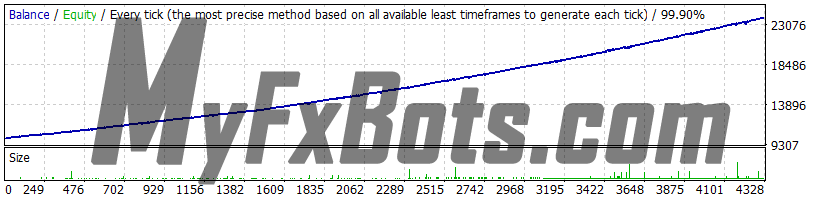
Backtests Settings
Symbol
AUDCAD (Australian Dollar vs Canadian Dollar)
Period
15 Minutes (M15) 2010.01.04 04:00 - 2023.03.16 20:45
Model
Every tick (the most precise method based on all available least timeframes)
Parameters
Bars in test
309391
Ticks modelled
255104977
Modelling quality
99.90%
Initial Deposit
$10000.00
Spread
Variable
Backtests Results
Total net profit
13863.58
Gross profit
26390.98
Gross loss
-12527.40
Profit factor
2.11
Expected payoff
3.22
Absolute Bal DD
18.54
Maximal Bal DD
1167.65 (4.98%)
Relative Bal DD
4.98% (1167.65)
Total Trades
4311
Short positions
2164 (77.17%)
Long positions
2147 (74.71%)
Profit trades
3274 (75.95%)
Loss trades
1037 (24.05%)
Largest Profit trade
328.47
Largest Loss trade
-85.69
Average Profit trade
8.06
Average Loss trade
-12.08
Maximum consecutive wins (profit in money)
30 (163.69)
Maximum consecutive losses (loss in money)
5 (-321.51)
Maximal consecutive profit (count of wins)
357.96 (6)
Maximal consecutive loss (count of losses)
-321.51 (5)
Avarage consecutive wins
5
Avarage consecutive losses
1
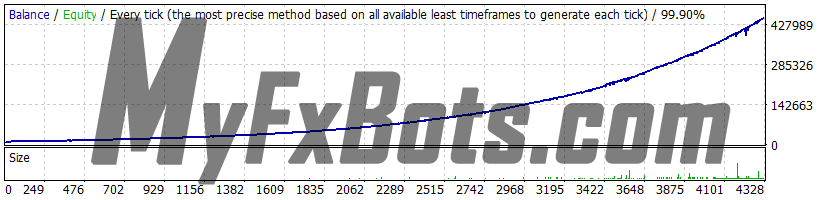
Backtests Settings
Symbol
AUDCAD (Australian Dollar vs Canadian Dollar)
Period
15 Minutes (M15) 2010.01.04 04:00 - 2023.03.16 21:00
Model
Every tick (the most precise method based on all available least timeframes)
Parameters
Bars in test
309391
Ticks modelled
255104977
Modelling quality
99.90%
Initial Deposit
$10000.00
Spread
Variable
Backtests Results
Total net profit
441158.14
Gross profit
870907.69
Gross loss
-429749.55
Profit factor
2.03
Expected payoff
102.33
Absolute Bal DD
92.75
Maximal Bal DD
91538.26 (21.95%)
Relative Bal DD
21.95% (91538.26)
Total Trades
4311
Short positions
2164 (77.17%)
Long positions
2147 (74.76%)
Profit trades
3275 (75.97%)
Loss trades
1036 (24.03%)
Largest Profit trade
25658.40
Largest Loss trade
-6740.65
Average Profit trade
265.93
Average Loss trade
-414.82
Maximum consecutive wins (profit in money)
30 (9522.81)
Maximum consecutive losses (loss in money)
5 (-25407.61)
Maximal consecutive profit (count of wins)
27973.00 (6)
Maximal consecutive loss (count of losses)
-25407.61 (5)
Avarage consecutive wins
5
Avarage consecutive losses
1
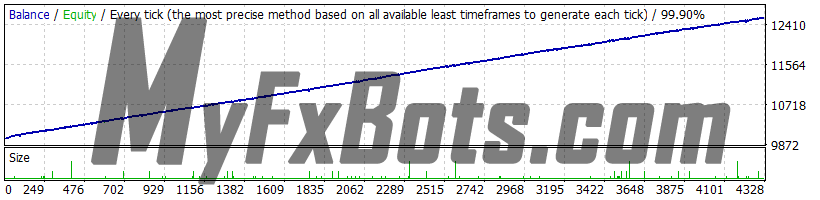
Backtests Settings
Symbol
AUDCAD (Australian Dollar vs Canadian Dollar)
Period
15 Minutes (M15) 2010.01.04 04:00 - 2023.03.16 21:00
Model
Every tick (the most precise method based on all available least timeframes)
Parameters
Bars in test
309391
Ticks modelled
255104977
Modelling quality
99.90%
Initial Deposit
$10000.00
Spread
Variable
Backtests Results
Total net profit
2555.45
Gross profit
4802.96
Gross loss
-2247.51
Profit factor
2.14
Expected payoff
0.59
Absolute Bal DD
6.18
Maximal Bal DD
144.50 (1.16%)
Relative Bal DD
1.16% (144.50)
Total Trades
4311
Short positions
2164 (77.22%)
Long positions
2147 (74.71%)
Profit trades
3275 (75.97%)
Loss trades
1036 (24.03%)
Largest Profit trade
39.84
Largest Loss trade
-10.60
Average Profit trade
1.47
Average Loss trade
-2.17
Maximum consecutive wins (profit in money)
30 (23.37)
Maximum consecutive losses (loss in money)
4 (-38.99)
Maximal consecutive profit (count of wins)
44.09 (26)
Maximal consecutive loss (count of losses)
-38.99 (4)
Avarage consecutive wins
5
Avarage consecutive losses
1
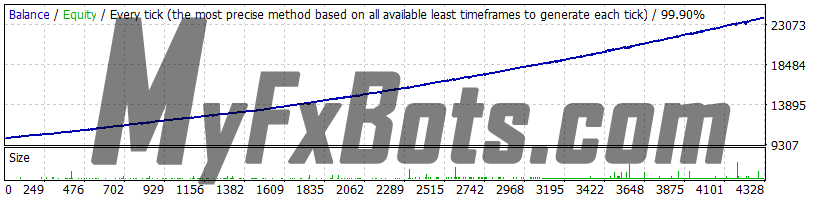
Backtests Settings
Symbol
AUDCAD (Australian Dollar vs Canadian Dollar)
Period
15 Minutes (M15) 2010.01.04 04:00 - 2023.03.16 21:15
Model
Every tick (the most precise method based on all available least timeframes)
Parameters
Bars in test
309391
Ticks modelled
255104977
Modelling quality
99.90%
Initial Deposit
$10000.00
Spread
Variable
Backtests Results
Total net profit
13860.57
Gross profit
26386.63
Gross loss
-12526.06
Profit factor
2.11
Expected payoff
3.22
Absolute Bal DD
18.57
Maximal Bal DD
1166.70 (4.98%)
Relative Bal DD
4.98% (1166.70)
Total Trades
4311
Short positions
2164 (77.17%)
Long positions
2147 (74.71%)
Profit trades
3274 (75.95%)
Loss trades
1037 (24.05%)
Largest Profit trade
328.21
Largest Loss trade
-85.62
Average Profit trade
8.06
Average Loss trade
-12.08
Maximum consecutive wins (profit in money)
30 (163.53)
Maximum consecutive losses (loss in money)
5 (-321.24)
Maximal consecutive profit (count of wins)
357.66 (6)
Maximal consecutive loss (count of losses)
-321.24 (5)
Avarage consecutive wins
5
Avarage consecutive losses
1
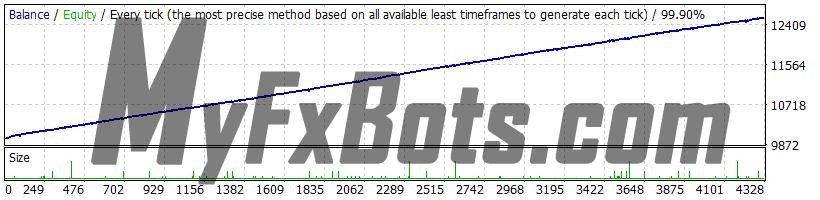
Backtests Settings
Symbol
AUDCAD (Australian Dollar vs Canadian Dollar)
Period
15 Minutes (M15) 2010.01.04 04:00 - 2023.03.16 21:30
Model
Every tick (the most precise method based on all available least timeframes)
Parameters
Bars in test
309391
Ticks modelled
255104977
Modelling quality
99.90%
Initial Deposit
$10000.00
Spread
Variable
Backtests Results
Total net profit
2554.97
Gross profit
4801.98
Gross loss
-2247.01
Profit factor
2.14
Expected payoff
0.59
Absolute Bal DD
6.17
Maximal Bal DD
144.48 (1.16%)
Relative Bal DD
1.16% (144.48)
Total Trades
4311
Short positions
2164 (77.22%)
Long positions
2147 (74.71%)
Profit trades
3275 (75.97%)
Loss trades
1036 (24.03%)
Largest Profit trade
39.84
Largest Loss trade
-10.60
Average Profit trade
1.47
Average Loss trade
-2.17
Maximum consecutive wins (profit in money)
30 (23.36)
Maximum consecutive losses (loss in money)
4 (-39.00)
Maximal consecutive profit (count of wins)
44.00 (26)
Maximal consecutive loss (count of losses)
-39.00 (4)
Avarage consecutive wins
5
Avarage consecutive losses
1
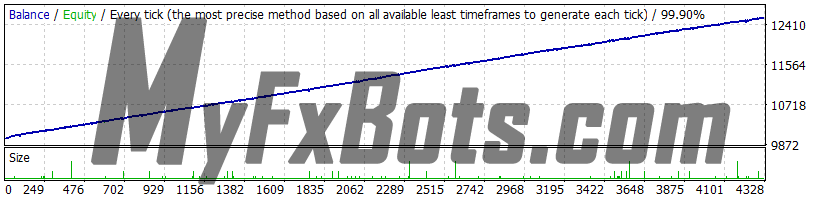
Backtests Settings
Symbol
AUDCAD (Australian Dollar vs Canadian Dollar)
Period
15 Minutes (M15) 2010.01.04 04:00 - 2023.03.16 21:30
Model
Every tick (the most precise method based on all available least timeframes)
Parameters
Bars in test
309391
Ticks modelled
255104977
Modelling quality
99.90%
Initial Deposit
$10000.00
Spread
Variable
Backtests Results
Total net profit
2556.01
Gross profit
4803.81
Gross loss
-2247.80
Profit factor
2.14
Expected payoff
0.59
Absolute Bal DD
6.17
Maximal Bal DD
144.52 (1.16%)
Relative Bal DD
1.16% (144.52)
Total Trades
4311
Short positions
2164 (77.22%)
Long positions
2147 (74.71%)
Profit trades
3275 (75.97%)
Loss trades
1036 (24.03%)
Largest Profit trade
39.86
Largest Loss trade
-10.60
Average Profit trade
1.47
Average Loss trade
-2.17
Maximum consecutive wins (profit in money)
30 (23.39)
Maximum consecutive losses (loss in money)
4 (-39.01)
Maximal consecutive profit (count of wins)
44.03 (26)
Maximal consecutive loss (count of losses)
-39.01 (4)
Avarage consecutive wins
5
Avarage consecutive losses
1
Read across the rows, the table makes one coherent point: in both tick sources, every risk set finishes positive, and the equity drawdown column climbs steadily as the risk setting rises, ending far above where it starts. The net-profit column, taken at face value, grows to totals no reader should carry into a live account — that is compounding acting on lot sizes which scale with the balance, not a forecast. Two rows also share a single risk label while covering different windows with different outcomes, so the table is not self-explaining. The fair reading is a risk ladder with a believable drawdown progression and an implausible profit column, and it is no substitute for the statement files the download link promises.
Waka Waka's Trading Strategy
Entry: bands, an RSI veto, one chart
The signal is a band touch with a veto on top. Waka Waka reads Bollinger Bands on the working timeframe and applies an RSI with a maximum-value filter, so a price sitting at the outer band is traded only when the oscillator still leaves room for the move the target needs. One M15 chart carries every symbol: the internal list is AUDCAD, AUDNZD and NZDCAD, and no set files ship because the settings live inside the executable. Direction is not taken from trend or momentum; this is Mean Reversion with a filter, run as Algorithmic Trading rather than as something a reader is expected to supervise bar by bar.
The ladder: spacing, multipliers and a ceiling
When price moves against the first position, the system averages in. Trade Distance fixes the minimum gap in pips, and Smart Distance lets the EA widen or narrow that gap with volatility; the multiplier inputs then set the size of the second entry, of the third to fifth, and of everything from the sixth onward. Maximum Trades caps how many rungs may be added, and Pause Between Grid Trades imposes a minimum interval between them. The guide's own example of a custom ladder is 1, 2, 4, 8, 12, 18, 27, 41, which is enough to show the shape: a basket eight rungs deep carries well over a hundred times the first lot.
Exits: a weighted target, a wide stop, and a way to hide it
Profit is taken on the basket. The initial trade has its own take profit in pips; the grid target is weighted, and when that input is zero, the target is computed in money across the whole basket rather than per ticket. The loss side is nominally generous: a grid stop loss in pips, with zero substituting a thousand pips, plus a Hide StopLoss switch that hides the level rather than attaching it to the order. Break-even can be armed once a chosen grid level is reached, and a trailing stop can be sized against the basket's weighted entry rather than the last order.
Averaging, named plainly
The help-centre page Valery Trading published for this product lists "Uses Martingale" among its features, and that is the honest description: every rung is larger than the last, and the basket closes only when the average price has moved far enough in the trader's favour. The product page markets the same behaviour as recovery. Nothing in the design limits the loss on a single trade; what limits it is an account-level switch — Maximum Drawdown Percent closes every open position once floating loss passes the threshold, and a per-symbol variant does the same for one instrument. Those switches convert an unbounded loss into a large realised one, which is not the same thing as a stop.
Filters and the clock
A news filter suspends entries around high-impact releases, with adjustable windows either side, rather than taking part in News Trading. A stock-market crash filter watches the volatility of an S&P 500 symbol and can block the whole day; a holiday filter works per currency; GMT detection is automatic but can be overridden by hand; rollover windows, a Friday cut-off and a check on margin for every grid level are all exposed. The last of those matters most on a small balance: if free margin cannot fund every rung at once, the initial lot is reduced before the basket opens. The same group holds a daily drawdown guard computed on the rules of FTMO — the terminal labels those two inputs with that firm's name, which is the clearest sign of where the vendor expects this product to be sold.
Waka Waka's MetaTrader Parameters
The inputs below are the ones the vendor publishes across the product page, the help centre and the marketplace listing; the vendor's position is that the shipped defaults are the settings it recommends and that no set files are required. Where a value is not published, the table says so instead of guessing, and the several inputs that change behaviour at zero are described in the controls column rather than presented as defaults. Nothing here is a parameter a reader should tune blind: every layer of Mean Reversion in this system is one of these inputs, and the ladder arithmetic moves with it.
| Parameter | Controls | Default |
|---|---|---|
| Symbols | The comma-separated list of instruments the EA trades; the published set is AUDCAD, AUDNZD and NZDCAD | Not published |
| Lot-sizing Method | Chooses fixed lots, dynamic lots, a deposit-load percentage, or one of the predefined risk sets | Not published |
| Deposit Load % | Share of the deposit committed to the first trade under that method | Not published |
| Maximum Lot | Hard ceiling on any single order the EA sends | Not published |
| Maximum Drawdown Percent | Closes every open position once floating drawdown passes this level; the account-level loss guard | Not published |
| Maximum Spread, in pips | Blocks entries while the spread is wider than this | Not published |
| Maximum Symbols at a time | Cap on how many instruments may be open together | Not published |
| Allow Hedging | Permits opposite-direction positions on one symbol; the help centre tells FIFO buyers to switch it off | Not published |
| Bollinger Bands Period | Period of the bands whose outer levels frame the entry | Not published |
| RSI Period | Period of the oscillator used to filter entries | Not published |
| Maximum RSI Value | Ceiling on the RSI reading before a signal is discarded | Not published |
| Trade Distance | Minimum gap in pips between the averaging trades of a basket | Not published |
| Smart Distance | Lets that gap widen and narrow with market volatility | Not published |
| 2nd Trade Multiplier | Size of the second rung relative to the first | Not published |
| 6th- Trade Multiplier | Size of every rung from the sixth onward | Not published |
| Maximum Trades | Ceiling on the number of averaging trades a basket may add | Not published |
| TakeProfit for Grid, in pips (weighted if zero) | Basket target; at zero the target is computed in money across the whole basket instead of per ticket | Not published |
| StopLoss for Grid, in pips (1000 pips if zero) | Stop for the grid; at zero the EA substitutes a thousand pips | Not published |
| Hide StopLoss | Hides the stop level rather than attaching it to the order | Not published |
| News Filter Enabled | Suspends entries around filtered releases instead of trading through them | Not published |
Waka Waka's Review Bottom Line
What the desk can stand behind is this. The system is real; it has run for years on accounts a third party verifies, and its mechanics are documented in more detail than most vendors manage: every averaging input is published, the account-level loss guard is named, and the two changes that make it FIFO-compliant are written down. The licence covers several accounts, the refund window is stated without conditions, and support reaches the buyer through more than one channel.
What the evidence will not support is a claim of safety. A ladder that multiplies into a losing position carries a loss tail, and one of the vendor's own public records has already travelled down it; buyers reviewing the product on the vendor's marketplace listing describe the same event from the outside. The marketing leans on the best-performing record and on longevity, which is exactly the framing a grid invites and exactly the framing a buyer should discount. Algorithmic Trading does not remove that judgement; it only moves it earlier — to the choice of which record to trust.
It suits a trader who wants a hands-off basket system, can fund a deep ladder, will run it on a VPS, and treats the drawdown cut-off as the real stop. It does not suit a small account, a US FIFO account left unconfigured, anyone who needs a defined loss per trade, or anyone who cannot sit through a floating loss measured in weeks. Two things are worth asking the vendor first: which published record it would call representative, and the statement files behind the backtest table. Automated trading carries the risk of losing the capital committed to it, and past performance does not predict future results.
Promotional Video (by the Vendor)
Other Forex Robots from Valery Trading

Evening Scalper PRO uses an original & compelling trading logic on cross pairs that have a solid mean-reverting tendency with high-profit targets (unlike most night scalpers).

Night Hunter PRO utilizes smart entry/exit algorithms to identify only the safest entry points during calm periods of the
market.
The premise is narrow. After a minor cross has stretched away from its recent average, it is expected to return far enough to close a basket in profit. Bollinger Bands set the outer levels, an RSI filter discards weak entries, and the system then holds and adds rather than accepting a loss. No direction is forecast. The wager is on Mean Reversion, financed by a balance large enough to carry the ladder until that return arrives.

The highest-performing gold EAs all share the same common logic: grid trading.
Valery Trading EA developers team have developed the #1 ranked grid trading EA, called Waka Waka, and then they have applied many of the algorithmic principles from Waka Waka to this gold EA, and the results have been mind-blowing: Golden Pickaxe performs even better than Waka Waka.

The claim is narrow. A trained model scores short-term market states, and when it finds a favourable one the system opens a basket rather than a single order; if price goes against it, the basket is held and added to until a retracement closes it green. Direction is never forecast, so the edge is entry timing plus the capacity to survive the adverse move. That makes the loss tail, not the win rate, the figure worth checking.

Investing in intraday seasonal volatility patterns driven by news events is the goal of News Catcher PRO, which is a sophisticated mean-reversion trading strategy.
News Catcher PRO does not use martingale or grid by default (optional grid is available).

Explore insights on Algocrat AI, a cutting-edge cryptocurrency copy trading platform crafted by Valery Trading—the masterminds in developing professional Expert Advisors. Discover articles that unveil its innovative strategies, transforming trading into an accessible and intelligent experience.

EasyAlgos AI gives traders free access to top-performing MQL5 MetaTrader 5 Expert Advisors, hosted on performance‑optimized VPS with third‑party‑verified track records — award‑winning, ready‑to‑trade algo solutions.

Sentinel AI implements an AI‑filtered Grid (AI‑Driven) approach: the system opens managed grid orders on M5 after neural‑network and ChatGPT/Bard‑based signal filtering to select high‑probability entries; risk controls, negative‑swap and news filters reduce adverse events. The EA supports portfolio integration for diversification.
Tags
Valery Trading
Tickmill
Algocrat AI
FXAutomater
WallStreet Forex Robot 3.0 Domination
Tick Data Suite
Waka Waka
Perceptrader AI
IC Markets
StrategyQuant X
Forex Diamond
Volatility Factor Pro
RoboForex
XM
HF Markets
InstaForex
Alpari
FX Scalper X
Forex Combo System
GPS Forex Robot
Golden Pickaxe
Forex Trend Detector
GrandCapital
Automated Forex Tools
Omega Trend
Broker Arbitrage
TradingFX VPS
AMarkets
Telegram Signal Copier
SMRT Algo
EasyAlgos AI
Quant Analyzer
AlgoCloud
Forex Trend Hunter
FXVM
Forex Gold Investor
Binance
Infinity Trader
Gold Miner
Sentinel AI
RayBOT
Gold Scalper PRO
LeapFX Trading Academy
ForexSignals.com
FxPro
ACY Securities
Zone Hunter Robot
Elirox
FX-Builder
Quant Data Manager
Commercial Network Services
FXCharger
News Scope EA PRO
Happy Forex
FXTM
BlackBull
Libertex
Smart Scalper PRO
Happy Bitcoin
Pump Trader Robot
WallStreet Recovery PRO
SlingShot
Dark Kronos
Vortex Trader PRO
Swing Trader PRO
Pepperstone
VPS Forex Trader
QHoster
FX Secret Club
Best Free Scalper Pro
Magnetic Exchange
Exness
StarTrader
Forex VPS
MTeletool
Trend Matrix EA
Trade Copier Station
Forex Robot Academy
Forex Robot Factory (Expert Advisor Generator)
ByBit
Database Mart
Gold Breaker
DARKEAS
Quant Tekel Funded
XAUBOT
ChartPrime
easyVPS
EGPForex
Risk
Forex trading can involve the risk of loss beyond your initial deposit. It is not suitable for all investors and you should make sure you understand the risks involved, seeking independent advice if necessary.
Forex accounts typically offer various degrees of leverage and their elevated profit potential is counterbalanced by an equally high level of risk. You should never risk more than you are prepared to lose and you should carefully take into consideration your trading experience.
Past performance and simulated results are not necessarily indicative of future performance. All the content on this site represents the sole opinion of the author and does not constitute an express recommendation to purchase any of the products described in its pages.
Sponsored By




Get Funded







Search Queries Cloud
BTC
in control
best free forex robot
أفضل إكسبرت
fx fx scalper
Fx scalper
waka waka
Fx stabilizer
原騰國際
UABTIC
fx scalper x
wallstreet forex
ProFX
forex diamond
waka
pfx scalper
Forex vps
switchback
algo pro
recovery
cross pro
discount
porsaj
futuretrading
waka waka news filter is disabled
Trailing stop
RENKO EA AUTO TRADER
trade copier
Copy trade
happy gold
future indikatoren
wall street
data
ARBITRAGE
Evening Scalper Pro
Forex inControl 3.0 Review
vision scalper
alpha striker
Me ta trader 5
Download Trailing Stop Forex Robot