





Menu


This page may contain paid affiliate links. If you buy or register through them, MyFxBots may earn a commission or referral fee. See our disclaimer for details.


Apex Engine is an Expert Advisor for one pair only, EUR/USD, and one idea: mean reversion after a stretched move. It enters at what the vendor calls a statistical extreme, adds to a losing position at better prices, and closes the whole basket when price pulls back. This review covers the strategy, the controls the vendor names, the live record behind a sign-in and the published test archive.
Trading Idea
The vendor's premise is that EUR/USD stretches away from its recent average and then snaps back, so an entry taken at the extreme is more likely to end in profit than one taken at the average. Apex Engine does not forecast direction; it waits for stretch, takes the other side, and leans on a high hit rate rather than on large winners. Whether that edge is genuine or borrowed from the loss tail is what the rest of this review tests.
Specifications
License (purchase licence — accounts, term, settings)
Two terms are sold: 597 US dollars for a year, or 997 once for a lifetime licence that never renews. Either covers an account up to a 50,000 dollar balance, with larger balances arranged directly with the vendor; how many accounts one licence may run on is not published.
Recommended broker and VPS
A single-pair system that adds to a losing position needs a broker whose EUR/USD spread holds up when the basket is deepest, and a host that does not drop the terminal mid-sequence. Tickmill, and IC Markets is a reasonable place to start the account, and TradingFX VPS VPS keeps the terminal running when a home connection would not. Neither is a condition of the licence.
Customer support
Support runs through a contact form, email at [email protected], and a telephone line for urgent matters, with Telegram and Skype offered on request; the vendor aims to reply within 24 hours or less on business days. The published office is in New York, and no support hours, time zone, or language list is set out beyond that response target.
Future updates
Both plans list free updates and settings as part of the purchase, and the lifetime licence is sold as a single payment with nothing further to pay. What the updates typically change — logic, settings files, broker compatibility — is not set out on the product page.
Recommended starting balance
The vendor presents Apex Engine as workable from 500 dollars upward and publishes tests from that size to a six-figure balance, while the licence itself is capped at a 50,000 dollar account. No minimum per risk preset is published, so the practical floor is set by the broker's minimum lot against the first entry of the ladder rather than by a stated figure.
Refund policy
The product page offers a 30-day money-back guarantee, honoured for any reason on an email request, and says the vendor applies it consistently. The site's general terms are narrower — a purchase may or may not provide a refund, and each product states its own policy — so the product page is the term worth saving at checkout.
Supported Currency Pairs
EURUSD
MetaTrader Chart Timeframe
M15
Developed By
LeapFX Trading Academy
About
Apex Engine

Reviewed By
MyFxBots Admin
Last Reviewed On
Fri, 6 Nov 2026
3rd Party-Verified Apex Engine's Live Trading Result Statements
The vendor tracks Apex Engine on Myfxbook, and the public widget for that record was read on 4 November 2026. It reports the gain, the monthly and daily averages, and the deepest drawdown, and Myfxbook marks the account as verified; the trade list, the broker, the deposit, and the account type sit behind a Myfxbook sign-in, and the desk will not register on a tracking service to see a vendor's numbers.
Three limits frame it. The vendor describes the account as months old and short of a year, so it covers one stretch of EUR/USD rather than a full cycle of the add-on ladder. It is the vendor's own account, held at a broker the vendor recommends, and the widget verifies the record rather than the account type — that the money is real is the vendor's assertion, not the tracker's. And past performance does not predict future results.
Real Money Account

Started On
Apr 06, 2026
Leverage
1:200
Broker
Blaze Markets
Starting Balance
$40000
Total Gain
+149.64%
Live Test Summary
Started On
Apr 06, 2026
Account Leverage
1:200
Profit Factor
2.72
Total Gain
+149.64%
Absolute Gain
+149.63%
Monthly Gain
13.82%
Daily Gain
0.43%
Total Pips
471.6
Total Trades
139
Profit Amount
$59,853.00
(%) Won Trades
471.6
Drawdown
27.77%
What the record establishes is that an outside tracker holds the account and that its curve rose over the period, with a deep retracement at the worst point — a shape consistent with the marketing and with a basket that is added to under pressure. What it leaves open is what matters: which risk preset and which loss controls were running, whether the drawdown came from one basket or several, and how the account behaved around the deepest adds. A reader who registers on Myfxbook can settle the first two in an afternoon.
Apex Engine's Backtests by MetaTrader Strategy Tester Using High-Quality Historical Tick Data
Apex Engine ships its testing evidence as a downloadable archive of MT4 strategy-tester reports, which the desk opened on 4 November 2026. Inside are several runs of EUR/USD on M15, all covering the same multi-year window, all modelled every tick from one server's feed, with different deposits and different risk presets; the rule under test is the same mean reversion entry in every one.
Read together, they show profit in every run, a high proportion of winners, and average winners and losers close enough in size that the result comes from the hit rate rather than from payoff. They also show the cost of the basket: in each run the deepest balance drawdown lands on the heaviest add-on sequence, and the biggest single loss dwarfs the average one. Neither a stop-loss nor a take-profit appears on any order in these reports, and the add-on lots rise as the sequence deepens.
None of this is live trading; it is modelling. The spread field in every report is the broker's current value rather than a historical series, so the fills assume a cost that live conditions will not hold constant. The server named in the reports is the broker the vendor recommends on its own broker page, so the conditions tested are the vendor's preferred ones. The reports print no inputs, so the loss controls cannot be shown to have been active. Past performance does not predict future results, and a single window on a single pair is a thin sample.
1K Ultra Risk
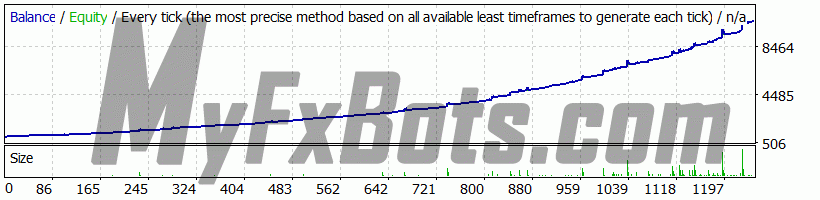
Backtests Settings
Symbol
EURUSD (Euro vs US Dollar)
Period
15 Minutes (M15) 2021.05.02 22:03 - 2026.03.20 21:45 (2021.05.01 - 2026.05.08)
Broker
Model
Every tick (the most precise method based on all available least timeframes)
Parameters
Bars in test
Ticks modelled
Modelling quality
Initial Deposit
$1000.00
Spread
Current (1)
Backtests Results
Total net profit
9583.31
Gross profit
15234.85
Gross loss
-5651.55
Profit factor
2.70
Expected payoff
7.72
Absolute Bal DD
47.26
Maximal Bal DD
2604.65
Relative Bal DD
54.48% (1700.75)
Total Trades
1242
Short positions
606 (73.10%)
Long positions
636 (70.91%)
Profit trades
894 (71.98%)
Loss trades
348 (28.02%)
Largest Profit trade
884.52
Largest Loss trade
-160.99
Average Profit trade
17.04
Average Loss trade
-16.24
Maximum consecutive wins (profit in money)
4 (-487.91)
Maximum consecutive losses (loss in money)
-
Maximal consecutive profit (count of wins)
1035.32 (2)
Maximal consecutive loss (count of losses)
-487.91 (4)
Avarage consecutive wins
4
Avarage consecutive losses
2
25K Ultra Risk
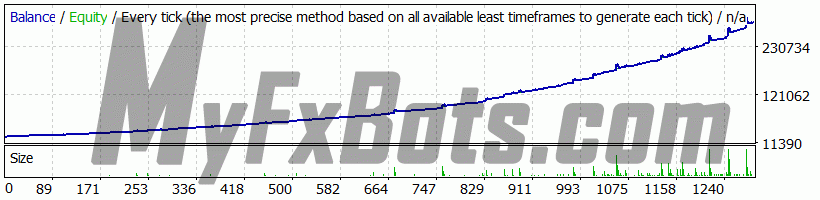
Backtests Settings
Symbol
EURUSD (Euro vs US Dollar)
Period
15 Minutes (M15) 2021.05.02 22:03 - 2026.04.17 18:30 (2021.05.01 - 2026.05.08)
Broker
Model
Every tick (the most precise method based on all available least timeframes)
Parameters
Bars in test
Ticks modelled
Modelling quality
Initial Deposit
$25000.00
Spread
Current (3)
Backtests Results
Total net profit
261071.41
Gross profit
426182.29
Gross loss
-165110.88
Profit factor
2.58
Expected payoff
203.01
Absolute Bal DD
4707.95
Maximal Bal DD
66113.28
Relative Bal DD
49.22% (19667.55)
Total Trades
1286
Short positions
627 (72.89%)
Long positions
659 (70.86%)
Profit trades
924 (71.85%)
Loss trades
362 (28.15%)
Largest Profit trade
18800.00
Largest Loss trade
-4815.53
Average Profit trade
461.24
Average Loss trade
-456.11
Maximum consecutive wins (profit in money)
4 (-13602.61)
Maximum consecutive losses (loss in money)
-
Maximal consecutive profit (count of wins)
26888.90 (11)
Maximal consecutive loss (count of losses)
-13602.61 (4)
Avarage consecutive wins
4
Avarage consecutive losses
2
100K Ultra Risk
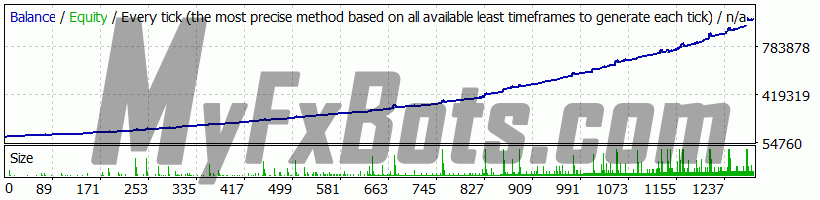
Backtests Settings
Symbol
EURUSD (Euro vs US Dollar)
Period
15 Minutes (M15) 2021.05.02 22:03 - 2026.04.17 18:30 (2021.05.01 - 2026.05.08)
Broker
Model
Every tick (the most precise method based on all available least timeframes)
Parameters
Bars in test
Ticks modelled
Modelling quality
Initial Deposit
$100000.00
Spread
Current (1)
Backtests Results
Total net profit
890490.49
Gross profit
1423106.38
Gross loss
-532615.88
Profit factor
2.67
Expected payoff
694.07
Absolute Bal DD
18901.77
Maximal Bal DD
164962.93
Relative Bal DD
49.10% (78244.90)
Total Trades
1283
Short positions
626 (73.64%)
Long positions
657 (70.78%)
Profit trades
926 (72.17%)
Loss trades
357 (27.83%)
Largest Profit trade
32750.00
Largest Loss trade
-10915.74
Average Profit trade
1536.83
Average Loss trade
-1491.92
Maximum consecutive wins (profit in money)
4 (-26781.33)
Maximum consecutive losses (loss in money)
-
Maximal consecutive profit (count of wins)
75104.17 (12)
Maximal consecutive loss (count of losses)
-26781.33 (4)
Avarage consecutive wins
4
Avarage consecutive losses
2
100k High Risk
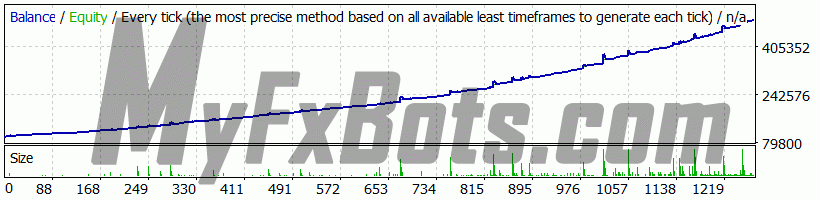
Backtests Settings
Symbol
EURUSD (Euro vs US Dollar)
Period
15 Minutes (M15) 2021.05.02 22:03 - 2026.03.20 21:45 (2021.05.01 - 2026.05.08)
Broker
Model
Every tick (the most precise method based on all available least timeframes)
Parameters
Bars in test
Ticks modelled
Modelling quality
Initial Deposit
$100000.00
Spread
Current (1)
Backtests Results
Total net profit
394770.67
Gross profit
668932.07
Gross loss
-274161.40
Profit factor
2.44
Expected payoff
312.32
Absolute Bal DD
8893.23
Maximal Bal DD
85660.12
Relative Bal DD
33.27% (45424.16)
Total Trades
1264
Short positions
615 (73.33%)
Long positions
649 (70.11%)
Profit trades
906 (71.68%)
Loss trades
358 (28.32%)
Largest Profit trade
30544.70
Largest Loss trade
-5004.95
Average Profit trade
738.34
Average Loss trade
-765.81
Maximum consecutive wins (profit in money)
4 (-17058.06)
Maximum consecutive losses (loss in money)
-
Maximal consecutive profit (count of wins)
30805.65 (3)
Maximal consecutive loss (count of losses)
-17058.06 (4)
Avarage consecutive wins
4
Avarage consecutive losses
2
100k High Risk
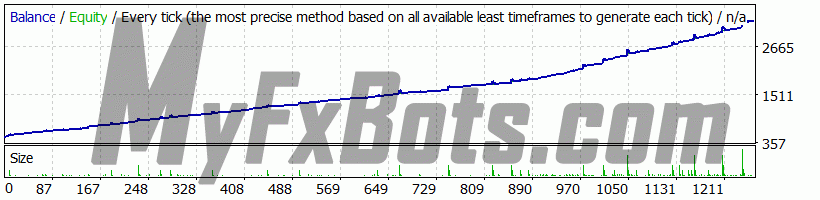
Backtests Settings
Symbol
EURUSD (Euro vs US Dollar)
Period
15 Minutes (M15) 2021.05.02 22:03 - 2026.03.20 21:45 (2021.05.01 - 2026.05.08)
Broker
Model
Every tick (the most precise method based on all available least timeframes)
Parameters
Bars in test
Ticks modelled
Modelling quality
Initial Deposit
$500.00
Spread
Current (1)
Backtests Results
Total net profit
2795.96
Gross profit
4642.05
Gross loss
-1846.09
Profit factor
2.51
Expected payoff
2.23
Absolute Bal DD
47.26
Maximal Bal DD
645.43
Relative Bal DD
41.03% (400.95)
Total Trades
1256
Short positions
611 (72.67%)
Long positions
645 (69.92%)
Profit trades
895 (71.26%)
Loss trades
361 (28.74%)
Largest Profit trade
196.56
Largest Loss trade
-32.94
Average Profit trade
5.19
Average Loss trade
-5.11
Maximum consecutive wins (profit in money)
5 (-79.69)
Maximum consecutive losses (loss in money)
-
Maximal consecutive profit (count of wins)
230.20 (2)
Maximal consecutive loss (count of losses)
-109.47 (4)
Avarage consecutive wins
4
Avarage consecutive losses
2
10K Medium Risk
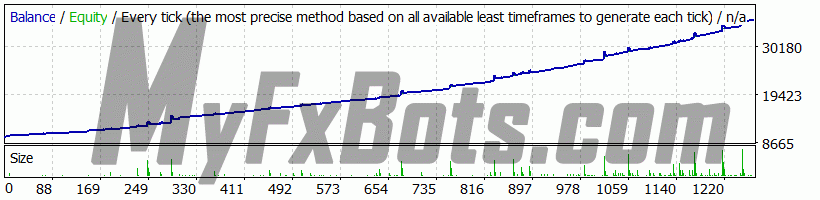
Backtests Settings
Symbol
EURUSD (Euro vs US Dollar)
Period
15 Minutes (M15) 2021.05.02 22:03 - 2026.03.20 21:45 (2021.05.01 - 2026.05.08)
Broker
Model
Every tick (the most precise method based on all available least timeframes)
Parameters
Bars in test
Ticks modelled
Modelling quality
Initial Deposit
$10000.00
Spread
Current (1)
Backtests Results
Total net profit
26204.95
Gross profit
43765.98
Gross loss
-17561.03
Profit factor
2.49
Expected payoff
20.70
Absolute Bal DD
766.53
Maximal Bal DD
5119.47
Relative Bal DD
26.88% (3393.68)
Total Trades
1266
Short positions
615 (73.33%)
Long positions
651 (69.89%)
Profit trades
906 (71.56%)
Loss trades
360 (28.44%)
Largest Profit trade
1857.12
Largest Loss trade
-290.67
Average Profit trade
48.31
Average Loss trade
-48.78
Maximum consecutive wins (profit in money)
5 (-737.00)
Maximum consecutive losses (loss in money)
-
Maximal consecutive profit (count of wins)
1872.16 (3)
Maximal consecutive loss (count of losses)
-987.04 (4)
Avarage consecutive wins
4
Avarage consecutive losses
2
100K Low Risk
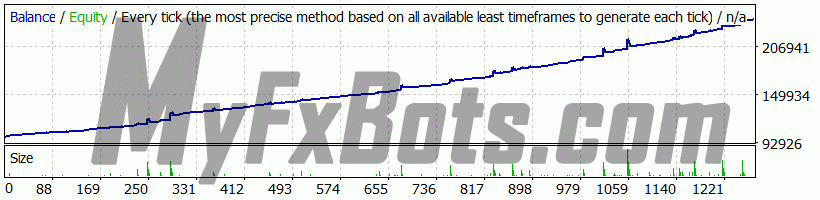
Backtests Settings
Symbol
EURUSD (Euro vs US Dollar)
Period
15 Minutes (M15) 2021.05.02 22:03 - 2026.03.20 21:45 (2021.05.01 - 2026.05.08)
Broker
Model
Every tick (the most precise method based on all available least timeframes)
Parameters
Bars in test
Ticks modelled
Modelling quality
Initial Deposit
$100000.00
Spread
Current (1)
Backtests Results
Total net profit
139258.81
Gross profit
235714.35
Gross loss
-96455.54
Profit factor
2.44
Expected payoff
109.91
Absolute Bal DD
5352.56
Maximal Bal DD
24296.73
Relative Bal DD
18.95% (22125.11)
Total Trades
1267
Short positions
616 (73.21%)
Long positions
651 (69.89%)
Profit trades
906 (71.51%)
Loss trades
361 (28.49%)
Largest Profit trade
11818.62
Largest Loss trade
-2404.58
Average Profit trade
260.17
Average Loss trade
-267.19
Maximum consecutive wins (profit in money)
5 (-8935.84)
Maximum consecutive losses (loss in money)
-
Maximal consecutive profit (count of wins)
12780.45 (6)
Maximal consecutive loss (count of losses)
-8935.84 (5)
Avarage consecutive wins
4
Avarage consecutive losses
2
What the runs do verify is coverage: one rule across several account sizes and several risk presets, behaving consistently, with outcomes that grow with the preset rather than implying a second edge. They cannot verify fills at a live EUR/USD spread while the ladder is being built, whether the Safety Pause or the Close-All Stop was switched on in these runs, or how a basket that survives the model behaves in a week when the pair does not revert. A demo run on the reader's own broker is where those questions belong.
Apex Engine's Trading Strategy
Entry: the far side of a stretched move
This is mean reversion run as a rule rather than a forecast, and the published description is narrow. The system measures how far EUR/USD has moved from its recent average and acts only when the market has reached a statistical extreme, buying when the pair is oversold and selling when it is overbought. No indicator, lookback window, threshold, session filter, or news filter is named anywhere on the product page, and the vendor sets no maximum spread, account type or broker condition for the system to work as designed. It is a single-instrument design: one pair, one chart, no diversification.
A losing position is added to, not closed
This is the part that decides the risk. The vendor states that when the market keeps moving after the first entry, Apex Engine adds at better prices so that the average entry moves closer to the market and a smaller bounce is enough to turn the whole position profitable. That is averaging into a loser. The published trade logs go further than the page: the add-on entries are not equal in size, and each is larger than the one before it, so the position grows fastest exactly when it is furthest from profit. Neither a stop-loss nor a take-profit is attached to any order in those logs; every exit is the system's own decision. This is a martingale-style ladder inside a single basket, and it should be read as such before the price is read.
Exits, and the two loss controls
The basket is closed by a trailing profit lock: it follows open profit upward and exits the whole position the moment price pulls back, so the target is never a fixed number of pips. Two loss limits sit underneath. A Safety Pause stops new entries once losses reach a chosen percentage while still managing the open positions towards an exit; a Close-All Stop closes every position and shuts the system down at a maximum loss. Both thresholds belong to the buyer, neither value is published, and the archive prints no inputs — so whether either control was switched on in the vendor's own runs cannot be established from what the site supplies.
Size, presets and the shape of the exposure
Sizing is described as a percentage of balance under the vendor's "Smart Risk Management", adjusted to the risk level the buyer selects; the archive carries presets named Low, Medium, High and Ultra across accounts of very different sizes. Because the base size is a share of a compounding balance and the adds escalate on top of it, the exposure of a basket deep in drawdown is a multiple of the first entry rather than a fixed risk per trade. A trader who sizes the account for the first order and not for the ladder will be under-capitalised at the moment it matters.
Apex Engine's MetaTrader Parameters
The product page for Apex Engine names four controls but publishes no input list, no parameter names and no defaults, and the archive prints results and trade logs rather than the Inputs block. What follows records the controls as the vendor describes them, marks every unpublished value, and adds the two scope facts the published reports do establish.
| Control | What it governs | Default |
|---|---|---|
| Risk preset | Size of each entry as a share of balance; the archive carries presets named Low, Medium, High, and Ultra | Not published |
| Safety Pause | Loss level at which new entries stop while open positions are still managed toward an exit | Not published |
| Close-All Stop | Loss level at which every position is closed and the system shuts down | Not published |
| Trailing profit lock | Follows open profit and closes the whole basket when price pulls back | Not published |
| Instrument | The only pair the system trades | EUR/USD |
| Chart timeframe | The chart every published report was run on | M15 |
Two points follow from the table. The published reports are MT4 output and the product page lists no MT5 build, so a trader working on MT5 should confirm the platform question with the vendor before buying. And because no input list is printed anywhere, the only way to learn what the pause and the close-all thresholds are set to is to ask the vendor in writing or to read them in the terminal after purchase.
Apex Engine's Review Bottom Line
Apex Engine arrives with three kinds of evidence: a vendor page, a tracked live account that stayed behind a sign-in, and an archive of MT4 reports. The reports are detailed enough to check, and they remain a model run on the vendor's preferred server with no inputs printed. What stands out is not the return but the mechanism: one pair, a mean reversion entry at an extreme, and a losing position that is added to with rising size until a small retracement closes it.
It suits a trader who understands averaging, can fund an account large enough for the ladder, and will set the pause and the close-all level before switching the system on. It does not suit anyone who assumes a stop-loss is present because exits are managed, or a trader who wants more than one instrument.
Automated trading of this kind risks loss, and no test guarantees anything. What remains is for the reader to check: the Myfxbook history, a written answer on which controls were live in the tests, and an account size that survives the deepest basket the model produced.
Promotional Video (by the Vendor)
Apex Engine Robot
Other Forex Robots from LeapFX Trading Academy

Arbitrage trading strategy where a certain currency positions are being opened depending on two different broker price feeds. It exploits differences in the price from each feed and profits from those discrepancies.

By measuring market volatility and oscillation, accounting trends and tracking price action, the robot can use the resulting data and combine it perfectly with its settings and built in indicators as CCI, Moving Averages, WPR, and others to wipe out the majority of harmful and bad signals, what finally results in being a huge win rate system.
Vortex Trader PRO uses a MySQL database to broadcast trading signals, it trades around the clock as was proved by its live performance statements with an average win of 11 pips and average loss of 21 pips.
Vortex Trader PRO uses a MySQL database to broadcast trading signals, it trades around the clock as was proved by its live performance statements with an average win of 11 pips and average loss of 21 pips.

It employs a micro channel breakout strategy and scans the lower timeframes, so once a breakout occurs, the robot automatically opens a trade with a 200 pip SL and carefully manages it until its closure on average win of 11 pips or average loss of 21 pips. The EA sends its trading signals via a MySQL database.
Channel Trader PRO not a high frequency scalper as on average it trades about 200 to 300 times a year. It focuses on short term trades to smartly enter and leave the market harvesting its profits with limited exposure to rapid market movements.
It implements the successful Forex trading behaviors including emotion, verifications, trade management, money management, and market awareness into its trading strategy.

Scalp Trader PRO monitors and detects trends on the MT4 chart using moving averages, price action, and some other powerful tools ignoring weak trends and looking only for the strong ones.
Once there is a potential kick in an opposing direction, the system will use its meticulous intelligent algorithm to scan and analyze it and determine if it's just a temporary move or not and signals a continuation pattern starting.
It generally trades every week, but sporadic days with no trades can exist, this is how it avoids unnecessary risk for the account.

As its name suggests, Hedge Track Trader uses a hedge trading strategy that appears to be a safe one with low risk and it could yield high profits. Its integrated algorithm is designed to adapt to the continuously changing market conditions and intelligently managing trades and risk, lock-in profits and strictly limit drawdowns.

Funnel Trader EA strategy simply identifies short term trends and trades in their direction.

Auto ARB is an arbitrage based trading system coded and refined by LeapFX Trading Academy developers team that has a set of automated trading systems being reviewed in MyFxBots.

Auto News Trader is a fully automated Forex trading robot that opens trades depending on news releases. Trading news is an important Forex trading strategy that exists and being used by Forex traders a long time ago although special precautions should be taken to what could occur during and around Forex news releases like spreads increase and execution delay, what is called slippage in the trading industry.

Arbitrage Trading is a method that's not predicting the future market movement but tries to identify where the market will go on a broker based on another price feed and profiting from those differences.

With the help of its built-in Forex indicators, Atomic Trader uses its unique algorithm to identify when the market is supposed to go up or down, then enters or closes trades on your behalf while you live your regular day.


No Grid, No Hedging, No Martingale, and No Massive StopLoss. But a strong evolved Money Management System.

Gold Trader runs completely automated and manages the GOLD investment by capitalizing on the volatility movements of GOLD.


In order to spot trends in the markets, the Easy Money X Ray Robot makes use of a proprietary quad indicator system that is composed of four indicators that are used in combination to determine the best entry points.

To put it bluntly, Econ Power Trader is a news straddle trader that has been designed for day traders. Econ Power Trader Never uses a grid, Never uses martingale, Never uses cost averaging, & Never over leverages.

Instead of looking at signals on your chart just run Instant EA with your indicator and it will automatically trade, manage, and close your trades.
Instant EA allows you to
- Back-test your indicators rapidly, test settings, and optimize.
- Run your indicators on live and demo accounts automatically (no more sitting in front of your computer for hours on end).
- Convert your indicators into fully automated Forex robots.
- And so much more.

Jet Trader Pro's calculate is based on the EURUSD highs and lows, making it the ideal tool for profiting from this currency pair.

Explore insights on MTeletool, an instant forex trades copying tool that channels real-time transactions from a broker’s account to a Telegram channel, developed by LeapFX Trading Academy — the experts in crafting advanced Expert Advisors. Dive into article summaries that reveal its innovative features and dynamic trading strategies.

News Action Trader utilizes real-time economic information from a reliable news source and automatically opens, manages, and closes trades.

Patterns are formations of pricing that provide us with a graphical representation of what’s going on behind the scenes in the market, Pattern Trader PRO can recognize them and make trades based on their analysis.

The cornerstone principles for Power Trader take into account price action, market volatility, and short-term trending.

Quick Scalp Trader identifies the trend with optimized moving averages, then determines an entry based on fractals and candlestick movement.

Stealth Trader is a low drawdown system, meaning it's designed to trade with very little loss while maximizing profits using NO martingale and NO grid strategy whatsoever. There will be opportunities to profit almost EVERY SINGLE DAY.

Without using a grid, martingale, or hedging strategies, Fund Trader approaches the market via a dualistic (2-step) process to determine when to enter and exit the market with profit.

Money Tree has a win rate of about 90%, with no account exposure risk, and low Stop Loss. It's not a Hedging or Grid system

The Skilled Trader has been developed to utilize and maximize the 3 secrets of successful Forex trading that will be discussed in this review. These 3 secrets actually work to allow the EA to beat the Forex market without being sabotaged by the broker it's trading on.


Trade Explorer efficiently monitors the market trends and price action, while ignoring sharp movements and market noise. It has an advanced dynamic trade management system designed to keep high returns with relatively low drawdowns.
Trade Explorer scans over 27 pairs, hunting for opportunities to be exploited.

The King Robot is a high-growth scalper with no grid, and as its developers ensure, the EA can get 10% to 100% profit per month with a high frequency of trades.

Power Growth Trader is a scalper EA with an intelligent money management system.

The Target Trader system has a proven track record of delivering consistent results based on trend, volatility, and price action movements using intelligent, carefully selected trade entries. Besides that, it's designed to last for years without needing to be updated.

The Pump Trader Robot employs a "calibrated automated trading strategy", most similar to the Trend Following Strategy that focuses on maximizing profits while minimizing risk exposure. This strategy involves using algorithms to make trading decisions based on pre-determined criteria, ensuring consistent performance and lower risk.

The Gold Miner Expert Advisor harnesses market momentum through precise price action analysis to execute rapid scalping trades in gold. With each trade protected by a built-in stop-loss, the system emphasizes disciplined risk management while capturing fleeting profit opportunities.

The trading idea behind Gold Breaker, developed by LeapFX Trading Academy, revolves around capturing gold’s breakout opportunities. It identifies key support and resistance breaches, places pending buy/sell orders at optimal levels, and enters only on genuine momentum signals. By filtering whipsaws and pairing this with adaptive stop-loss and take-profit, it pursues both short-term bursts and major trend moves without emotional bias.

Identify outsized moves away from equilibrium using a dynamic statistical channel on AUDCAD M5, enter on probable reversion points, lock quick confirmations at preset profit targets, and if price extends, layer additional positions at measured intervals while a built‑in timer prevents overexposure.

SlingShot follows a pure price‑action, trend‑following concept: identify market structure and momentum, enter selective trades, hold positions for hours to days, and size positions by signal strength and stop distance. The approach avoids indicator repainting and refrains from grid or martingale methods.

Exploit short‑term overbought/oversold conditions across multiple timeframes using two technical indicators to confirm mean reversion entries, then manage risk with dynamic sizing and an automatic session loss cutoff. The EA targets frequent, small‑edge trades rather than long trend holds.
The vendor's premise is that EUR/USD stretches away from its recent average and then snaps back, so an entry taken at the extreme is more likely to end in profit than one taken at the average. Apex Engine does not forecast direction; it waits for stretch, takes the other side, and leans on a high hit rate rather than on large winners. Whether that edge is genuine or borrowed from the loss tail is what the rest of this review tests.
Tags
Valery Trading
Tickmill
Algocrat AI
FXAutomater
WallStreet Forex Robot 3.0 Domination
Tick Data Suite
Perceptrader AI
IC Markets
StrategyQuant X
Waka Waka
Forex Diamond
Volatility Factor Pro
RoboForex
XM
HF Markets
InstaForex
Alpari
FX Scalper X
Forex Combo System
GPS Forex Robot
Golden Pickaxe
Forex Trend Detector
GrandCapital
Automated Forex Tools
Omega Trend
Broker Arbitrage
TradingFX VPS
AMarkets
Telegram Signal Copier
SMRT Algo
EasyAlgos AI
Quant Analyzer
AlgoCloud
Forex Trend Hunter
FXVM
Forex Gold Investor
Binance
Infinity Trader
Gold Miner
Sentinel AI
RayBOT
Gold Scalper PRO
LeapFX Trading Academy
ForexSignals.com
FxPro
ACY Securities
Zone Hunter Robot
Elirox
FX-Builder
Quant Data Manager
Commercial Network Services
FXCharger
News Scope EA PRO
Happy Forex
FXTM
BlackBull
Libertex
Smart Scalper PRO
Happy Bitcoin
Pump Trader Robot
WallStreet Recovery PRO
SlingShot
Dark Kronos
Vortex Trader PRO
Swing Trader PRO
Pepperstone
VPS Forex Trader
QHoster
FX Secret Club
Best Free Scalper Pro
Magnetic Exchange
Exness
StarTrader
Forex VPS
MTeletool
Trend Matrix EA
Trade Copier Station
Forex Robot Academy
Forex Robot Factory (Expert Advisor Generator)
ByBit
Database Mart
Gold Breaker
DARKEAS
Quant Tekel Funded
XAUBOT
ChartPrime
easyVPS
EGPForex
Risk
Forex trading can involve the risk of loss beyond your initial deposit. It is not suitable for all investors and you should make sure you understand the risks involved, seeking independent advice if necessary.
Forex accounts typically offer various degrees of leverage and their elevated profit potential is counterbalanced by an equally high level of risk. You should never risk more than you are prepared to lose and you should carefully take into consideration your trading experience.
Past performance and simulated results are not necessarily indicative of future performance. All the content on this site represents the sole opinion of the author and does not constitute an express recommendation to purchase any of the products described in its pages.
Sponsored By




Get Funded







Search Queries Cloud
BTC
in control
best free forex robot
أفضل إكسبرت
fx fx scalper
Fx scalper
waka waka
Fx stabilizer
原騰國際
UABTIC
fx scalper x
wallstreet forex
ProFX
forex diamond
waka
pfx scalper
Forex vps
switchback
algo pro
recovery
cross pro
discount
porsaj
waka waka news filter is disabled
futuretrading
Trailing stop
RENKO EA AUTO TRADER
trade copier
Copy trade
happy gold
future indikatoren
wall street
data
ARBITRAGE
Evening Scalper Pro
Forex inControl 3.0 Review
alpha striker
vision scalper
Me ta trader 5
Download Trailing Stop Forex Robot