





Menu


This page may contain paid affiliate links. If you buy or register through them, MyFxBots may earn a commission or referral fee. See our disclaimer for details.


Day trading system for Gold on MT5. ADR submits two opposing stop orders each morning, holds at most one position, and closes before the New York session ends. The vendor publishes four Myfxbook records and two MT5 backtests; the standard report shows a 26.38% balance drawdown. Check the recovery input first.
Trading Idea
The vendor's stated premise for ADR is that Gold's average daily range sets the frame for the next session: orders placed at the edges of that range should catch the day's expansion, and the stop and target should widen or contract with the same reading. The risk control is structural — one attempt a day, no re-entry, no averaging into a loser, no position carried into the next session.
Specifications
License
The licence is rented by the year or bought outright: ADR costs 399 US dollars annually or 699 for a lifetime licence, and either covers three accounts at once, interchangeable from the client area. The vendor manages the licence by account number after purchase.
Broker special requirements
The vendor's position is that ADR is broker-neutral and needs only an MT5 account carrying Gold; the published records run on four different brokers, which is the practical test of that claim. What matters in practice is a Gold feed tight enough not to eat the average winner, which the standard report puts at 455.08.
Recommended Broker and VPS
A Gold system that trades one window a day still depends on the broker's spread and the host's stability, so both deserve a decision rather than a default. Tickmill, and IC Markets is a reasonable starting point for the account, and TradingFX VPS VPS keeps the terminal awake through the 09:00 and 23:00 windows when a home connection is not. Neither is a condition of the licence.
MT5 version availability
There is no MT4 build. ADR runs on MT5 only, which the product page states and the report headers confirm. A trader still on MT4 has no path to this system short of changing platform.
User guide inclusion
Purchase delivers a download link and a user guide for the EA, plus a client area where account numbers are managed. What the guide covers is not itemised, so a buyer should expect installation help and treat the published inputs as the practical reference.
Customer support
Support runs through two published channels — email at [email protected] and Telegram at t.me/quotraderfx — with licence and account changes handled in the client area. The 24/5 commitment appears in the site's MBT licence block rather than on this product page, so the working hours for this system are worth confirming in writing.
Recommended Trading account criteria
The account the vendor builds for is a prop-style MT5 account: the system is marketed for prop trading, and the site offers settings intended to make one account's entries differ from another's so that a firm does not see duplicated strategies. Whether that is permitted depends entirely on the firm's terms and should be checked before use. Both published reports were run at 1:100 on USD accounts, one with a 5,000 deposit and one with 100,000.
Refund policy
The guarantee is 14 days, described as no-fuss and applied across the vendor's products. The site's MBT licence block adds that a refunded EA stops functioning; confirm that the same condition covers this system before relying on the window.
Supported Currency Pairs
XAUUSD and other major FX pairs.
MetaTrader Chart Timeframe
H1

3rd Party-Verified ADR's Live Trading Result Statements
The vendor publishes four Myfxbook records for ADR rather than screenshots: account #1 at EqualMarkets, #2 at RoboForex, #3 at PuPrime labelled PROP SETTINGS, and #5 at GMGMarkets. Myfxbook is an independent tracking service, so the records sit outside the vendor's site and can be opened, inspected and, in principle, checked by a third party. The numbering skips #4.
What those records contain could not be read for this review. The Myfxbook pages returned to the desk carried navigation, but no figures, and the desk does not register accounts on tracking services to read vendor records. The vendor states that the records update in real time, and that each record page shows the deposit, leverage, currency and start of history, along with whether the account is real or demo.
Real Money Account

Started On
May 20, 2026
Leverage
1:100
Broker
Equal Markets
Starting Balance
$20000
Total Gain
+401.43%
Live Test Summary
Started On
May 20, 2026
Account Leverage
1:100
Profit Factor
2.31
Total Gain
+401.43%
Absolute Gain
+221.90%
Monthly Gain
40.60%
Daily Gain
1.12%
Total Pips
85,337.0
Total Trades
90
Profit Amount
€44,380.29
(%) Won Trades
85,337.0
Drawdown
13.06%
Real Money Account

Started On
Jun 01, 2026
Leverage
1:1000
Broker
RoboForex
Starting Balance
$2159.25
Total Gain
+162.53%
Live Test Summary
Started On
Jun 01, 2026
Account Leverage
1:1000
Profit Factor
1.86
Total Gain
+162.53%
Absolute Gain
+122.16%
Monthly Gain
25.62%
Daily Gain
0.73%
Total Pips
59,141.0
Total Trades
86
Profit Amount
$2,637.71
(%) Won Trades
59,141.0
Drawdown
25.60%


Live Test Summary
Started On
May 27, 2026
Account Leverage
1:500
Profit Factor
1.92
Total Gain
+24.34%
Absolute Gain
+24.37%
Monthly Gain
4.96%
Daily Gain
0.16%
Total Pips
79,909.0
Total Trades
90
Profit Amount
$24,371.47
(%) Won Trades
79,909.0
Drawdown
3.90%

Started On
Apr 23, 2026
Leverage
1:30
Broker
Global Markets Group
Starting Balance
$20000
Total Gain
+232.92%
Live Test Summary
Started On
Apr 23, 2026
Account Leverage
1:30
Profit Factor
2.11
Total Gain
+232.92%
Absolute Gain
+232.91%
Monthly Gain
23.81%
Daily Gain
0.70%
Total Pips
79,013.0
Total Trades
116
Profit Amount
€46,581.89
(%) Won Trades
79,013.0
Drawdown
12.60%
The conclusion is narrow but useful. A set of externally hosted records is better evidence than a marketing screenshot, because a reader with a Myfxbook account can inspect the trade list and the drawdown directly. It does not establish that the system produced the backtest figures, and no figure from these accounts is quoted here. Real or demo, past performance on any of them does not predict future results, and the site footer dates the company to 2026, which caps how much history any record can hold.
ADR's Backtests by MetaTrader Strategy Tester using High Quality Historical Tick Data
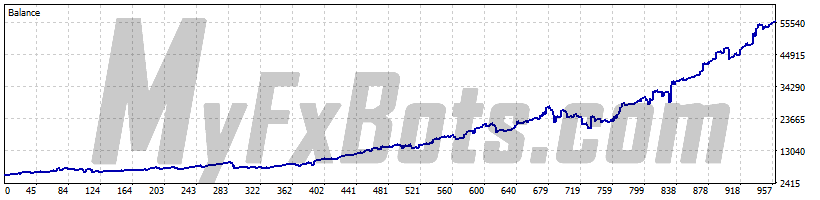
Instead of a single equity curve, the product page for ADR publishes a ZIP archive of MT5 strategy-tester reports, retrieved on 2 November 2026. It holds two: one run at 2.5% starting risk on a USD 5,000 account labelled PUPrime-Demo, and one at 1% risk on a USD 100,000 account at a second broker. Both trade XAUUSD on H1, both cover a 24-month window from July 2024 to July 2026, and both report 99% history quality, with 185,217,788 and 132,191,229 ticks modelled.
The headline figures agree closely. Net profit is 50,945.18 on the first and 163,078.65 on the second, profit factor 1.73 against 1.71, and the win rates sit within 0.3 points of each other. The difference that matters is drawdown: 26.38% on balance and 30.20% on equity in the standard run, against 9.86% and 11.56% in the prop run, which follows the lower risk inputs and the twenty-times-larger deposit.
The reports are modelling, not live trading. The tester replays historical ticks from the tested broker's feed, the reports do not state the spread, commission or swap assumptions behind the fills, and a live account paying wider spreads on Gold will not reproduce them exactly. Past performance does not predict future results, and one 24-month window is a narrow basis for judging a system of this kind.
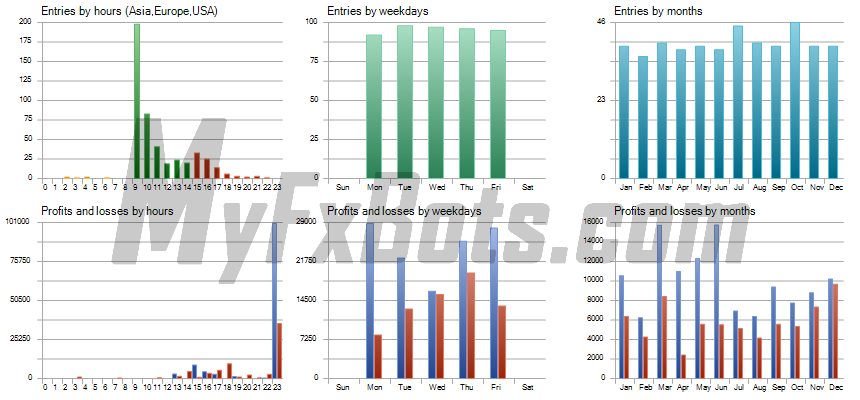
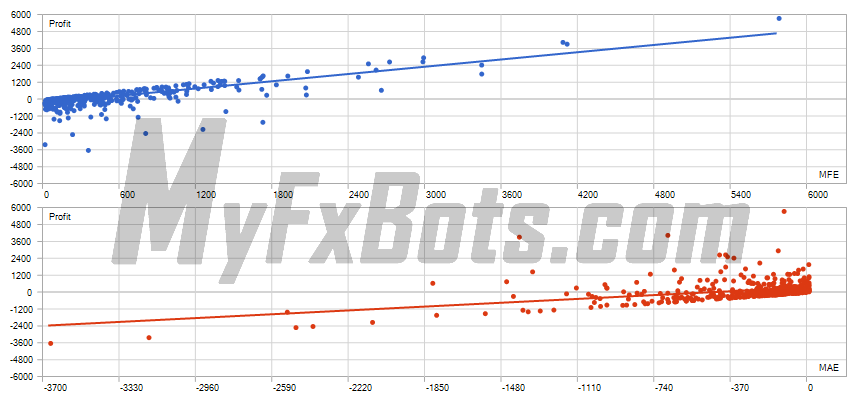
The archive holds two statement files for ADR, both strategy-tester outputs on demo servers, and neither is a live account statement; both were retrieved on 2 November 2026. The first is the standard-settings run: XAUUSD.p on H1, 2024.07.01 to 2026.07.01, executed on PUPrime-Demo, build 6182, with a USD 5,000 deposit at 1:100. It executed 478 trades: 274 long at a 59.85% win rate and 204 short at 50.00%, for 55.65% overall. The averages are modest — 455.08 on a winner against 329.45 on a loser — and the largest single loss was 3,606.02. The worst losing run was five trades for 2,157.22, against a 5,000 deposit.
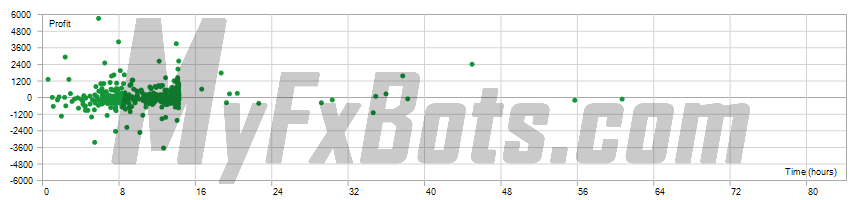
The holding time deserves attention. Average time in market is 11:23:02, consistent with a session trade, but the longest position ran 60:25:21, and the order log shows a position opened on 4 July 2024 that closed on its stop the following afternoon. That sits awkwardly with the product page's statement that nothing is held overnight. The report offers no explanation, and the desk could not resolve it.
The statement is modelling. It replays historical ticks from the tested broker's own feed; it does not disclose the spread, commission, and swap assumptions applied, and a live account on different conditions will diverge. Past performance does not predict future results, and a 24-month sample is short.
Backtests Settings
Symbol
XAUUSD.p
Period
H1 (2024.07.01 - 2026.07.01)
Broker
Currency
USD
Leverage
1:100
Symbols
1
Bars in test
11822
Ticks modelled
185217788
Modelling quality
99%
Initial Deposit
$5000.00
Backtests Results
Total net profit
50945.18
Gross profit
121050.58
Gross loss
-70105.40
Profit factor
1.73
Expected payoff
106.58
Margin level
687.93%
Absolute Bal DD
29.68
Maximal Bal DD
7 301.71 (26.38%)
Relative Bal DD
26.38% (7 301.71)
Absolute EQ DD
64.59
Maximal EQ DD
8 472.80 (30.20%)
Relative EQ DD
30.20% (8 472.80)
Recovery Factor
6.01
Sharp Ratio
3.18
Z-Score
2.37 (98.22%)
AHPR
1.0057 (0.57%)
LR Correlation
0.91
OnTester result
-
GHPR
1.0051 (0.51%)
LR Standard Error
5327.28
Total Trades
478
Short positions
204 (50.00%)
Long positions
274 (59.85%)
Profit trades
266 (55.65%)
Loss trades
212 (44.35%)
Largest Profit trade
5763.67
Largest Loss trade
-3606.02
Average Profit trade
455.08
Average Loss trade
-329.45
Maximum consecutive wins (profit in money)
6 (947.12)
Maximum consecutive losses (loss in money)
5 (-2 157.22)
Maximal consecutive profit (count of wins)
6 817.47 (2)
Maximal consecutive loss (count of losses)
-5 018.03 (4)
Avarage consecutive wins
2
Avarage consecutive losses
2
This is a detailed, internally consistent run on a demo server, and it establishes nothing about live behaviour. The unexplained overnight hold is the point to raise with the vendor before buying.
The second statement carries the prop settings: XAUUSD on H1, 2024.08.01 to 2026.07.31, run on ICMarketsSC-MT5-4 with a USD 100,000 deposit at 1:100, with 1% starting risk and a 3.5% ceiling. It executed 477 trades, 264 winners and 213 losers at 55.35%, with the largest win at 11,462.64 and the largest loss at 6,328.25. The worst losing run was five trades for 10,304.04, and the report records an 11.56% maximum equity drawdown over the whole period.
Its limitation is the same as the first: modelling rather than live trading, under assumptions the report does not state, with past performance no guide to future results.
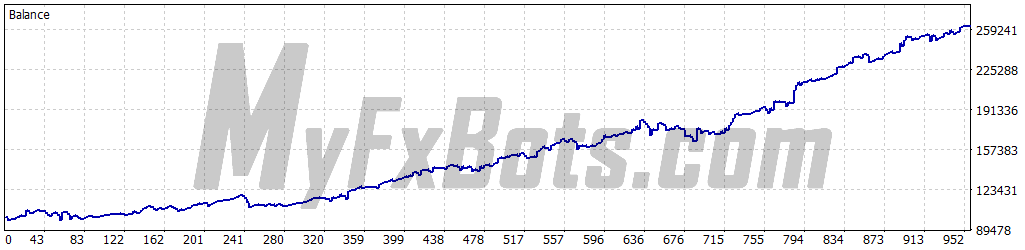
Backtests Settings
Symbol
XAUUSD
Period
H1 (2024.08.01 - 2026.07.31)
Broker
Currency
USD
Leverage
1:100
Symbols
1
Bars in test
11801
Ticks modelled
132191229
Modelling quality
99%
Initial Deposit
$100000.00
Backtests Results
Total net profit
163078.65
Gross profit
394242.92
Gross loss
-231164.27
Profit factor
1.71
Expected payoff
341.88
Margin level
2022.69%
Absolute Bal DD
2 255.10
Maximal Bal DD
17 979.25 (9.86%)
Relative Bal DD
9.86% (17 979.25)
Absolute EQ DD
3 295.96
Maximal EQ DD
21 197.35 (11.56%)
Relative EQ DD
11.56% (21 197.35)
Recovery Factor
7.69
Sharp Ratio
3.46
Z-Score
2.39 (98.32%)
AHPR
1.0021 (0.21%)
LR Correlation
0.96
OnTester result
-
GHPR
1.0020 (0.20%)
LR Standard Error
13249.25
Total Trades
477
Short positions
203 (49.75%)
Long positions
274 (59.49%)
Profit trades
264 (55.35%)
Loss trades
213 (44.65%)
Largest Profit trade
11462.64
Largest Loss trade
-6328.25
Average Profit trade
1493.34
Average Loss trade
-1081.03
Maximum consecutive wins (profit in money)
6 (5 827.86)
Maximum consecutive losses (loss in money)
5 (-10 304.04)
Maximal consecutive profit (count of wins)
17 666.92 (3)
Maximal consecutive loss (count of losses)
-12 480.50 (4)
Avarage consecutive wins
2
Avarage consecutive losses
2
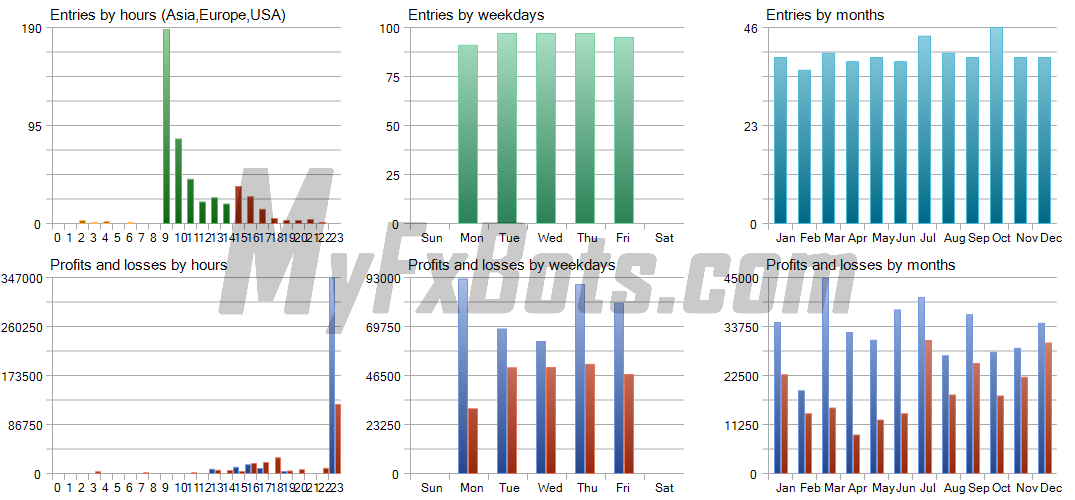
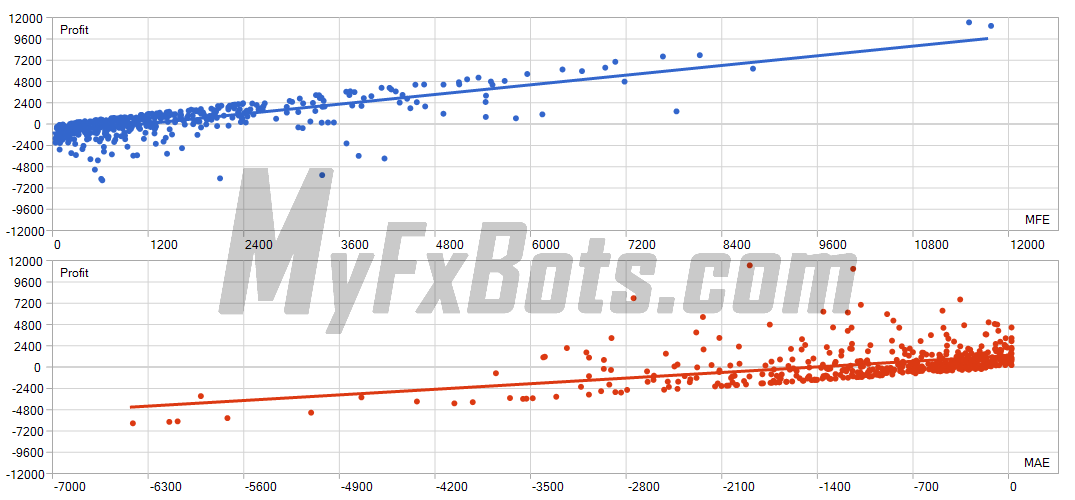
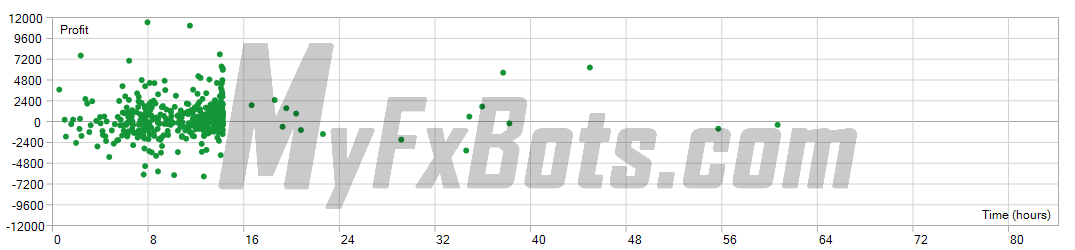
What it does not establish is the thing a prop trader wants most: that the settings stay inside a firm's daily-loss or trailing-drawdown limit. A period maximum says nothing about a single day's loss, and prop rules are written around daily and trailing thresholds. That is the test to run before buying for a challenge.
The archive is a genuine report set rather than a teaser, and running the same logic on two balances, two brokers and two risk profiles is more than most vendors publish. It remains modelling, and it establishes nothing about live execution.
ADR's Trading Strategy
How the daily trade is assembled
Mechanically, this is breakout trading around a volatility-derived daily range, not a directional forecast. The order log in the published report shows the same routine every trading day: at 09:00 server time, two pending orders go in, a buy stop above the reference range and a sell stop below it. The first to trigger becomes the position and the opposite order is cancelled; on days when neither triggers, both are cancelled at 23:00, and no trade is taken.
Exits and trade management
Stop loss and take profit are attached when the order is placed and scale with the day's volatility reading, so the target widens in volatile conditions and contracts in quiet ones. Trailing stop and break-even inputs exist but are disabled in both published reports. A position still open at 23:00 is closed at market, which is how the vendor describes the intraday-only promise.
Position sizing
The user sets risk as a percentage of balance per signal, and lot size follows from that percentage and the stop distance. The standard report runs Start_Risk at 2.5, and the prop-settings report at 1.0; MaxLotSize caps the result at 4.0 lots in both.
Recovery behaviour, stated plainly
The vendor sells the system as non-martingale and non-grid, and half of that holds up: the order log shows no grid, no added entries to a losing position, and no averaging down, because only one position can exist at a time. The other half needs care. The inputs published for ADR carry an optional recovery function that is switched on in both reports: Recovery_Factor 2.0, with Max_Risk at 10.0 in the standard set and 3.5 in the prop set. Read together, those inputs describe risk that steps up after a losing trade, up to the Max_Risk ceiling, before resetting. That is escalation in size rather than in position count — less dangerous than a grid, still not a fixed-risk model. The vendor states the Expert Advisor can also run with escalation disabled; a buyer who wants that must confirm the setting rather than assume it.
News and session handling
The site says the system handles news well and avoids overnight and weekend exposure. The published inputs contain no news filter to inspect, so that claim rests on the order timing and the 23:00 close rather than on a switch the reader can see.
ADR's MetaTrader Parameters
The vendor publishes no input reference page for ADR, and the settings below come from the Inputs block of the two strategy-tester reports in the site's backtest archive rather than from a documented default set. They are the values actually tested, and the vendor states that settings can be tailored per account. The inputs fall into five groups — risk and lots, session timing, gap offsets, trade management, identification — and are listed in report order. Names are left exactly as they appear in MT5.
| Input | Controls | Standard report | Prop-settings report |
|---|---|---|---|
| EA_Mode | Operating-mode selector | 1 | 1 |
| Lot_Sizing | Sizing-method selector | 1 | 1 |
| Start_Risk | Risk per signal as a percentage of balance | 2.5 | 1.0 |
| Recovery_Factor | Multiplier applied after a losing trade in the recovery function | 2.0 | 2.0 |
| Max_Risk | Ceiling on risk per trade under recovery | 10.0 | 3.5 |
| StartLotSize | Lot size used when lot-based sizing is selected | 1.0 | 1.0 |
| MaxLotSize | Maximum lot size | 4.0 | 4.0 |
| StartADR | Start hour of the average-daily-range calculation | 01:00 | 01:00 |
| ADRPlaceOrder | Time the two pending orders are submitted | 09:00 | 09:00 |
| CancelAllTradesByTime | Time untriggered orders are cancelled | 23:00 | 23:00 |
| CloseAllTradesByTime | Time open positions are closed at market | 23:00 | 23:00 |
| UpsideGap | Gap offset for the upper order; unit not published | 60 | 60 |
| DownsideGap | Gap offset for the lower order; unit not published | 60 | 60 |
| UseTrailingStop | Enables the trailing stop | false | false |
| TrailStart | Trailing stop activation distance | 175 | 175 |
| TrailDist | Trailing stop distance | 50 | 50 |
| TrailStep | Trailing stop step | 0 | 0 |
| BreakEven | Enables the break-even move | false | false |
| BreakEvenAfterGain | Gain that triggers the break-even move | 90.0 | 90.0 |
| BreakEvenLevel | Break-even level | 0.0 | 0.0 |
| MagicNumber | Identifier stamped on the trades the EA opens | 111 | 111 |
The reports carry the recovery multiplier twice, as Recovery_Factor and RecoveryFactor, with the same value; it appears once above.
ADR's Review Bottom Line
The evidence for ADR is one vendor site, four externally hosted live records the desk could not read, and two MT5 reports covering 24 months each on demo servers. The reports are detailed, internally consistent, and run across two balances, two brokers, and two risk profiles, which is more than most EA vendors publish. None of it is verified live performance.
The system suits a trader already on MT5 who wants one Gold decision a day, a published stop and target, and a prop-style configuration with a lower risk ceiling. It does not suit an MT4 user, a trader who wants multi-pair diversification, or anyone who leaves the recovery multiplier at 2.0 and then reads the backtest drawdown as the risk they are actually taking. Under the standard settings, the tested equity drawdown was 30.20%, and a live account with a wider Gold spread can do worse.
Trading with these systems carries the risk of loss, and a backtest is a model, not a promise. The decision belongs to the reader: open the Myfxbook records, get the recovery setting confirmed in writing, and size the account so that the drawdown the report shows is one that can be carried.
Other Forex Robots from QuoTrader

MBT implements an automated breakout approach for XAUUSD that detects volatility windows and places directional trades with defined stop-loss and take-profit logic. It blends breakout detection with momentum filters and position sizing rules to capture trending moves while attempting to limit drawdowns.
The vendor's stated premise for ADR is that Gold's average daily range sets the frame for the next session: orders placed at the edges of that range should catch the day's expansion, and the stop and target should widen or contract with the same reading. The risk control is structural — one attempt a day, no re-entry, no averaging into a loser, no position carried into the next session.
Tags
Valery Trading
Tickmill
Algocrat AI
FXAutomater
WallStreet Forex Robot 3.0 Domination
Tick Data Suite
IC Markets
StrategyQuant X
Waka Waka
Perceptrader AI
Forex Diamond
Volatility Factor Pro
RoboForex
XM
HF Markets
InstaForex
Alpari
FX Scalper X
Forex Combo System
GPS Forex Robot
Golden Pickaxe
Forex Trend Detector
GrandCapital
Automated Forex Tools
Omega Trend
Broker Arbitrage
TradingFX VPS
AMarkets
Telegram Signal Copier
SMRT Algo
EasyAlgos AI
Quant Analyzer
AlgoCloud
Forex Trend Hunter
FXVM
Forex Gold Investor
Binance
Infinity Trader
Gold Miner
Sentinel AI
RayBOT
Gold Scalper PRO
LeapFX Trading Academy
ForexSignals.com
FxPro
ACY Securities
Zone Hunter Robot
Elirox
FX-Builder
Quant Data Manager
Commercial Network Services
FXCharger
News Scope EA PRO
Happy Forex
FXTM
BlackBull
Libertex
Smart Scalper PRO
Happy Bitcoin
Pump Trader Robot
WallStreet Recovery PRO
SlingShot
Dark Kronos
Vortex Trader PRO
Swing Trader PRO
Pepperstone
VPS Forex Trader
QHoster
FX Secret Club
Best Free Scalper Pro
Magnetic Exchange
Exness
StarTrader
Forex VPS
MTeletool
Trend Matrix EA
Trade Copier Station
Forex Robot Academy
Forex Robot Factory (Expert Advisor Generator)
ByBit
Database Mart
Gold Breaker
DARKEAS
Quant Tekel Funded
XAUBOT
ChartPrime
easyVPS
EGPForex
Risk
Forex trading can involve the risk of loss beyond your initial deposit. It is not suitable for all investors and you should make sure you understand the risks involved, seeking independent advice if necessary.
Forex accounts typically offer various degrees of leverage and their elevated profit potential is counterbalanced by an equally high level of risk. You should never risk more than you are prepared to lose and you should carefully take into consideration your trading experience.
Past performance and simulated results are not necessarily indicative of future performance. All the content on this site represents the sole opinion of the author and does not constitute an express recommendation to purchase any of the products described in its pages.
Sponsored By




Get Funded







Search Queries Cloud
BTC
in control
best free forex robot
أفضل إكسبرت
fx fx scalper
Fx scalper
waka waka
Fx stabilizer
原騰國際
UABTIC
fx scalper x
wallstreet forex
ProFX
forex diamond
waka
pfx scalper
Forex vps
switchback
algo pro
recovery
cross pro
discount
porsaj
waka waka news filter is disabled
futuretrading
Trailing stop
RENKO EA AUTO TRADER
trade copier
Copy trade
happy gold
future indikatoren
wall street
data
ARBITRAGE
Evening Scalper Pro
Forex inControl 3.0 Review
alpha striker
vision scalper
Me ta trader 5
Download Trailing Stop Forex Robot