












Menu


This page may contain paid affiliate links. If you buy or register through them, MyFxBots may earn a commission or referral fee. See our disclaimer for details.

How to backtest Forex Diamond EA in MetaTrader 4
Forex Diamond, sold by FXAutomater, is an MT4 and MT5 expert advisor that runs three independent signal engines on four majors at M15, with a recovery mode, a drawdown-protection panel, and a prop-firm configuration. This review covers its Algorithmic Trading logic, its published inputs, seven vendor backtests, and three live panels. Check the recovery behaviour and the modelling assumptions before anything else.
Trading Idea
Forex Diamond rests on the premise that no single signal survives every regime, so three run at once: a trend-retracement engine entering after an impulse pulls back, a countertrend engine taking reversals, and a small-move engine harvesting short bursts. The claimed edge is coverage rather than forecast — whichever regime prevails, one engine is meant to be trading with it. FXAutomater frames the blend as diversification, not prediction.
Specifications
A broker that matches your platform and execution style matters more than the headline spread, and Tickmill, and IC Markets is a reasonable starting point. Pair it with TradingFX VPS VPS so that latency and uptime stop being the variables you cannot control.
The published input list includes an NFA switch and a hedging switch, both printed as off in every report the vendor distributes. The site itself does not document FIFO behaviour, so a US-facing trader should confirm the setting with support before relying on it.
A purchase from FXAutomater activates one real-money account and ten demo accounts, with lifetime access to the member area and to updates. Licences are activated per account number through the vendor’s site, and additional licences are sold separately for further accounts.
The vendor states that any broker offering MT4 or MT5 is supported, including ECN execution, and the EA handles four- and five-digit quotes without adjustment. The published inputs cap entries at a spread of 2.5 and allow slippage of 0.5, and hedging is permitted by default.
The vendor publishes both builds and states MT5 compatibility on the product page and in its FAQ. One of its live panels also runs the MT5 build, which gives substance to the claim beyond the marketing line.
The purchase includes a User Guide and Installation Manual, a Quick Strategy Guide and member-area tutorials, and version 6.6 adds downloadable .set files with per-pair presets. The guide also covers the drawdown-protection settings for live, demo, and prop-firm use.
FXAutomater runs support through a contact form, a member-area support desk and its social channels, and states that the desk is open around the clock with replies often inside a business day. The site does not publish supported languages or a telephone line.
Updates are free for the life of the licence, and the vendor has shipped two feature releases in the past year, one of which is described as mandatory for continued operation. Presets and settings files arrive with those releases through the member area.
The FAQ suggests starting with 100 to 500 USD and names 1,000 to 5,000 USD as the recommended capital, while a support reply in January 2026 puts the workable balance at 500 USD. The published backtests all begin from 2,500 USD.
The EA is built for a standard hedging account on MT4 or MT5, with one chart per pair for the four recommended symbols, and micro lots help where the balance is small. The vendor markets it as compatible with prop-firm challenge rules, with randomisation and drawdown limits provided for that purpose.
The product page and FAQ state that the EA runs on Mac OS and Windows. The version 6.5 release note is more specific — the separate Mac build was dropped and the current build is described as compatible with any computer and operating system — so a Mac user should confirm terminal support with support before buying.
Installation is done via a quick-install wizard that walks through the setup, with a manual route that copies the .ex4 or .ex5 file into the terminal’s Experts folder. Licence verification and the automatic GMT feature require the vendor’s URL to be added to the terminal’s WebRequest allow-list.
The offer bundles an advanced news filter and a second expert advisor during the current promotion, plus lifetime member-area access and the per-pair preset files introduced with version 6.6. The bundled advisor is a promotional addition rather than a permanent part of the licence.
The guarantee runs for 30 days from purchase, and the terms attach conditions: additional licences are excluded, a second purchase after a refund cannot be refunded again, requests raised through the contact form are rejected, and a request must be confirmed within three calendar days or it lapses.
Tradable: any pair offered by the broker (vendor statement), with the EA attached to one chart per pair. Recommended: GBP/USD, EUR/USD, USD/CHF, USD/JPY.
M15 (15 minutes).
Developed By
FXAutomater
About
Forex Diamond

Reviewed By
MyFxBots Admin
Last Reviewed On
Tues, 10 Nov 2026
3rd Party-Verified Forex Diamond's Live Trading Result Statements
Three Myfxbook panels for Forex Diamond sit at the top of the product page: one real-money AUD account on MT4 and two demo accounts, one on MT4 and one on MT5. They are published as images and were read for this review on 10 November 2026. The record pages themselves returned an access block to automated retrieval, so what follows is limited to what the panels print. All three histories are young beside the vendor’s backtests, and the MT5 panel exists mainly to demonstrate the Time Management release.
Limitations: the real account is small enough that a handful of trades move its percentages; the two demos are simulations and carry no execution cost; none of the panels print a trade count, a profit factor, or the settings used. Past performance does not predict future results.
The real-money panel for Forex Diamond is an AUD account on MT4, shown at high leverage, with a modest deposit and a balance that has risen over the record. Track record and trading privileges carry verification badges; live update does not. It was read from the product page on 10 November 2026.
Limitations: a small real account swings in large percentages on a few trades; the history is short; and the panel prints no settings, trade count, or profit factor, so the configuration behind the curve is unknown. Past performance does not predict future results.

Tracking Record Summary
Started On
Jun 18, 2025
Account Leverage
1:500
Profit Factor
1.10
Total Gain
+58.08%
Absolute Gain
+58.11%
Monthly Gain
2.73%
Daily Gain
0.09%
Total Pips
4,296.7
Total Trades
2,633
Profit Amount
A$290.57
(%) Won Trades
4,296.7
Drawdown
21.71%
This is the only panel that is not simulated, and it establishes something the backtests cannot: the EA can run a verified real account at this broker without a terminal failure or a blown balance. It also shows live drawdown running deeper than on the demo panels, which is the measure a buyer should carry into position sizing.

The second panel is a demo USD account on MT4 at the same broker group, published beside the real one and read on 10 November 2026. Its balance curve is smoother than the real account’s, and its drawdown is shallower, on a larger deposit. The name it carries points to a single pair.
Limitations: a demo account is simulated, so it carries neither slippage nor the decisions a real drawdown forces; the record is short; the settings are not published. Past performance does not predict future results.

Tracking Record Summary
Started On
Jun 25, 2025
Account Leverage
1:500
Profit Factor
1.34
Total Gain
+27.85%
Absolute Gain
+27.93%
Monthly Gain
1.48%
Daily Gain
0.05%
Total Pips
1,517.4
Total Trades
581
Profit Amount
$279.26
(%) Won Trades
1,517.4
Drawdown
6.02%
This is the configuration the vendor treats as typical — one pair, modest risk — and it produces the cleanest curve of the three. As a simulation, it supports a claim about mechanics, not about live execution, and it should be read as the vendor’s preferred presentation rather than as independent evidence.
The third panel is a demo USD account on MT5, published to accompany the Time Management release and read on 10 November 2026. It is the shortest record of the three and the only MT5 evidence on the site, and its curve is gentler than the MT4 demo’s.
Limitations: a demo account is simulated; the record is the shortest here; the panel exists to showcase a feature and prints no settings. Past performance does not predict future results.

Tracking Record Summary
Started On
Feb 17, 2026
Account Leverage
1:500
Profit Factor
1.35
Total Gain
+24.31%
Absolute Gain
+24.69%
Monthly Gain
2.48%
Daily Gain
0.08%
Total Pips
3,601.5
Total Trades
1,075
Profit Amount
$246.87
(%) Won Trades
3,601.5
Drawdown
5.86%
Its contribution is narrow and real: an MT5 build demonstrably exists, trades, and is tracked, which the MT4-only backtests cannot show. It says nothing about long-run behaviour, and a demo showcasing a new feature is the least independent evidence of the three.
All three panels are in positive territory, and the real-money one carries a drawdown far deeper than either demo — the reverse of the impression the backtest cards give. That gap is the useful finding: what a buyer experiences depends on the risk setting and on recovery, not on the headline curve. Durability is what the panels cannot show; the histories are short, and none of them has been through a full cycle.
Forex Diamond's Backtests by MetaTrader Strategy Tester using High-Quality Historical Tick Data
Seven MT4 strategy-tester reports for Forex Diamond are linked from the product page and were downloaded and read on 10 November 2026. Each is a ZIP archive holding one HTML report; all seven were run on the same build, on a demo account at Alpari, with a fixed spread and the every-tick model. Five cover a single symbol over a long history — four on fixed lots, one at a high-risk setting — and two rerun GBP/USD over a recent window with recovery switched on. The symbols are the four the vendor recommends.
Limitations: these are models, not live trading. The spread is fixed at every entry, the account is a demo server, modelling quality is reported below full, no commission line appears, and the recovery runs compound position size. Past performance does not predict future results, and a long sample is not the same as many independent market regimes.
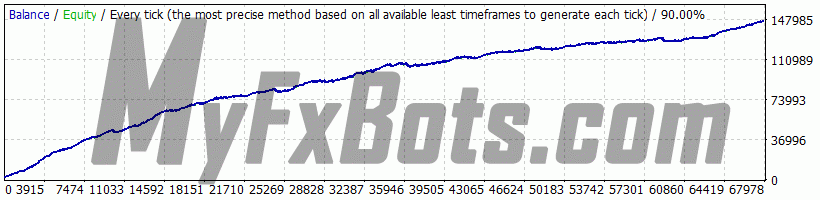
The file gbpusd_fixed_lots.htm, inside the archive gbpusd_fixed_lots.zip, is the GBP/USD fixed-lot run of Forex Diamond: every-tick modelling over the longest history in the set, all three engines enabled, constant lots, recovery off and a fixed spread. The report prints its inputs, every trade and the summary block, and it was downloaded from the product page on 10 November 2026.
Limitations: this is a model on a demo server; the spread never widens, no commission is charged, and modelling quality is reported below full. Past performance does not predict future results.
Backtests Settings
Symbol
GBPUSD (Great Britain Pound vs US Dollar)
Period
15 Minutes (M15) 1999.01.04 09:13 - 2025.06.17 13:23
Broker
Model
Every tick (the most precise method based on all available least timeframes)
Parameters
- GS General Settings
- LongTrades: true
- ShortTrades: true
- AutoGMT_Offset: true
- ManualGMT_Offset: 2
- DST_Usage: 1
- EA_Comment: "FD"
- MaxSpread: 2.5
- Slippage: 0.5
- StealthMode: false
- NFA: false
- No_Hedge: false
- Max_Orders_Total: 5
- SS1 Signal 1 Settings
- Signal_1: true
- Magic_1: 10101
- RecoveryMode_1: false
- FixedLots_1: 0.1
- AutoMM_1: 0
- AutoMM_Max_1: 10
- Max_Orders_1: 3
- Trade_Interval_1: 0
- SS2 Signal 2 Settings
- Signal_2: true
- Magic_2: 20202
- RecoveryMode_2: false
- FixedLots_2: 0.1
- AutoMM_2: 0
- AutoMM_Max_2: 10
- Max_Orders_2: 3
- Trade_Interval_2: 0
- SS3 Signal 3 Settings
- Signal_3: true
- Magic_3: 30303
- RecoveryMode_3: false
- FixedLots_3: 0.1
- AutoMM_3: 0
- AutoMM_Max_3: 10
- Max_Orders_3: 3
- Trade_Interval_3: 0
- ES Expert Settings
- ExecuteOnEveryTick: false
- CloseOnlyOnProfit: false
- TakeProfit: 0
- Min_StopLoss: 0
- Max_StopLoss: 0
- ReverseProfit: 0
- ExtraPipsSignal_1: 0
- ExtraPipsSignal_2: 0
- ExtraPipsSignal_3: 0
- Use_Trend_Filter: false
- Trend_Period: 105
- Trend_Strenght: 0
- MFR MondayFriday Settings
- MondayStartHour: 0
- FridayExit: false
- LastTradeHour: 19
- ExitHour: 20
- NF News Filter Settings
- Avoid_News: false
- Include_Medium_News: false
- Wait_Before_News: 240
- Wait_After_News: 240
- PS Protection Settings
- MaxOpenLots: 0
- DP: "--- Daily Protections ---"
- MaxDailyLoss: 0
- MaxDailyDD: 0
- DailyResetHour: 0
- AP: "--- Account Protections ---"
- MinEquity: 0
- MaxEquityDD: 0
- MaxEquity: 0
- RAN Randomization Settings
- RandomizeExit: false
- StopLossRange: 5
- TakeProfitRange: 5
- RandomizeEntry: false
- OpenTimeMaxDelay: 60
- OpenPriceMinDeviation: 5
- OpenPriceMaxDeviation: 10
Bars in test
9295926
Ticks modelled
18186163
Modelling quality
90.00%
Initial Deposit
$2500.00
Spread
10
Backtests Results
Total net profit
143752.20
Gross profit
826362.60
Gross loss
-682610.40
Profit factor
1.21
Expected payoff
2.12
Absolute Bal DD
16.00
Maximal Bal DD
3917.40
Relative Bal DD
14.97% (478.00)
Total Trades
67711
Short positions
33967 (83.07%)
Long positions
33744 (82.30%)
Profit trades
55987 (82.69%)
Loss trades
11724 (17.31%)
Largest Profit trade
70.00
Largest Loss trade
-70.00
Average Profit trade
14.76
Average Loss trade
-58.22
Maximum consecutive wins (profit in money)
11 (-585.00)
Maximum consecutive losses (loss in money)
11 (-285.34)
Maximal consecutive profit (count of wins)
1286.10 (75)
Maximal consecutive loss (count of losses)
-700.00 (10)
Avarage consecutive wins
10
Avarage consecutive losses
2
The report establishes what the fixed-lot configuration does mechanically: a large number of small wins, occasional larger losses, and a stated drawdown that stays shallow because lot size never grows. It does not establish that the same holding behaviour survives a variable spread, a live server or a broker that fills less cleanly — which is the gap between this curve and a real account.
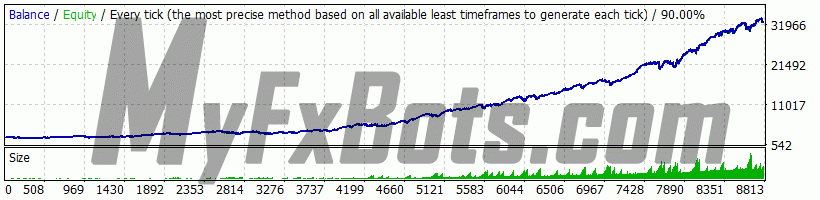
The file gbpusd_1_percent_recovery.htm is the GBP/USD recovery run: the same three engines, this time with recovery enabled and money management sizing lots from a low-risk setting, over a recent stretch of history rather than the full sample. Every-tick modelling and a fixed spread again, and the report was downloaded on 10 November 2026.
Limitations: modelling on a demo server; recovery compounds the position after losses, so a shallow reading of the equity curve understates the tail; no commission line appears. Past performance does not predict future results.
Backtests Settings
Symbol
GBPUSD (Great Britain Pound vs US Dollar)
Period
15 Minutes (M15) 2021.01.04 00:05 - 2025.06.17 13:38 (2021.01.01 - 2028.01.01)
Broker
Model
Every tick (the most precise method based on all available least timeframes)
Parameters
- GS General Settings
- LongTrades: true
- ShortTrades: true
- AutoGMT_Offset: true
- ManualGMT_Offset: 2
- DST_Usage: 1
- EA_Comment: "FD"
- MaxSpread: 2.5
- Slippage: 0.5
- StealthMode: false
- NFA: false
- No_Hedge: false
- Max_Orders_Total: 5
- SS1 Signal 1 Settings
- Signal_1: true
- Magic_1: 10101
- RecoveryMode_1: true
- FixedLots_1: 0.1
- AutoMM_1: 1
- AutoMM_Max_1: 10
- Max_Orders_1: 3
- Trade_Interval_1: 0
- SS2 Signal 2 Settings
- Signal_2: true
- Magic_2: 20202
- RecoveryMode_2: true
- FixedLots_2: 0.1
- AutoMM_2: 1
- AutoMM_Max_2: 10
- Max_Orders_2: 3
- Trade_Interval_2: 0
- SS3 Signal 3 Settings
- Signal_3: true
- Magic_3: 30303
- RecoveryMode_3: true
- FixedLots_3: 0.1
- AutoMM_3: 1
- AutoMM_Max_3: 10
- Max_Orders_3: 3
- Trade_Interval_3: 0
- ES Expert Settings
- ExecuteOnEveryTick: false
- CloseOnlyOnProfit: false
- TakeProfit: 0
- Min_StopLoss: 0
- Max_StopLoss: 0
- ReverseProfit: 0
- ExtraPipsSignal_1: 0
- ExtraPipsSignal_2: 0
- ExtraPipsSignal_3: 0
- Use_Trend_Filter: false
- Trend_Period: 105
- Trend_Strenght: 0
- MFR MondayFriday Settings
- MondayStartHour: 0
- FridayExit: false
- LastTradeHour: 19
- ExitHour: 20
- NF News Filter Settings
- Avoid_News: false
- Include_Medium_News: false
- Wait_Before_News: 240
- Wait_After_News: 240
- PS Protection Settings
- MaxOpenLots: 0
- DP: "--- Daily Protections ---"
- MaxDailyLoss: 0
- MaxDailyDD: 0
- DailyResetHour: 0
- AP: "--- Account Protections ---"
- MinEquity: 0
- MaxEquityDD: 0
- MaxEquity: 0
- RAN Randomization Settings
- RandomizeExit: false
- StopLossRange: 5
- TakeProfitRange: 5
- RandomizeEntry: false
- OpenTimeMaxDelay: 60
- OpenPriceMinDeviation: 5
- OpenPriceMaxDeviation: 10
Bars in test
1641650
Ticks modelled
3269865
Modelling quality
90.00%
Initial Deposit
$2500.00
Spread
10
Backtests Results
Total net profit
30162.37
Gross profit
131577.90
Gross loss
-101415.53
Profit factor
1.30
Expected payoff
3.44
Absolute Bal DD
384.53
Maximal Bal DD
2963.76
Relative Bal DD
23.32% (953.20)
Total Trades
8778
Short positions
4253 (82.11%)
Long positions
3487 (76.00%)
Profit trades
7219 (82.24%)
Loss trades
1559 (17.76%)
Largest Profit trade
350.00
Largest Loss trade
-429.30
Average Profit trade
18.23
Average Loss trade
-65.05
Maximum consecutive wins (profit in money)
8 (-782.00)
Maximum consecutive losses (loss in money)
11 (-102.84)
Maximal consecutive profit (count of wins)
2378.58 (63)
Maximal consecutive loss (count of losses)
-1352.05 (6)
Avarage consecutive wins
9
Avarage consecutive losses
2
Set against the fixed-lot run on the same symbol, this statement shows the price of recovery: the curve is smoother in ordinary conditions, and the drawdown is markedly deeper when a sequence goes against it. That trade-off, not the final balance, is what the file documents.
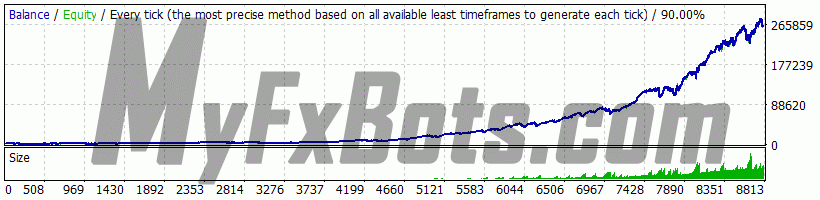
The file gbpusd_2_percent_recovery.htm repeats the recovery test with the risk setting doubled and money management active, over the same recent window. Same engines, same model, same fixed spread, and downloaded from the product page on 10 November 2026.
Limitations: modelling, demo server, fixed spread, no commission; position size now scales with the balance, so late trades are much larger than early ones. Past performance does not predict future results.
Backtests Settings
Symbol
GBPUSD (Great Britain Pound vs US Dollar)
Period
15 Minutes (M15) 2021.01.04 00:05 - 2025.06.17 13:41 (2021.01.01 - 2028.01.01)
Broker
Model
Every tick (the most precise method based on all available least timeframes)
Parameters
- GS General Settings
- LongTrades: true
- ShortTrades: true
- AutoGMT_Offset: true
- ManualGMT_Offset: 2
- DST_Usage: 1
- EA_Comment: "FD"
- MaxSpread: 2.5
- Slippage: 0.5
- StealthMode: false
- NFA: false
- No_Hedge: false
- Max_Orders_Total: 5
- SS1 Signal 1 Settings
- Signal_1: true
- Magic_1: 10101
- RecoveryMode_1: true
- FixedLots_1: 0.1
- AutoMM_1: 2
- AutoMM_Max_1: 10
- Max_Orders_1: 3
- Trade_Interval_1: 0
- SS2 Signal 2 Settings
- Signal_2: true
- Magic_2: 20202
- RecoveryMode_2: true
- FixedLots_2: 0.1
- AutoMM_2: 2
- AutoMM_Max_2: 10
- Max_Orders_2: 3
- Trade_Interval_2: 0
- SS3 Signal 3 Settings
- Signal_3: true
- Magic_3: 30303
- RecoveryMode_3: true
- FixedLots_3: 0.1
- AutoMM_3: 2
- AutoMM_Max_3: 10
- Max_Orders_3: 3
- Trade_Interval_3: 0
- ES Expert Settings
- ExecuteOnEveryTick: false
- CloseOnlyOnProfit: false
- TakeProfit: 0
- Min_StopLoss: 0
- Max_StopLoss: 0
- ReverseProfit: 0
- ExtraPipsSignal_1: 0
- ExtraPipsSignal_2: 0
- ExtraPipsSignal_3: 0
- Use_Trend_Filter: false
- Trend_Period: 105
- Trend_Strenght: 0
- MFR MondayFriday Settings
- MondayStartHour: 0
- FridayExit: false
- LastTradeHour: 19
- ExitHour: 20
- NF News Filter Settings
- Avoid_News: false
- Include_Medium_News: false
- Wait_Before_News: 240
- Wait_After_News: 240
- PS Protection Settings
- MaxOpenLots: 0
- DP: "--- Daily Protections ---"
- MaxDailyLoss: 0
- MaxDailyDD: 0
- DailyResetHour: 0
- AP: "--- Account Protections ---"
- MinEquity: 0
- MaxEquityDD: 0
- MaxEquity: 0
- RAN Randomization Settings
- RandomizeExit: false
- StopLossRange: 5
- TakeProfitRange: 5
- RandomizeEntry: false
- OpenTimeMaxDelay: 60
- OpenPriceMinDeviation: 5
- OpenPriceMaxDeviation: 10
Bars in test
1641653
Ticks modelled
3269871
Modelling quality
90.00%
Initial Deposit
$2500.00
Spread
10
Backtests Results
Total net profit
259572.22
Gross profit
1093755.47
Gross loss
-834183.25
Profit factor
1.31
Expected payoff
29.57
Absolute Bal DD
760.51
Maximal Bal DD
46363.63
Relative Bal DD
42.06% (2327.23)
Total Trades
8778
Short positions
4253 (82.11%)
Long positions
3487 (76.00%)
Profit trades
7219 (82.24%)
Loss trades
1559 (17.76%)
Largest Profit trade
3759.00
Largest Loss trade
-6598.50
Average Profit trade
151.51
Average Loss trade
-535.08
Maximum consecutive wins (profit in money)
8 (-5313.00)
Maximum consecutive losses (loss in money)
11 (-303.86)
Maximal consecutive profit (count of wins)
26871.31 (63)
Maximal consecutive loss (count of losses)
-19560.56 (3)
Avarage consecutive wins
9
Avarage consecutive losses
2
Set beside the low-risk recovery file, this statement isolates the effect of the risk input: identical trades, a different lot path, and a genuinely deeper drawdown in percentage terms. It is the clearest demonstration in the set that the risk setting, not the signal logic, decides what a bad sequence costs.
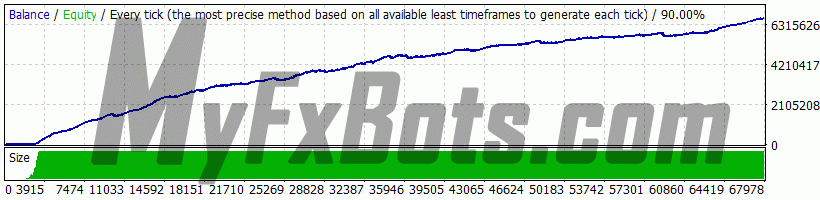
The file gbpusd_5_percent.htm is the high-risk configuration: the engines run at the top of the vendor’s recommended risk band with money management on, over the long GBP/USD history. Every-tick modelling, fixed spread, downloaded on 10 November 2026.
Limitations: modelling; compounded lot growth makes the later part of the curve depend almost entirely on position sizing rather than on signal quality, and the stated drawdown is not a usable risk measure at this size. Past performance does not predict future results.
Backtests Settings
Symbol
GBPUSD (Great Britain Pound vs US Dollar)
Period
15 Minutes (M15) 1999.01.04 09:13 - 2025.06.17 13:26
Broker
Model
Every tick (the most precise method based on all available least timeframes)
Parameters
- GS General Settings
- LongTrades: true
- ShortTrades: true
- AutoGMT_Offset: true
- ManualGMT_Offset: 2
- DST_Usage: 1
- EA_Comment: "FD"
- MaxSpread: 2.5
- Slippage: 0.5
- StealthMode: false
- NFA: false
- No_Hedge: false
- Max_Orders_Total: 5
- SS1 Signal 1 Settings
- Signal_1: true
- Magic_1: 10101
- RecoveryMode_1: false
- FixedLots_1: 0.1
- AutoMM_1: 5
- AutoMM_Max_1: 10
- Max_Orders_1: 3
- Trade_Interval_1: 0
- SS2 Signal 2 Settings
- Signal_2: true
- Magic_2: 20202
- RecoveryMode_2: false
- FixedLots_2: 0.1
- AutoMM_2: 5
- AutoMM_Max_2: 10
- Max_Orders_2: 3
- Trade_Interval_2: 0
- SS3 Signal 3 Settings
- Signal_3: true
- Magic_3: 30303
- RecoveryMode_3: false
- FixedLots_3: 0.1
- AutoMM_3: 5
- AutoMM_Max_3: 10
- Max_Orders_3: 3
- Trade_Interval_3: 0
- ES Expert Settings
- ExecuteOnEveryTick: false
- CloseOnlyOnProfit: false
- TakeProfit: 0
- Min_StopLoss: 0
- Max_StopLoss: 0
- ReverseProfit: 0
- ExtraPipsSignal_1: 0
- ExtraPipsSignal_2: 0
- ExtraPipsSignal_3: 0
- Use_Trend_Filter: false
- Trend_Period: 105
- Trend_Strenght: 0
- MFR MondayFriday Settings
- MondayStartHour: 0
- FridayExit: false
- LastTradeHour: 19
- ExitHour: 20
- NF News Filter Settings
- Avoid_News: false
- Include_Medium_News: false
- Wait_Before_News: 240
- Wait_After_News: 240
- PS Protection Settings
- MaxOpenLots: 0
- DP: "--- Daily Protections ---"
- MaxDailyLoss: 0
- MaxDailyDD: 0
- DailyResetHour: 0
- AP: "--- Account Protections ---"
- MinEquity: 0
- MaxEquityDD: 0
- MaxEquity: 0
- RAN Randomization Settings
- RandomizeExit: false
- StopLossRange: 5
- TakeProfitRange: 5
- RandomizeEntry: false
- OpenTimeMaxDelay: 60
- OpenPriceMinDeviation: 5
- OpenPriceMaxDeviation: 10
Bars in test
9295929
Ticks modelled
18186169
Modelling quality
90.00%
Initial Deposit
$2500.00
Spread
10
Backtests Results
Total net profit
66363585.10
Gross profit
398183392.50
Gross loss
-331819807.40
Profit factor
1.20
Expected payoff
980.10
Absolute Bal DD
20.80
Maximal Bal DD
1958700.00
Relative Bal DD
34.61% (12425.80)
Total Trades
67711
Short positions
33967 (83.07%)
Long positions
3487 (76.00%)
Profit trades
55987 (82.69%)
Loss trades
11724 (17.31%)
Largest Profit trade
35000.00
Largest Loss trade
-35000.00
Average Profit trade
7112.07
Average Loss trade
-28302.61
Maximum consecutive wins (profit in money)
11 (-292500.00)
Maximum consecutive losses (loss in money)
11 (-30243.85)
Maximal consecutive profit (count of wins)
643050.00 (75)
Maximal consecutive loss (count of losses)
-350000.00 (10)
Avarage consecutive wins
10
Avarage consecutive losses
2
The file is best read as a warning rather than a result. It shows how compounding a high-risk setting turns a modest per-trade edge into an equity curve of implausible scale, and why the vendor’s guidance treats the top of its risk band as a ceiling rather than a recommendation. Anyone quoting its profit as evidence of performance is quoting an artefact.
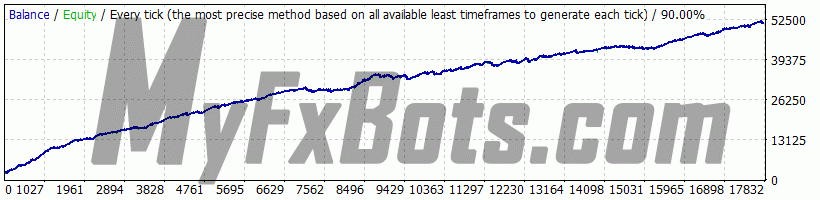
The file usdjpy_fixed_lots.htm is the USD/JPY fixed-lot run over the long history, with the same three engines and a fixed spread. Yen pairs carry a different pip value and a different spread profile, so this statement tests whether the behaviour transfers across symbols. Downloaded on 10 November 2026.
Limitations: modelling on a demo server, fixed spread, no commission, and a single broker’s quote history. Past performance does not predict future results.
Backtests Settings
Symbol
USDJPY (US Dollar vs Japanese Yen)
Period
15 Minutes (M15) 1999.01.04 08:54 - 2025.06.17 13:46
Broker
Model
Every tick (the most precise method based on all available least timeframes)
Parameters
- GS General Settings
- LongTrades: true
- ShortTrades: true
- AutoGMT_Offset: true
- ManualGMT_Offset: 2
- DST_Usage: 1
- EA_Comment: "FD"
- MaxSpread: 2.5
- Slippage: 0.5
- StealthMode: false
- NFA: false
- No_Hedge: false
- Max_Orders_Total: 5
- SS1 Signal 1 Settings
- Signal_1: true
- Magic_1: 10101
- RecoveryMode_1: false
- FixedLots_1: 0.1
- AutoMM_1: 0
- AutoMM_Max_1: 10
- Max_Orders_1: 3
- Trade_Interval_1: 0
- SS2 Signal 2 Settings
- Signal_2: true
- Magic_2: 20202
- RecoveryMode_2: false
- FixedLots_2: 0.1
- AutoMM_2: 0
- AutoMM_Max_2: 10
- Max_Orders_2: 3
- Trade_Interval_2: 0
- SS3 Signal 3 Settings
- Signal_3: true
- Magic_3: 30303
- RecoveryMode_3: false
- FixedLots_3: 0.1
- AutoMM_3: 0
- AutoMM_Max_3: 10
- Max_Orders_3: 3
- Trade_Interval_3: 0
- ES Expert Settings
- ExecuteOnEveryTick: false
- CloseOnlyOnProfit: false
- TakeProfit: 0
- Min_StopLoss: 0
- Max_StopLoss: 0
- ReverseProfit: 0
- ExtraPipsSignal_1: 0
- ExtraPipsSignal_2: 0
- ExtraPipsSignal_3: 0
- Use_Trend_Filter: false
- Trend_Period: 105
- Trend_Strenght: 0
- MFR MondayFriday Settings
- MondayStartHour: 0
- FridayExit: false
- LastTradeHour: 19
- ExitHour: 20
- NF News Filter Settings
- Avoid_News: false
- Include_Medium_News: false
- Wait_Before_News: 240
- Wait_After_News: 240
- PS Protection Settings
- MaxOpenLots: 0
- DP: "--- Daily Protections ---"
- MaxDailyLoss: 0
- MaxDailyDD: 0
- DailyResetHour: 0
- AP: "--- Account Protections ---"
- MinEquity: 0
- MaxEquityDD: 0
- MaxEquity: 0
- RAN Randomization Settings
- RandomizeExit: false
- StopLossRange: 5
- TakeProfitRange: 5
- RandomizeEntry: false
- OpenTimeMaxDelay: 60
- OpenPriceMinDeviation: 5
- OpenPriceMaxDeviation: 10
Bars in test
9434938
Ticks modelled
18557629
Modelling quality
90.00%
Initial Deposit
$2500.00
Spread
10
Backtests Results
Total net profit
48961.56
Gross profit
216212.14
Gross loss
-167250.58
Profit factor
1.29
Expected payoff
2.76
Absolute Bal DD
305.49
Maximal Bal DD
1979.29
Relative Bal DD
20.62% (570.20)
Total Trades
17762
Short positions
9575 (81.23%)
Long positions
-
Profit trades
14423 (81.20%)
Loss trades
3339 (18.80%)
Largest Profit trade
103.12
Largest Loss trade
-216.27
Average Profit trade
14.99
Average Loss trade
-50.09
Maximum consecutive wins (profit in money)
8 (-130.10)
Maximum consecutive losses (loss in money)
-
Maximal consecutive profit (count of wins)
949.02 (32)
Maximal consecutive loss (count of losses)
-1078.52 (5)
Avarage consecutive wins
7
Avarage consecutive losses
2
The profile is recognisably the same as on GBP/USD — many small wins, a modest profit factor, a shallow stated drawdown — which suggests the engines are not tuned to one symbol. What it does not test is how the yen spread behaves in fast markets, where the fixed assumption is least realistic.
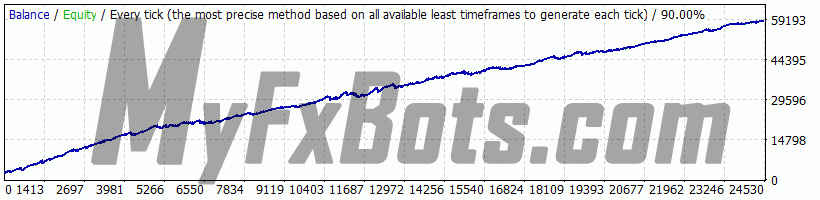
The file eurusd_fixed_lots.htm covers EUR/USD on fixed lots over the long history, again every tick and with a fixed spread, downloaded on 10 November 2026. EUR/USD is the most liquid of the four pairs and the one where the countertrend engines have the least room.
Limitations: modelling, demo server, fixed spread, and no commission; the sample includes several regime changes that a single set of inputs cannot adapt to. Past performance does not predict future results.
Backtests Settings
Symbol
EURUSD (Euro vs US Dollar)
Period
15 Minutes (M15) 1999.01.13 18:17 - 2025.06.17 13:48
Broker
Model
Every tick (the most precise method based on all available least timeframes)
Parameters
- GS General Settings
- LongTrades: true
- ShortTrades: true
- AutoGMT_Offset: true
- ManualGMT_Offset: 2
- DST_Usage: 1
- EA_Comment: "FD"
- MaxSpread: 2.5
- Slippage: 0.5
- StealthMode: false
- NFA: false
- No_Hedge: false
- Max_Orders_Total: 5
- SS1 Signal 1 Settings
- Signal_1: true
- Magic_1: 10101
- RecoveryMode_1: false
- FixedLots_1: 0.1
- AutoMM_1: 0
- AutoMM_Max_1: 10
- Max_Orders_1: 3
- Trade_Interval_1: 0
- SS2 Signal 2 Settings
- Signal_2: true
- Magic_2: 20202
- RecoveryMode_2: false
- FixedLots_2: 0.1
- AutoMM_2: 0
- AutoMM_Max_2: 10
- Max_Orders_2: 3
- Trade_Interval_2: 0
- SS3 Signal 3 Settings
- Signal_3: true
- Magic_3: 30303
- RecoveryMode_3: false
- FixedLots_3: 0.1
- AutoMM_3: 0
- AutoMM_Max_3: 10
- Max_Orders_3: 3
- Trade_Interval_3: 0
- ES Expert Settings
- ExecuteOnEveryTick: false
- CloseOnlyOnProfit: false
- TakeProfit: 0
- Min_StopLoss: 0
- Max_StopLoss: 0
- ReverseProfit: 0
- ExtraPipsSignal_1: 0
- ExtraPipsSignal_2: 0
- ExtraPipsSignal_3: 0
- Use_Trend_Filter: false
- Trend_Period: 105
- Trend_Strenght: 0
- MFR MondayFriday Settings
- MondayStartHour: 0
- FridayExit: false
- LastTradeHour: 19
- ExitHour: 20
- NF News Filter Settings
- Avoid_News: false
- Include_Medium_News: false
- Wait_Before_News: 240
- Wait_After_News: 240
- PS Protection Settings
- MaxOpenLots: 0
- DP: "--- Daily Protections ---"
- MaxDailyLoss: 0
- MaxDailyDD: 0
- DailyResetHour: 0
- AP: "--- Account Protections ---"
- MinEquity: 0
- MaxEquityDD: 0
- MaxEquity: 0
- RAN Randomization Settings
- RandomizeExit: false
- StopLossRange: 5
- TakeProfitRange: 5
- RandomizeEntry: false
- OpenTimeMaxDelay: 60
- OpenPriceMinDeviation: 5
- OpenPriceMaxDeviation: 10
Bars in test
9423570
Ticks modelled
18511279
Modelling quality
90.00%
Initial Deposit
$2500.00
Spread
10
Backtests Results
Total net profit
56235.70
Gross profit
238465.10
Gross loss
-182229.40
Profit factor
1.31
Expected payoff
2.30
Absolute Bal DD
55.00
Maximal Bal DD
2107.40
Relative Bal DD
20.08% (667.00)
Total Trades
24434
Short positions
12070 (77.36%)
Long positions
-
Profit trades
18962 (77.60%)
Loss trades
5472 (22.40%)
Largest Profit trade
80.00
Largest Loss trade
-170.00
Average Profit trade
12.58
Average Loss trade
-33.30
Maximum consecutive wins (profit in money)
10 (-778.90)
Maximum consecutive losses (loss in money)
-
Maximal consecutive profit (count of wins)
815.60 (47)
Maximal consecutive loss (count of losses)
-850.00 (5)
Avarage consecutive wins
6
Avarage consecutive losses
2
Its win share is the lowest of the four fixed-lot runs, and its stated drawdown is larger than the GBP/USD equivalent — the least flattering of the long-run statements. That is useful: it suggests the countertrend engines work harder on the most efficient pair, and it is the file a sceptical reader should open first.
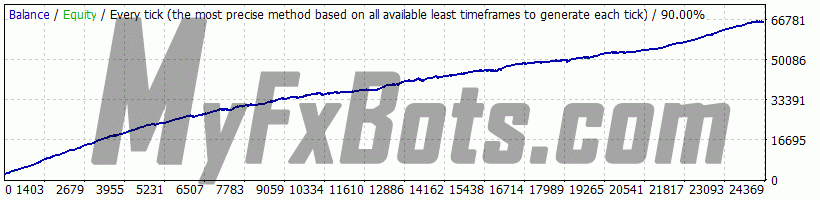
The file usdchf_fixed_lots.htm is the USD/CHF fixed-lot run over the long history, every tick and with a fixed spread, downloaded on 10 November 2026. The history includes the Swiss franc’s removal of its euro peg, an episode that broke many strategies and brokers alike.
Limitations: modelling on a demo server, fixed spread, no commission; a period containing a gap event of that size is exactly where a fixed-spread model is least trustworthy. Past performance does not predict future results.
Backtests Settings
Symbol
USDCHF (US Dollar vs Swiss Franc)
Period
15 Minutes (M15) 1999.01.04 09:54 - 2025.06.17 13:44
Broker
Model
Every tick (the most precise method based on all available least timeframes)
Parameters
- GS General Settings
- LongTrades: true
- ShortTrades: true
- AutoGMT_Offset: true
- ManualGMT_Offset: 2
- DST_Usage: 1
- EA_Comment: "FD"
- MaxSpread: 2.5
- Slippage: 0.5
- StealthMode: false
- NFA: false
- No_Hedge: false
- Max_Orders_Total: 5
- SS1 Signal 1 Settings
- Signal_1: true
- Magic_1: 10101
- RecoveryMode_1: false
- FixedLots_1: 0.1
- AutoMM_1: 0
- AutoMM_Max_1: 10
- Max_Orders_1: 3
- Trade_Interval_1: 0
- SS2 Signal 2 Settings
- Signal_2: true
- Magic_2: 20202
- RecoveryMode_2: false
- FixedLots_2: 0.1
- AutoMM_2: 0
- AutoMM_Max_2: 10
- Max_Orders_2: 3
- Trade_Interval_2: 0
- SS3 Signal 3 Settings
- Signal_3: true
- Magic_3: 30303
- RecoveryMode_3: false
- FixedLots_3: 0.1
- AutoMM_3: 0
- AutoMM_Max_3: 10
- Max_Orders_3: 3
- Trade_Interval_3: 0
- ES Expert Settings
- ExecuteOnEveryTick: false
- CloseOnlyOnProfit: false
- TakeProfit: 0
- Min_StopLoss: 0
- Max_StopLoss: 0
- ReverseProfit: 0
- ExtraPipsSignal_1: 0
- ExtraPipsSignal_2: 0
- ExtraPipsSignal_3: 0
- Use_Trend_Filter: false
- Trend_Period: 105
- Trend_Strenght: 0
- MFR MondayFriday Settings
- MondayStartHour: 0
- FridayExit: false
- LastTradeHour: 19
- ExitHour: 20
- NF News Filter Settings
- Avoid_News: false
- Include_Medium_News: false
- Wait_Before_News: 240
- Wait_After_News: 240
- PS Protection Settings
- MaxOpenLots: 0
- DP: "--- Daily Protections ---"
- MaxDailyLoss: 0
- MaxDailyDD: 0
- DailyResetHour: 0
- AP: "--- Account Protections ---"
- MinEquity: 0
- MaxEquityDD: 0
- MaxEquity: 0
- RAN Randomization Settings
- RandomizeExit: false
- StopLossRange: 5
- TakeProfitRange: 5
- RandomizeEntry: false
- OpenTimeMaxDelay: 60
- OpenPriceMinDeviation: 5
- OpenPriceMaxDeviation: 10
Bars in test
9302353
Ticks modelled
18181119
Modelling quality
90.00%
Initial Deposit
$2500.00
Spread
10
Backtests Results
Total net profit
63173.44
Gross profit
167902.15
Gross loss
-104728.71
Profit factor
1.60
Expected payoff
2.60
Absolute Bal DD
5.09
Maximal Bal DD
1313.83
Relative Bal DD
5.29% (208.49)
Total Trades
24273
Short positions
11522 (80.48%)
Long positions
-
Profit trades
19540 (80.50%)
Loss trades
4733 (19.50%)
Largest Profit trade
75.75
Largest Loss trade
-119.17
Average Profit trade
8.59
Average Loss trade
-22.13
Maximum consecutive wins (profit in money)
9 (-654.07)
Maximum consecutive losses (loss in money)
-
Maximal consecutive profit (count of wins)
684.44 (70)
Maximal consecutive loss (count of losses)
-654.07 (9)
Avarage consecutive wins
7
Avarage consecutive losses
2
This statement prints the strongest profit factor and the shallowest drawdown of the seven, which is precisely why it deserves suspicion: a curve that calm across a period containing the franc shock is evidence about the model, not about the EA’s resilience. It is the clearest case in the set for treating the reports as descriptions of intended behaviour.
The reports are consistent with each other and with the vendor’s story: a high proportion of winning trades, a profit factor that stays modest, and shallow published drawdowns on the fixed-lot runs. They also show what recovery adds — the same trades as each other, a drawdown that widens sharply as the risk input rises — and what the top of the vendor’s risk band produces: a compounded equity curve that is not a credible risk figure. Read as a description of behaviour, the set is informative; read as a forecast, it is optimistic by construction.
Forex Diamond's Trading Strategy
Three engines, three order streams
Forex Diamond switches each engine on separately, and each carries its own magic number, lot setting, recovery switch, order cap, and minimum interval between entries, so the three streams can be sized or disabled independently. The published inputs allow three orders per engine and five across the account. The vendor ships a Normal build with the full input set and a Simple build with fewer settings; the description below is the Normal one.
Entry and exit logic
The first engine waits for a strong impulse and enters when price pulls back against it, treating the retracement as a continuation entry — Trend Trading with a timing filter. The second trades against moves it reads as exhausted, so it goes against the move rather than with it. The third is a high-frequency Scalping engine that takes small, short-lived moves and depends on a tight spread and fast execution. Stops and targets are calculated per position rather than fixed, bounded by Min_StopLoss and Max_StopLoss; TakeProfit at zero leaves the target to the same calculation. Trading is confined to a daily window set by LastTradeHour and ExitHour, with a Monday start hour, an optional Friday exit, and — from version 6.6 — a time-management layer that blocks chosen hours and days.
Money management and risk controls
Size comes from either FixedLots per engine or AutoMM, a risk percentage capped by AutoMM_Max lots; guidance published by FXAutomater is to keep risk between one and five per cent and not above five. Above that sit MaxSpread and Slippage entry filters, a total open-volume cap, daily loss and drawdown limits with a reset hour, account equity floors, and the drawdown-protection panel the vendor markets for funded accounts. The NFA and No_Hedge switches change order handling for restricted jurisdictions, and the randomisation block varies entry and exit prices and timing for prop-firm uniqueness rules.
Recovery and stacking behaviour
RecoveryMode is the part to read twice. When it is on, a losing trade is followed by a re-entry intended to recover it, and because each engine may hold up to three orders and the account up to five, the EA can sit in several correlated positions at once. That is a recovery-and-stacking structure, not a fixed-risk one: the two published recovery runs, which use the same trades as each other, carry a drawdown that widens sharply as the risk input rises, and both are deeper than the fixed-lot run. With recovery off and fixed lots, the risk per trade is constant.
Forex Diamond's MetaTrader Parameters
No separate defaults table is published for Forex Diamond. The inputs below are the ones printed in the seven strategy-tester reports the vendor distributes, grouped the way the EA groups them; where the reports vary a value between runs, both values are shown. The time-management inputs added in version 6.6 do not appear in those reports and are not published elsewhere.
Three settings decide the risk profile more than the rest: whether RecoveryMode is on, how many orders each engine may hold, and whether AutoMM is active. In the fixed-lot runs, recovery is off and lots are constant; in the two recovery runs it is on, and the drawdown rises with it.
| Parameter | Controls | Default |
|---|---|---|
| LongTrades / ShortTrades | Long and short entries allowed | true / true |
| AutoGMT_Offset / ManualGMT_Offset / DST_Usage | GMT detection, manual offset, daylight saving | true / 2 / 1 |
| EA_Comment | Order comment | "FD" |
| MaxSpread | Maximum spread for an entry | 2.5 |
| Slippage | Slippage allowed on execution | 0.5 |
| StealthMode | Hides the comment and the levels | false |
| NFA | NFA/FIFO order handling | false |
| No_Hedge | Blocks hedging positions | false |
| Max_Orders_Total | Simultaneous orders across the engines | 5 |
| Signal_1 / Signal_2 / Signal_3 | Enables each engine | true / true / true |
| Magic_1 / Magic_2 / Magic_3 | Order identifier per engine | 10101 / 20202 / 30303 |
| RecoveryMode_1 / _2 / _3 | Re-entry after a losing trade | false in the fixed-lot runs; true in the recovery runs |
| FixedLots_1 / _2 / _3 | Fixed lot per engine | 0.1 |
| AutoMM_1 / _2 / _3 | Risk per cent for automatic sizing; zero disables it | 0 in the fixed-lot runs; 1, 2 and 5 in the risk runs |
| AutoMM_Max_1 / _2 / _3 | Lot ceiling for automatic sizing | 10 |
| Max_Orders_1 / _2 / _3 | Orders each engine may hold | 3 |
| Trade_Interval_1 / _2 / _3 | Minimum interval between entries | 0 |
| ExecuteOnEveryTick | Evaluates on every tick | false |
| CloseOnlyOnProfit | Closes a position only in profit | false |
| TakeProfit | Fixed target; zero leaves it dynamic | 0 |
| Min_StopLoss / Max_StopLoss | Bounds on the calculated stop | 0 / 0 |
| ReverseProfit | Profit reversal threshold | 0 |
| ExtraPipsSignal_1 / _2 / _3 | Extra pips added to each engine’s levels | 0 |
| Use_Trend_Filter / Trend_Period / Trend_Strenght | Trend filter, its lookback and its threshold | false / 105 / 0 |
| MondayStartHour / FridayExit | Monday start hour, Friday close | 0 / false |
| LastTradeHour / ExitHour | Last entry hour, closing hour | 19 / 20 |
| Avoid_News / Include_Medium_News / Wait_Before_News / Wait_After_News | News filter, medium impact, blackout minutes | false / false / 240 / 240 |
| MaxOpenLots | Total open volume cap; zero disables it | 0 |
| MaxDailyLoss / MaxDailyDD / DailyResetHour | Daily limits and the reset hour | 0 / 0 / 0 |
| MinEquity / MaxEquityDD / MaxEquity | Account equity protections | 0 / 0 / 0 |
| RandomizeEntry / RandomizeExit / StopLossRange / TakeProfitRange | Randomisation for prop-firm rules | false / false / 5 / 5 |
| OpenTimeMaxDelay / OpenPriceMinDeviation / OpenPriceMaxDeviation | Entry timing and permitted price deviation | 60 / 5 / 10 |
| Time-management inputs (version 6.6) | Session and day filters | Not published |
Forex Diamond's Review Bottom Line
The evidence assembled here is uneven but not thin. The strategy, the inputs, and the risk controls are documented on the site and confirmed by the input lists in the reports; the seven backtests are internally consistent; and the three live panels, short and small as they are, are real enough to show what the backtests hide — that live drawdown runs deeper than the fixed-lot curves suggest, and that recovery is the setting which decides how much deeper.
Forex Diamond suits a trader who wants a high-frequency, multi-engine system on the four majors, is comfortable on MT4 or MT5, will run it on demo first, keeps risk at the low end of the vendor’s range, and understands that recovery and multi-order stacking can multiply a losing sequence. It does not suit a buyer who needs a long verified live record, an MT5 backtest, a documented FIFO guarantee for a US account, or a strategy whose worst case is bounded by a single stop.
The caution is plain: this is automated trading on margin. The published reports are models on a demo server with a fixed spread, the live records are months old and small, and past performance does not predict future results. Size positions as though the next sequence will be the adversarial one, and treat the drawdown figures in the marketing as illustrations of behaviour rather than as limits.
Promotional Video (by the Vendor)
Other Forex Robots from FXAutomater

The premise is diversification of method, not of instrument: four sub-systems share one chart and account. One follows Trend Following, one trades range edges as they give way, one works corrections against the prevailing move, one trades a Forex Range / Channel. Sizing can be fixed lots or percentage risk.

WallStreet Forex Robot 3.0 Domination exploits calm market windows around the clock by filtering trades in line with institutional “smart money.” It uses retry loops for order management, dynamic stop-loss/take-profit levels, early-profit exits, and pending orders to capture small, frequent scalps.

Omega Trend is designed on well-established rules that enable it to run both in up and down markets. Its core algorithm is based on the fundamental trading truism: Volatility equals profits.
Forex Diamond rests on the premise that no single signal survives every regime, so three run at once: a trend-retracement engine entering after an impulse pulls back, a countertrend engine taking reversals, and a small-move engine harvesting short bursts. The claimed edge is coverage rather than forecast — whichever regime prevails, one engine is meant to be trading with it. FXAutomater frames the blend as diversification, not prediction.

Volatility Factor Pro trades by opening a basket of 4 positions maximum depending on market volatility, taking profit at 20 pips with hard StopLoss of 50 pips, this means that touching the SL for the 4 basket trades would mean a drawdown (4 * 50 = 200), this is a so much safer if compared to the older version which drawdowns could be in excess of 1500 pips of (380 * 4 = 1520) pips.

No exotic or speculative techniques are applied in Forex Trend Detector and it's not a slippage or spread dependent.
It detects the final moments of a volatile market trend or session, identifies the volatility limits below which the dominant market trend is, and don't ignore the special situations when those volatility limits occur near important market levels, predict price levels that should capitalize when the market is readjusted after the volatility breakout has occurred, and finally it sets an order based on that prediction.
It detects the final moments of a volatile market trend or session, identifies the volatility limits below which the dominant market trend is, and don't ignore the special situations when those volatility limits occur near important market levels, predict price levels that should capitalize when the market is readjusted after the volatility breakout has occurred, and finally it sets an order based on that prediction.

Forex Gold Investor trades by the use of precise entry and exit trading algorithms with drawdown protection system, intelligent money-management system, revolutionary "Go Long" trading system, and broker SPY module.

Best Free Scalper Pro is a powerful automated Forex scalping system, one of the FXAutomater family. A reputable ECN Forex broker with very tight spreads, low commissions, and minimal slippage is required as it can confirm the difference between a winning and losing trading system, especially scalping strategy ones.

The Gold Scalper PRO strategy's principle is to enter in a distinctive market impulse direction and follow correction. A principle that has been around for as long as the markets have existed.
Gold Scalper PRO is not a grid, martingale, or using any other risky strategies, it just employs a classical trading strategy by a textbook using reasonable Stop Loss levels and a prosperous entry and exit trading logic beside an optional money management ATR based algorithm.

Strictly ruled grid-based trading technique with safety "high frequency" scalping element.


Smart Scalper PRO is very simple, but it is based on the most proven trading principle since the markets exist – enter the market in the direction of a strong market impulse after a reasonable correction is detected.

Pips Master Pro has a Strong, pure and simple trading logic, Reasonable TP and SL levels, High spread, slippage and broker protection, Multiple currency pairs support, Low drawdown, and New, improved, highly effective exit logic.

Using Trend Matrix EA, traders can identify and profit from market trends. It offers a safe and reliable way to navigate the forex market with its Next Generation Loss Recovery System and reliable risk management tools.

Chat GPT and Gemini (developed by Google) are the two most powerful AI engines available. The Gemini AI handles real-time trading data better than Chat GPT. However, Chat GPT excels at managing complex conversation threads even though it is trained only on past data. Combining Chat GPT and Gemini AI leads to the most accurate and current trading forecasts.
AI alone, can't be reliable - a proven, solid strategy must back it up. FXAutomater deliver results that stand out with their AI-powered strategy Infinity Trader!

The trading idea behind Crypto Investor EA is to harness real-time AI to capitalize on Bitcoin’s dynamic movements. It promptly scans markets, identifies opportunities, and executes trades under both high-profit, moderate-risk and low-risk, conservative setups.

This recovery-focused expert advisor tracks drawdowns and, upon a loss, deploys successive trades with increasing lot sizes until all positions close together in net profit. It leverages AutoMM risk control, optional high-impact news filtering, and a broker-spy module to minimize slippage and protect equity during volatile drawdown periods.

WallStreet ASIA targets low-volatility windows in Asian hours by waiting for short retracements to reject and then placing tight pending orders. It captures small scalps with dynamic SL/TP, adjusts for real-time spread shifts, and suspends trading when broker spreads or slippage exceed user-defined limits.

WallStreet CRYPTO exploits recurring micro-trends in crypto markets by filtering out extreme volatility bursts. It places tight pending orders on retracements, uses dynamic SL/TP levels to lock small gains, and dynamically adjusts lot sizes via AutoMM to cap risk in high-volatility environments.

WallStreet GOLD Trader hunts micro-swings in gold by waiting for tight retracements and placing precision pending orders. It aligns entries with institutional momentum, applies dynamic SL/TP to secure quick gains, and suspends trading when spreads exceed user-defined thresholds.
Tags
Valery Trading
Tickmill
Algocrat AI
FXAutomater
WallStreet Forex Robot 3.0 Domination
Tick Data Suite
Waka Waka
Perceptrader AI
IC Markets
StrategyQuant X
Forex Diamond
Volatility Factor Pro
RoboForex
XM
HF Markets
InstaForex
Alpari
FX Scalper X
Forex Combo System
GPS Forex Robot
Golden Pickaxe
Forex Trend Detector
GrandCapital
Automated Forex Tools
Omega Trend
Broker Arbitrage
TradingFX VPS
AMarkets
Telegram Signal Copier
SMRT Algo
EasyAlgos AI
Quant Analyzer
AlgoCloud
Forex Trend Hunter
FXVM
Forex Gold Investor
Binance
Infinity Trader
Gold Miner
Sentinel AI
RayBOT
Gold Scalper PRO
LeapFX Trading Academy
ForexSignals.com
FxPro
ACY Securities
Zone Hunter Robot
Elirox
FX-Builder
Quant Data Manager
Commercial Network Services
FXCharger
News Scope EA PRO
Happy Forex
FXTM
BlackBull
Libertex
Smart Scalper PRO
Happy Bitcoin
Pump Trader Robot
WallStreet Recovery PRO
SlingShot
Dark Kronos
Vortex Trader PRO
Swing Trader PRO
Pepperstone
VPS Forex Trader
QHoster
FX Secret Club
Best Free Scalper Pro
Magnetic Exchange
Exness
StarTrader
Forex VPS
MTeletool
Trend Matrix EA
Trade Copier Station
Forex Robot Academy
Forex Robot Factory (Expert Advisor Generator)
ByBit
Database Mart
Gold Breaker
DARKEAS
Quant Tekel Funded
XAUBOT
ChartPrime
easyVPS
EGPForex
Risk
Forex trading can involve the risk of loss beyond your initial deposit. It is not suitable for all investors and you should make sure you understand the risks involved, seeking independent advice if necessary.
Forex accounts typically offer various degrees of leverage and their elevated profit potential is counterbalanced by an equally high level of risk. You should never risk more than you are prepared to lose and you should carefully take into consideration your trading experience.
Past performance and simulated results are not necessarily indicative of future performance. All the content on this site represents the sole opinion of the author and does not constitute an express recommendation to purchase any of the products described in its pages.
Sponsored By



Get Funded







Search Queries Cloud
BTC
in control
best free forex robot
أفضل إكسبرت
fx fx scalper
Fx scalper
waka waka
Fx stabilizer
原騰國際
UABTIC
fx scalper x
wallstreet forex
ProFX
forex diamond
waka
pfx scalper
Forex vps
switchback
algo pro
recovery
cross pro
discount
porsaj
futuretrading
waka waka news filter is disabled
Trailing stop
RENKO EA AUTO TRADER
trade copier
Copy trade
happy gold
wall street
future indikatoren
data
ARBITRAGE
Evening Scalper Pro
Forex inControl 3.0 Review
alpha striker
vision scalper
Me ta trader 5
Download Trailing Stop Forex Robot