





Menu


This page may contain paid affiliate links. If you buy or register through them, MyFxBots may earn a commission or referral fee. See our disclaimer for details.

How to install Forex COMBO System using automatic installer
Forex Combo System is an MT4 expert advisor that bundles four trading modules — Scalping, a trend and breakout engine, a counter-trend reversal component and a range module — into one automated system. The vendor publishes four supported pairs (EURUSD, GBPUSD, EURAUD, EURCAD) and an M5 chart. The review covers the specification, the tester inputs, the live tracking and the backtest archive.
Trading Idea
The vendor's case rests on diversification of method rather than a single signal: quiet, spread-bound conditions are left to Scalping, directional moves to the breakout engine, exhausted trends to the reversal component and sideways markets to the range module. Each module is enabled and sized separately, so the system is presented as able to hold exposure in conditions that defeat a single-strategy robot.
Specifications
The vendor states compatibility with any broker offering MT4 and exposes switches for ECN execution, a maximum spread and a no-hedging mode. Accounts must be activated through the members area before trading, and the vendor advises testing on a demo account before going live.
For execution stability it is recommended to run this expert advisor on Tickmill, and IC Markets with TradingFX VPS.Buying Forex Combo System provides a copy for one live account and an unlimited number of demo accounts, each activated through the members area by entering the account number. The package includes members-area access, the installation files, the user guide and lifetime updates.
Support is described as a team of specialists and developers available around the clock, reached through the members area or the site's contact page. No response-time commitment or additional channel is published.
A detailed user guide and installation manual are included and downloaded from the members area. The guide is a PDF and requires Adobe Acrobat Reader; the vendor states that following the wizard and the guide gets a new user trading within about ten minutes.
The published input list carries an NFA_Compatibility switch (default false) together with No_Hedge_Trades (default false) and Use_ECN_Execution (default true), so the system can be configured for FIFO-style execution on US-regulated accounts. Whether a given account is set up correctly is left to the user.
No specific broker is recommended; the vendor states that any MT4 broker can be used and that compatibility work was done to that end. No VPS provider is named on the pages reviewed — the site carries only a general link to a hosting section — so a recommendation is not published.
No MetaTrader 5 version is published. The pages reviewed describe an expert advisor written in MQL4 for the MT4 terminal, and no MT5 build is announced anywhere on them.
Updates and new versions are supplied free of charge for the life of the licence. The vendor states that the product is prepared for 2027 market conditions, and the published archive shows a progression from an earlier four-in-one build to a later version with additional supported pairs.
The vendor suggests a recommended capital of $1,000–$5,000, while noting that an account can be started with $100–$500 at the cost of much smaller trade sizes. The inputs allow fixed lots per module or an automatic money-management mode with a cap.
Installation is handled by an install wizard that places the expert and its files into the MT4 terminal in a few clicks, without manual copying of files to specific folders. Accounts still require activation through the members area afterwards.
A 60-day unconditional money-back guarantee is published. The vendor states that it will refund any dissatisfied buyer who sends a note, and that no reason is required.
Typical use is fully automated, hands-off running on the supported pairs at the M5 horizon, with module switches, magic numbers and money management set once, notifications enabled and the terminal left running from Monday's open to Friday's close. The vendor positions it for traders who want a diversified rule set rather than a single signal.
EURUSD, GBPUSD, EURAUD, EURCAD
M5
Developed By
FXAutomater
About
Forex Combo System

Reviewed By
MyFxBots Admin
Last Reviewed On
Sun, 15 Nov 2026
Forex Combo System's Backtests by MetaTrader Strategy Tester using High Quality Historical Tick Data
The archive is not one experiment but three generations of them. The earliest group runs the four-in-one build on a five-minute chart on an Alpari ECN demo server at a fixed ten-point spread, from late 2007 to 2018 on EURUSD and GBPUSD and over shorter windows on EURAUD and EURCAD. The next group moves to the fifteen-minute chart, first on history-centre data at fixed spreads of one and two points, then on real-spread tick data from Dukascopy. A final trio re-runs the sterling combination with the terminal clock pinned to GMT and daylight saving disabled. The vendor's published headline is the fixed-lot four-in-one simulation, reported as $5,000 growing to $275,372 at a profit factor of 1.75 and a maximal drawdown of 32.59% over 2007.12.03–2018.08.24, an ROI it puts at 5,507%.
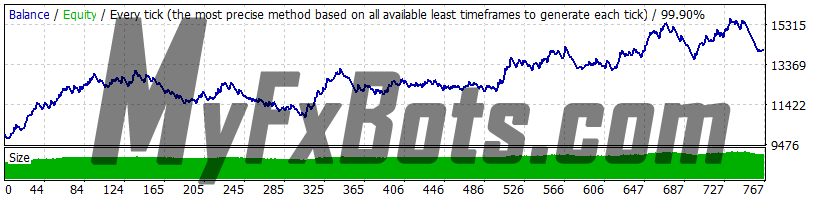
The range module alone on GBPUSD with the terminal clock fixed at GMT and daylight saving disabled, at the fifteen-minute horizon, at the risk preset the vendor labels risk 2, on real-spread tick data from Dukascopy. Range identification is sensitive to where sessions begin and end, so the run tests the fourth module's dependence on the time base.
Backtests Settings
Symbol
GBPUSD
Period
15 Minutes (M15), 2010.01.04 01:00 - 2022.03.16 22:45
Timeframe
M15
Model
Every tick
Parameters
- A="===================="
- Use_FXCOMBO_Scalping=false
- Use_FXCOMBO_Breakout=false
- Use_FXCOMBO_Reversal=false
- Use_FXCOMBO_EuroRange=true
- B="===================="
- Use_ECN_Execution=true
- Hidden_StopAndTarget=false
- No_Hedge_Trades=false
- NFA_Compatibility=false
- C="===================="
- CommentSys1="*** 1 ***"
- CommentSys2="*** 2 ***"
- CommentSys3="*** 3 ***"
- CommentSys4="*** 4 ***"
- D="===================="
- Magic1=111
- Magic2=222
- Magic3=333
- Magic4=444
- E="===================="
- MaxSPREAD=4
- Slippage=2
- AutoGMT_Offset=false
- ManualGMT_Offset=0
- Calculate_DST=false
- EMAIL_Notification=false
- PUSH_Notification=false
- MFR="==== Monday-Friday Rules ===="
- MondayStartHour=0
- FridayExit=false
- LastTradeHour=19
- ExitHour=20
- MMSys1="==== FXCOMBO Scalping MM Parameters ===="
- RecoveryMode1=false
- RecoveryMultiplier1=1.05
- FixedLots1=0
- AutoMM1=2
- AutoMM_Max1=10
- MaximalLots1=100
- MMSys2="==== FXCOMBO Breakout MM Parameters ===="
- RecoveryMode2=false
- RecoveryMultiplier2=1.05
- FixedLots2=0
- AutoMM2=2
- AutoMM_Max2=10
- MaximalLots2=100
- MMSys3="==== FXCOMBO Reversal MM Parameters ===="
- RecoveryMode3=false
- RecoveryMultiplier3=1.05
- FixedLots3=0
- AutoMM3=2
- AutoMM_Max3=10
- MaximalLots3=100
- MMSys4="==== FXCOMBO EuroRange MM Parameters ===="
- RecoveryMode4=false
- RecoveryMultiplier4=1.05
- FixedLots4=0
- AutoMM4=2
- AutoMM_Max4=10
- MaximalLots4=100
- Scalping="==== FXCOMBO Scalping System Parameters ===="
- StopLoss=0
- TakeProfit=0
- TREND_STR=0
- OSC_open=0
- OSC_close=0
- Breakout="==== FXCOMBO Breakout System Parameters ===="
- TakeProfit_II=0
- StopLoss_II=0
- MaxPipsTrailing2=0
- MinPipsTrailing2=0
- Break=0
- ATRTrailingFactor2=0
- F_TrailingProfit_II=0
- F_Trailing_II=0
- Use_Exp_Trailing_II=-1
- Exp_Trail_Factor_II=0
- Reversal="==== FXCOMBO Reversal System Parameters ===="
- BegHourSys_III=0
- EndHourSys_III=0
- TakeProfit_III=0
- StopLoss_III=0
- MaxPipsTrailing3=0
- MinPipsTrailing3=0
- F_TrailingProfit_III=0
- F_Trailing_III=0
- Use_Exp_Trailing_III=-1
- Exp_Trail_Factor_III=0
- EuroRange="==== FXCOMBO EuroRange System Parameters ===="
- MaxRangePips=0
- BreakPips=0
- TargetPercent=0
- StopLoss_IV=0
- Use_Exp_Trailing_IV=-1
- Exp_Trail_Factor_IV=0
- ReverseTF=0
- ExitProfit=0
- NF="==== News Filter Settings ===="
- Include_Medium_News=true
- Wait_Before_News=30
- Wait_After_News=30
- NewsFilterSys1=false
- NewsFilterSys2=false
- NewsFilterSys3=false
- NewsFilterSys4=false
Bars in test
299252
Ticks modelled
230113610
Modelling quality
99.90%
Initial Deposit
$10000.00
Spread
Variable
Backtests Results
Total net profit
41101.32
Gross profit
12568.61
Gross loss
-37017.86
Profit factor
1.11
Expected payoff
5.34
Absolute Bal DD
827.85
Maximal Bal DD
1221.98 (22.65%)
Relative Bal DD
22.65% (1221.98)
Total Trades
764
Short positions
184 (52.72%)
Long positions
392 (44.13%)
Profit trades
336 (43.98%)
Loss trades
428 (56.02%)
Largest Profit trade
343.05
Largest Loss trade
-120.38
Average Profit trade
122.33
Average Loss trade
-86.49
Maximum consecutive wins (profit in money)
13 (1097.33)
Maximum consecutive losses (loss in money)
14 (-1472.56)
Maximal consecutive profit (count of wins)
1097.33 (13)
Maximal consecutive loss (count of losses)
-1472.56 (14)
Avarage consecutive wins
2
Avarage consecutive losses
2
The statement completes the time-base series and should be read as part of it rather than on its own. It cannot show which offset convention a given broker applies, and it leaves combined behaviour untested under the same clock. Its contribution is a measure of how convention-dependent the range module's output is.
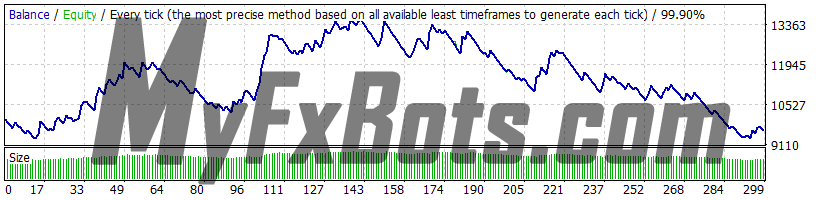
The counter-trend reversal component alone on GBPUSD with the clock fixed at GMT and daylight saving disabled, at the fifteen-minute horizon, at the risk preset the vendor labels risk 2, on real-spread tick data from Dukascopy. The module trades inside defined hour windows, so the time base is part of its logic rather than a detail of the test rig.
Backtests Settings
Symbol
GBPUSD
Period
15 Minutes (M15), 2010.01.04 01:00 - 2022.03.16 21:45
Timeframe
M15
Model
Every tick
Parameters
- A="===================="
- Use_FXCOMBO_Scalping=false
- Use_FXCOMBO_Breakout=false
- Use_FXCOMBO_Reversal=true
- Use_FXCOMBO_EuroRange=false
- B="===================="
- Use_ECN_Execution=true
- Hidden_StopAndTarget=false
- No_Hedge_Trades=false
- NFA_Compatibility=false
- C="===================="
- CommentSys1="*** 1 ***"
- CommentSys2="*** 2 ***"
- CommentSys3="*** 3 ***"
- CommentSys4="*** 4 ***"
- D="===================="
- Magic1=111
- Magic2=222
- Magic3=333
- Magic4=444
- E="===================="
- MaxSPREAD=4
- Slippage=2
- AutoGMT_Offset=false
- ManualGMT_Offset=0
- Calculate_DST=false
- EMAIL_Notification=false
- PUSH_Notification=false
- MFR="==== Monday-Friday Rules ===="
- MondayStartHour=0
- FridayExit=false
- LastTradeHour=19
- ExitHour=20
- MMSys1="==== FXCOMBO Scalping MM Parameters ===="
- RecoveryMode1=false
- RecoveryMultiplier1=1.05
- FixedLots1=0
- AutoMM1=2
- AutoMM_Max1=10
- MaximalLots1=100
- MMSys2="==== FXCOMBO Breakout MM Parameters ===="
- RecoveryMode2=false
- RecoveryMultiplier2=1.05
- FixedLots2=0
- AutoMM2=2
- AutoMM_Max2=10
- MaximalLots2=100
- MMSys3="==== FXCOMBO Reversal MM Parameters ===="
- RecoveryMode3=false
- RecoveryMultiplier3=1.05
- FixedLots3=0
- AutoMM3=2
- AutoMM_Max3=10
- MaximalLots3=100
- MMSys4="==== FXCOMBO EuroRange MM Parameters ===="
- RecoveryMode4=false
- RecoveryMultiplier4=1.05
- FixedLots4=0
- AutoMM4=2
- AutoMM_Max4=10
- MaximalLots4=100
- Scalping="==== FXCOMBO Scalping System Parameters ===="
- StopLoss=0
- TakeProfit=0
- TREND_STR=0
- OSC_open=0
- OSC_close=0
- Breakout="==== FXCOMBO Breakout System Parameters ===="
- TakeProfit_II=0
- StopLoss_II=0
- MaxPipsTrailing2=0
- MinPipsTrailing2=0
- Break=0
- ATRTrailingFactor2=0
- F_TrailingProfit_II=0
- F_Trailing_II=0
- Use_Exp_Trailing_II=-1
- Exp_Trail_Factor_II=0
- Reversal="==== FXCOMBO Reversal System Parameters ===="
- BegHourSys_III=0
- EndHourSys_III=0
- TakeProfit_III=0
- StopLoss_III=0
- MaxPipsTrailing3=0
- MinPipsTrailing3=0
- F_TrailingProfit_III=0
- F_Trailing_III=0
- Use_Exp_Trailing_III=-1
- Exp_Trail_Factor_III=0
- EuroRange="==== FXCOMBO EuroRange System Parameters ===="
- MaxRangePips=0
- BreakPips=0
- TargetPercent=0
- StopLoss_IV=0
- Use_Exp_Trailing_IV=-1
- Exp_Trail_Factor_IV=0
- ReverseTF=0
- ExitProfit=0
- NF="==== News Filter Settings ===="
- Include_Medium_News=true
- Wait_Before_News=30
- Wait_After_News=30
- NewsFilterSys1=false
- NewsFilterSys2=false
- NewsFilterSys3=false
- NewsFilterSys4=false
Bars in test
299252
Ticks modelled
230113610
Modelling quality
99.90%
Initial Deposit
$10000.00
Spread
Variable
Backtests Results
Total net profit
22480.16
Gross profit
18306.99
Gross loss
-22864.15
Profit factor
0.98
Expected payoff
-1.29
Absolute Bal DD
994.01
Maximal Bal DD
2630.06 (32.87%)
Relative Bal DD
32.87% (2630.06)
Total Trades
298
Short positions
154 (74.03%)
Long positions
133 (33.08%)
Profit trades
103 (34.56%)
Loss trades
195 (65.44%)
Largest Profit trade
622.03
Largest Loss trade
-141.72
Average Profit trade
218.25
Average Loss trade
-117.25
Maximum consecutive wins (profit in money)
6 (2282.14)
Maximum consecutive losses (loss in money)
10 (-1329.86)
Maximal consecutive profit (count of wins)
2282.14 (6)
Maximal consecutive loss (count of losses)
-1329.86 (10)
Avarage consecutive wins
1
Avarage consecutive losses
3
This narrows the time-base question to the module most exposed to it. It does not prove that a fixed GMT clock suits any given broker's server time, and it excludes the other three modules. Read it next to the automatic-offset version of the same component to judge how much the hour convention moves the outcome.
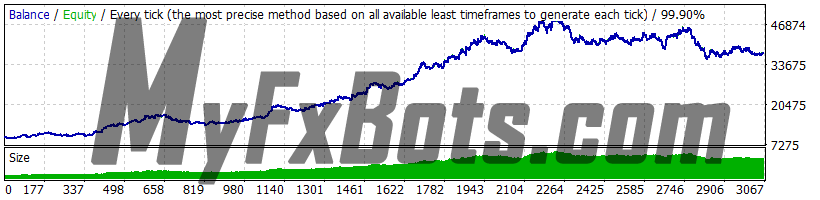
The combined sterling configuration on real-spread tick data from Dukascopy, with the terminal clock pinned to GMT and daylight-saving adjustment switched off. The logic depends on session and hour boundaries, so this is a time-base test as much as a strategy test: it asks how much of the result rests on the offset convention the earlier runs carried.
Backtests Settings
Symbol
GBPUSD
Period
15 Minutes (M15), 2010.01.04 01:00 - 2022.03.16 17:45
Timeframe
M15
Model
Every tick
Parameters
- A="===================="
- Use_FXCOMBO_Scalping=true
- Use_FXCOMBO_Breakout=true
- Use_FXCOMBO_Reversal=true
- Use_FXCOMBO_EuroRange=true
- B="===================="
- Use_ECN_Execution=true
- Hidden_StopAndTarget=false
- No_Hedge_Trades=false
- NFA_Compatibility=false
- C="===================="
- CommentSys1="*** 1 ***"
- CommentSys2="*** 2 ***"
- CommentSys3="*** 3 ***"
- CommentSys4="*** 4 ***"
- D="===================="
- Magic1=111
- Magic2=222
- Magic3=333
- Magic4=444
- E="===================="
- MaxSPREAD=4
- Slippage=2
- AutoGMT_Offset=false
- ManualGMT_Offset=0
- Calculate_DST=false
- EMAIL_Notification=false
- PUSH_Notification=false
- MFR="==== Monday-Friday Rules ===="
- MondayStartHour=0
- FridayExit=false
- LastTradeHour=19
- ExitHour=20
- MMSys1="==== FXCOMBO Scalping MM Parameters ===="
- RecoveryMode1=false
- RecoveryMultiplier1=1.05
- FixedLots1=0
- AutoMM1=2
- AutoMM_Max1=10
- MaximalLots1=100
- MMSys2="==== FXCOMBO Breakout MM Parameters ===="
- RecoveryMode2=false
- RecoveryMultiplier2=1.05
- FixedLots2=0
- AutoMM2=2
- AutoMM_Max2=10
- MaximalLots2=100
- MMSys3="==== FXCOMBO Reversal MM Parameters ===="
- RecoveryMode3=false
- RecoveryMultiplier3=1.05
- FixedLots3=0
- AutoMM3=2
- AutoMM_Max3=10
- MaximalLots3=100
- MMSys4="==== FXCOMBO EuroRange MM Parameters ===="
- RecoveryMode4=false
- RecoveryMultiplier4=1.05
- FixedLots4=0
- AutoMM4=2
- AutoMM_Max4=10
- MaximalLots4=100
- Scalping="==== FXCOMBO Scalping System Parameters ===="
- StopLoss=0
- TakeProfit=0
- TREND_STR=0
- OSC_open=0
- OSC_close=0
- Breakout="==== FXCOMBO Breakout System Parameters ===="
- TakeProfit_II=0
- StopLoss_II=0
- MaxPipsTrailing2=0
- MinPipsTrailing2=0
- Break=0
- ATRTrailingFactor2=0
- F_TrailingProfit_II=0
- F_Trailing_II=0
- Use_Exp_Trailing_II=-1
- Exp_Trail_Factor_II=0
- Reversal="==== FXCOMBO Reversal System Parameters ===="
- BegHourSys_III=0
- EndHourSys_III=0
- TakeProfit_III=0
- StopLoss_III=0
- MaxPipsTrailing3=0
- MinPipsTrailing3=0
- F_TrailingProfit_III=0
- F_Trailing_III=0
- Use_Exp_Trailing_III=-1
- Exp_Trail_Factor_III=0
- EuroRange="==== FXCOMBO EuroRange System Parameters ===="
- MaxRangePips=0
- BreakPips=0
- TargetPercent=0
- StopLoss_IV=0
- Use_Exp_Trailing_IV=-1
- Exp_Trail_Factor_IV=0
- ReverseTF=0
- ExitProfit=0
- NF="==== News Filter Settings ===="
- Include_Medium_News=true
- Wait_Before_News=30
- Wait_After_News=30
- NewsFilterSys1=false
- NewsFilterSys2=false
- NewsFilterSys3=false
- NewsFilterSys4=false
Bars in test
299210
Ticks modelled
230113610
Modelling quality
99.90%
Initial Deposit
$10000.00
Spread
Variable
Backtests Results
Total net profit
294151.76
Gross profit
285539.85
Gross loss
-266480.58
Profit factor
1.10
Expected payoff
9.06
Absolute Bal DD
1174.32
Maximal Bal DD
11331.38 (29.19%)
Relative Bal DD
33.05% (1888.93)
Total Trades
3055
Short positions
1242 (65.30%)
Long positions
1567 (49.78%)
Profit trades
1478 (48.38%)
Loss trades
1577 (51.62%)
Largest Profit trade
2211.54
Largest Loss trade
-664.76
Average Profit trade
199.02
Average Loss trade
-168.98
Maximum consecutive wins (profit in money)
10 (1645.31)
Maximum consecutive losses (loss in money)
11 (-3463.46)
Maximal consecutive profit (count of wins)
3118.90 (6)
Maximal consecutive loss (count of losses)
-3463.46 (11)
Avarage consecutive wins
2
Avarage consecutive losses
2
Comparing this record with the same combination under automatic offset handling is its only sensible use, and it shows whether the clock convention is a material variable. It does not settle which convention matches any particular broker, and it is still one symbol on one tick archive.
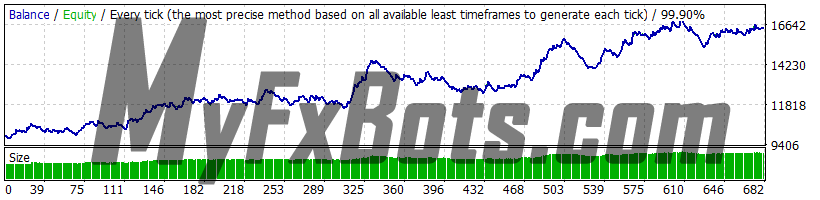
The range module alone on GBPUSD at the fifteen-minute horizon, at the risk preset the vendor labels risk 2, on real-spread tick data from Dukascopy. Range detection on a pair with wider typical excursions is the question: whether the module can still identify non-trending conditions and keep its entries inside them when costs vary.
Backtests Settings
Symbol
GBPUSD
Period
15 Minutes (M15), 2010.01.04 03:00 - 2022.03.16 10:30
Timeframe
M15
Model
Every tick
Parameters
- A="===================="
- Use_FXCOMBO_Scalping=false
- Use_FXCOMBO_Breakout=false
- Use_FXCOMBO_Reversal=false
- Use_FXCOMBO_EuroRange=true
- B="===================="
- Use_ECN_Execution=true
- Hidden_StopAndTarget=false
- No_Hedge_Trades=false
- NFA_Compatibility=false
- C="===================="
- CommentSys1="*** 1 ***"
- CommentSys2="*** 2 ***"
- CommentSys3="*** 3 ***"
- CommentSys4="*** 4 ***"
- D="===================="
- Magic1=111
- Magic2=222
- Magic3=333
- Magic4=444
- E="===================="
- MaxSPREAD=4
- Slippage=2
- AutoGMT_Offset=true
- ManualGMT_Offset=2
- Calculate_DST=true
- EMAIL_Notification=false
- PUSH_Notification=false
- MFR="==== Monday-Friday Rules ===="
- MondayStartHour=0
- FridayExit=false
- LastTradeHour=19
- ExitHour=20
- MMSys1="==== FXCOMBO Scalping MM Parameters ===="
- RecoveryMode1=false
- RecoveryMultiplier1=1.05
- FixedLots1=0
- AutoMM1=2
- AutoMM_Max1=10
- MaximalLots1=100
- MMSys2="==== FXCOMBO Breakout MM Parameters ===="
- RecoveryMode2=false
- RecoveryMultiplier2=1.05
- FixedLots2=0
- AutoMM2=2
- AutoMM_Max2=10
- MaximalLots2=100
- MMSys3="==== FXCOMBO Reversal MM Parameters ===="
- RecoveryMode3=false
- RecoveryMultiplier3=1.05
- FixedLots3=0
- AutoMM3=2
- AutoMM_Max3=10
- MaximalLots3=100
- MMSys4="==== FXCOMBO EuroRange MM Parameters ===="
- RecoveryMode4=false
- RecoveryMultiplier4=1.05
- FixedLots4=0
- AutoMM4=2
- AutoMM_Max4=10
- MaximalLots4=100
- Scalping="==== FXCOMBO Scalping System Parameters ===="
- StopLoss=0
- TakeProfit=0
- TREND_STR=0
- OSC_open=0
- OSC_close=0
- Breakout="==== FXCOMBO Breakout System Parameters ===="
- TakeProfit_II=0
- StopLoss_II=0
- MaxPipsTrailing2=0
- MinPipsTrailing2=0
- Break=0
- ATRTrailingFactor2=0
- F_TrailingProfit_II=0
- F_Trailing_II=0
- Use_Exp_Trailing_II=-1
- Exp_Trail_Factor_II=0
- Reversal="==== FXCOMBO Reversal System Parameters ===="
- BegHourSys_III=0
- EndHourSys_III=0
- TakeProfit_III=0
- StopLoss_III=0
- MaxPipsTrailing3=0
- MinPipsTrailing3=0
- F_TrailingProfit_III=0
- F_Trailing_III=0
- Use_Exp_Trailing_III=-1
- Exp_Trail_Factor_III=0
- EuroRange="==== FXCOMBO EuroRange System Parameters ===="
- MaxRangePips=0
- BreakPips=0
- TargetPercent=0
- StopLoss_IV=0
- Use_Exp_Trailing_IV=-1
- Exp_Trail_Factor_IV=0
- ReverseTF=0
- ExitProfit=0
- NF="==== News Filter Settings ===="
- Include_Medium_News=true
- Wait_Before_News=30
- Wait_After_News=30
- NewsFilterSys1=false
- NewsFilterSys2=false
- NewsFilterSys3=false
- NewsFilterSys4=false
Bars in test
299252
Ticks modelled
230113610
Modelling quality
99.90%
Initial Deposit
$10000.00
Spread
Variable
Backtests Results
Total net profit
40105.78
Gross profit
16810.92
Gross loss
-33648.21
Profit factor
1.19
Expected payoff
9.51
Absolute Bal DD
1155.59
Maximal Bal DD
1862.27 (32.63%)
Relative Bal DD
32.63% (1862.27)
Total Trades
679
Short positions
269 (49.81%)
Long positions
326 (44.17%)
Profit trades
305 (44.92%)
Loss trades
374 (55.08%)
Largest Profit trade
422.46
Largest Loss trade
-132.52
Average Profit trade
131.49
Average Loss trade
-89.97
Maximum consecutive wins (profit in money)
8 (1133.05)
Maximum consecutive losses (loss in money)
7 (-833.86)
Maximal consecutive profit (count of wins)
1206.66 (5)
Maximal consecutive loss (count of losses)
-833.86 (7)
Avarage consecutive wins
2
Avarage consecutive losses
2
The record isolates the range component under the harsher of the two instruments and feeds used in the archive. It does not address news windows, when range boundaries fail and spreads peak, and it leaves interaction with the other modules untested. Read it as a robustness reading on the fourth module.
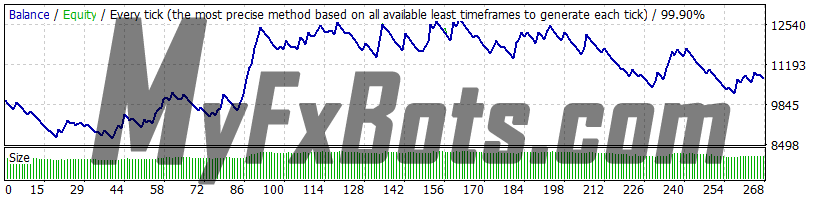
The counter-trend reversal component alone on GBPUSD at the fifteen-minute horizon, at the risk preset the vendor labels risk 2, on real-spread tick data from Dukascopy. Combining the pair that overshoots most with the module that trades against the move is the archive's sharpest test of the reversal premise under realistic costs.
Backtests Settings
Symbol
GBPUSD
Period
15 Minutes (M15), 2010.01.04 03:00 - 2021.12.31 01:45
Timeframe
M15
Model
Every tick
Parameters
- A="===================="
- Use_FXCOMBO_Scalping=false
- Use_FXCOMBO_Breakout=false
- Use_FXCOMBO_Reversal=true
- Use_FXCOMBO_EuroRange=false
- B="===================="
- Use_ECN_Execution=true
- Hidden_StopAndTarget=false
- No_Hedge_Trades=false
- NFA_Compatibility=false
- C="===================="
- CommentSys1="*** 1 ***"
- CommentSys2="*** 2 ***"
- CommentSys3="*** 3 ***"
- CommentSys4="*** 4 ***"
- D="===================="
- Magic1=111
- Magic2=222
- Magic3=333
- Magic4=444
- E="===================="
- MaxSPREAD=4
- Slippage=2
- AutoGMT_Offset=true
- ManualGMT_Offset=2
- Calculate_DST=true
- EMAIL_Notification=false
- PUSH_Notification=false
- MFR="==== Monday-Friday Rules ===="
- MondayStartHour=0
- FridayExit=false
- LastTradeHour=19
- ExitHour=20
- MMSys1="==== FXCOMBO Scalping MM Parameters ===="
- RecoveryMode1=false
- RecoveryMultiplier1=1.05
- FixedLots1=0
- AutoMM1=2
- AutoMM_Max1=10
- MaximalLots1=100
- MMSys2="==== FXCOMBO Breakout MM Parameters ===="
- RecoveryMode2=false
- RecoveryMultiplier2=1.05
- FixedLots2=0
- AutoMM2=2
- AutoMM_Max2=10
- MaximalLots2=100
- MMSys3="==== FXCOMBO Reversal MM Parameters ===="
- RecoveryMode3=false
- RecoveryMultiplier3=1.05
- FixedLots3=0
- AutoMM3=2
- AutoMM_Max3=10
- MaximalLots3=100
- MMSys4="==== FXCOMBO EuroRange MM Parameters ===="
- RecoveryMode4=false
- RecoveryMultiplier4=1.05
- FixedLots4=0
- AutoMM4=2
- AutoMM_Max4=10
- MaximalLots4=100
- Scalping="==== FXCOMBO Scalping System Parameters ===="
- StopLoss=0
- TakeProfit=0
- TREND_STR=0
- OSC_open=0
- OSC_close=0
- Breakout="==== FXCOMBO Breakout System Parameters ===="
- TakeProfit_II=0
- StopLoss_II=0
- MaxPipsTrailing2=0
- MinPipsTrailing2=0
- Break=0
- ATRTrailingFactor2=0
- F_TrailingProfit_II=0
- F_Trailing_II=0
- Use_Exp_Trailing_II=-1
- Exp_Trail_Factor_II=0
- Reversal="==== FXCOMBO Reversal System Parameters ===="
- BegHourSys_III=0
- EndHourSys_III=0
- TakeProfit_III=0
- StopLoss_III=0
- MaxPipsTrailing3=0
- MinPipsTrailing3=0
- F_TrailingProfit_III=0
- F_Trailing_III=0
- Use_Exp_Trailing_III=-1
- Exp_Trail_Factor_III=0
- EuroRange="==== FXCOMBO EuroRange System Parameters ===="
- MaxRangePips=0
- BreakPips=0
- TargetPercent=0
- StopLoss_IV=0
- Use_Exp_Trailing_IV=-1
- Exp_Trail_Factor_IV=0
- ReverseTF=0
- ExitProfit=0
- NF="==== News Filter Settings ===="
- Include_Medium_News=true
- Wait_Before_News=30
- Wait_After_News=30
- NewsFilterSys1=false
- NewsFilterSys2=false
- NewsFilterSys3=false
- NewsFilterSys4=false
Bars in test
299252
Ticks modelled
230113610
Modelling quality
99.90%
Initial Deposit
$10000.00
Spread
Variable
Backtests Results
Total net profit
732.83
Gross profit
13572.94
Gross loss
-20090.28
Profit factor
1.04
Expected payoff
2.74
Absolute Bal DD
566.02
Maximal Bal DD
1805.42 (22.55%)
Relative Bal DD
22.55% (1805.42)
Total Trades
267
Short positions
106 (75.47%)
Long positions
114 (31.58%)
Profit trades
92 (34.46%)
Loss trades
175 (65.54%)
Largest Profit trade
598.80
Largest Loss trade
-133.85
Average Profit trade
226.34
Average Loss trade
-114.80
Maximum consecutive wins (profit in money)
8 (2789.59)
Maximum consecutive losses (loss in money)
9 (-867.57)
Maximal consecutive profit (count of wins)
2789.59 (8)
Maximal consecutive loss (count of losses)
-880.11 (7)
Avarage consecutive wins
2
Avarage consecutive losses
3
The statement is a stress case rather than a summary, and should not be read as the product's expected behaviour. It cannot model fill quality at the exact turn, where this logic lives or dies, and it excludes the three modules that normally share the account.
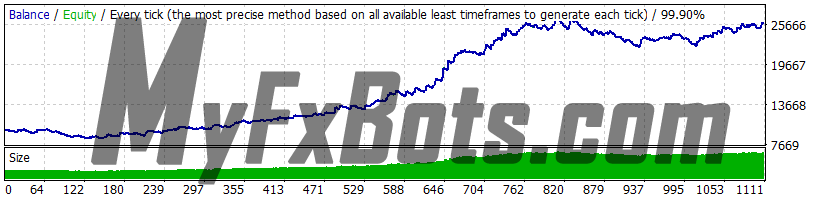
The Breakout module alone on GBPUSD at the fifteen-minute horizon, at the risk preset the vendor labels risk 2, on real-spread tick data from Dukascopy. The module's longer holding periods should make it the least disturbed by a variable spread on a volatile pair, and the record exists to confirm or qualify that expectation.
Backtests Settings
Symbol
GBPUSD
Period
15 Minutes (M15), 2010.01.04 03:00 - 2021.12.31 01:45
Timeframe
M15
Model
Every tick
Parameters
- A="===================="
- Use_FXCOMBO_Scalping=false
- Use_FXCOMBO_Breakout=true
- Use_FXCOMBO_Reversal=false
- Use_FXCOMBO_EuroRange=false
- B="===================="
- Use_ECN_Execution=true
- Hidden_StopAndTarget=false
- No_Hedge_Trades=false
- NFA_Compatibility=false
- C="===================="
- CommentSys1="*** 1 ***"
- CommentSys2="*** 2 ***"
- CommentSys3="*** 3 ***"
- CommentSys4="*** 4 ***"
- D="===================="
- Magic1=111
- Magic2=222
- Magic3=333
- Magic4=444
- E="===================="
- MaxSPREAD=4
- Slippage=2
- AutoGMT_Offset=true
- ManualGMT_Offset=2
- Calculate_DST=true
- EMAIL_Notification=false
- PUSH_Notification=false
- MFR="==== Monday-Friday Rules ===="
- MondayStartHour=0
- FridayExit=false
- LastTradeHour=19
- ExitHour=20
- MMSys1="==== FXCOMBO Scalping MM Parameters ===="
- RecoveryMode1=false
- RecoveryMultiplier1=1.05
- FixedLots1=0
- AutoMM1=2
- AutoMM_Max1=10
- MaximalLots1=100
- MMSys2="==== FXCOMBO Breakout MM Parameters ===="
- RecoveryMode2=false
- RecoveryMultiplier2=1.05
- FixedLots2=0
- AutoMM2=2
- AutoMM_Max2=10
- MaximalLots2=100
- MMSys3="==== FXCOMBO Reversal MM Parameters ===="
- RecoveryMode3=false
- RecoveryMultiplier3=1.05
- FixedLots3=0
- AutoMM3=2
- AutoMM_Max3=10
- MaximalLots3=100
- MMSys4="==== FXCOMBO EuroRange MM Parameters ===="
- RecoveryMode4=false
- RecoveryMultiplier4=1.05
- FixedLots4=0
- AutoMM4=2
- AutoMM_Max4=10
- MaximalLots4=100
- Scalping="==== FXCOMBO Scalping System Parameters ===="
- StopLoss=0
- TakeProfit=0
- TREND_STR=0
- OSC_open=0
- OSC_close=0
- Breakout="==== FXCOMBO Breakout System Parameters ===="
- TakeProfit_II=0
- StopLoss_II=0
- MaxPipsTrailing2=0
- MinPipsTrailing2=0
- Break=0
- ATRTrailingFactor2=0
- F_TrailingProfit_II=0
- F_Trailing_II=0
- Use_Exp_Trailing_II=-1
- Exp_Trail_Factor_II=0
- Reversal="==== FXCOMBO Reversal System Parameters ===="
- BegHourSys_III=0
- EndHourSys_III=0
- TakeProfit_III=0
- StopLoss_III=0
- MaxPipsTrailing3=0
- MinPipsTrailing3=0
- F_TrailingProfit_III=0
- F_Trailing_III=0
- Use_Exp_Trailing_III=-1
- Exp_Trail_Factor_III=0
- EuroRange="==== FXCOMBO EuroRange System Parameters ===="
- MaxRangePips=0
- BreakPips=0
- TargetPercent=0
- StopLoss_IV=0
- Use_Exp_Trailing_IV=-1
- Exp_Trail_Factor_IV=0
- ReverseTF=0
- ExitProfit=0
- NF="==== News Filter Settings ===="
- Include_Medium_News=true
- Wait_Before_News=30
- Wait_After_News=30
- NewsFilterSys1=false
- NewsFilterSys2=false
- NewsFilterSys3=false
- NewsFilterSys4=false
Bars in test
299252
Ticks modelled
230113610
Modelling quality
99.90%
Initial Deposit
$10000.00
Spread
Variable
Backtests Results
Total net profit
69876.24
Gross profit
19093.06
Gross loss
-53974.49
Profit factor
1.29
Expected payoff
14.36
Absolute Bal DD
23.50
Maximal Bal DD
1711.44 (18.69%)
Relative Bal DD
18.69% (1711.44)
Total Trades
1107
Short positions
210 (47.14%)
Long positions
525 (34.48%)
Profit trades
382 (34.51%)
Loss trades
725 (65.49%)
Largest Profit trade
1517.85
Largest Loss trade
-127.15
Average Profit trade
182.92
Average Loss trade
-74.45
Maximum consecutive wins (profit in money)
7 (1246.13)
Maximum consecutive losses (loss in money)
14 (-1601.47)
Maximal consecutive profit (count of wins)
2007.97 (3)
Maximal consecutive loss (count of losses)
-1601.47 (14)
Avarage consecutive wins
2
Avarage consecutive losses
3
Read beside the scalping statement on the same pair and feed, it illustrates how differently two components absorb the same cost environment. It says nothing about entry slippage during the expansions it trades, the main unknown for this style, and it is a single-module result.
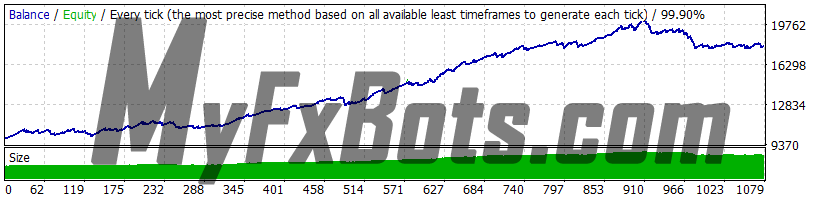
The Scalping module alone on GBPUSD at the fifteen-minute horizon, at the risk preset the vendor labels risk 2, on real-spread tick data from Dukascopy. Two pressures are combined here — a high-turnover routine and a volatile pair — and the run shows whether cost sensitivity becomes decisive under both at once.
Backtests Settings
Symbol
GBPUSD
Period
15 Minutes (M15), 2010.01.04 03:00 - 2021.12.31 01:45
Timeframe
M15
Model
Every tick
Parameters
- A="===================="
- Use_FXCOMBO_Scalping=true
- Use_FXCOMBO_Breakout=false
- Use_FXCOMBO_Reversal=false
- Use_FXCOMBO_EuroRange=false
- B="===================="
- Use_ECN_Execution=true
- Hidden_StopAndTarget=false
- No_Hedge_Trades=false
- NFA_Compatibility=false
- C="===================="
- CommentSys1="*** 1 ***"
- CommentSys2="*** 2 ***"
- CommentSys3="*** 3 ***"
- CommentSys4="*** 4 ***"
- D="===================="
- Magic1=111
- Magic2=222
- Magic3=333
- Magic4=444
- E="===================="
- MaxSPREAD=4
- Slippage=2
- AutoGMT_Offset=true
- ManualGMT_Offset=2
- Calculate_DST=true
- EMAIL_Notification=false
- PUSH_Notification=false
- MFR="==== Monday-Friday Rules ===="
- MondayStartHour=0
- FridayExit=false
- LastTradeHour=19
- ExitHour=20
- MMSys1="==== FXCOMBO Scalping MM Parameters ===="
- RecoveryMode1=false
- RecoveryMultiplier1=1.05
- FixedLots1=0
- AutoMM1=2
- AutoMM_Max1=10
- MaximalLots1=100
- MMSys2="==== FXCOMBO Breakout MM Parameters ===="
- RecoveryMode2=false
- RecoveryMultiplier2=1.05
- FixedLots2=0
- AutoMM2=2
- AutoMM_Max2=10
- MaximalLots2=100
- MMSys3="==== FXCOMBO Reversal MM Parameters ===="
- RecoveryMode3=false
- RecoveryMultiplier3=1.05
- FixedLots3=0
- AutoMM3=2
- AutoMM_Max3=10
- MaximalLots3=100
- MMSys4="==== FXCOMBO EuroRange MM Parameters ===="
- RecoveryMode4=false
- RecoveryMultiplier4=1.05
- FixedLots4=0
- AutoMM4=2
- AutoMM_Max4=10
- MaximalLots4=100
- Scalping="==== FXCOMBO Scalping System Parameters ===="
- StopLoss=0
- TakeProfit=0
- TREND_STR=0
- OSC_open=0
- OSC_close=0
- Breakout="==== FXCOMBO Breakout System Parameters ===="
- TakeProfit_II=0
- StopLoss_II=0
- MaxPipsTrailing2=0
- MinPipsTrailing2=0
- Break=0
- ATRTrailingFactor2=0
- F_TrailingProfit_II=0
- F_Trailing_II=0
- Use_Exp_Trailing_II=-1
- Exp_Trail_Factor_II=0
- Reversal="==== FXCOMBO Reversal System Parameters ===="
- BegHourSys_III=0
- EndHourSys_III=0
- TakeProfit_III=0
- StopLoss_III=0
- MaxPipsTrailing3=0
- MinPipsTrailing3=0
- F_TrailingProfit_III=0
- F_Trailing_III=0
- Use_Exp_Trailing_III=-1
- Exp_Trail_Factor_III=0
- EuroRange="==== FXCOMBO EuroRange System Parameters ===="
- MaxRangePips=0
- BreakPips=0
- TargetPercent=0
- StopLoss_IV=0
- Use_Exp_Trailing_IV=-1
- Exp_Trail_Factor_IV=0
- ReverseTF=0
- ExitProfit=0
- NF="==== News Filter Settings ===="
- Include_Medium_News=true
- Wait_Before_News=30
- Wait_After_News=30
- NewsFilterSys1=false
- NewsFilterSys2=false
- NewsFilterSys3=false
- NewsFilterSys4=false
Bars in test
299252
Ticks modelled
230113610
Modelling quality
99.90%
Initial Deposit
$10000.00
Spread
Variable
Backtests Results
Total net profit
32173.68
Gross profit
32101.93
Gross loss
-24286.99
Profit factor
1.32
Expected payoff
7.34
Absolute Bal DD
4.00
Maximal Bal DD
1045.20 (7.83%)
Relative Bal DD
12.12% (696.41)
Total Trades
1075
Short positions
581 (74.70%)
Long positions
500 (76.60%)
Profit trades
811 (75.44%)
Loss trades
264 (24.56%)
Largest Profit trade
88.17
Largest Loss trade
-289.83
Average Profit trade
39.67
Average Loss trade
-92.00
Maximum consecutive wins (profit in money)
21 (730.29)
Maximum consecutive losses (loss in money)
5 (-870.82)
Maximal consecutive profit (count of wins)
1050.41 (13)
Maximal consecutive loss (count of losses)
-870.82 (5)
Avarage consecutive wins
4
Avarage consecutive losses
1
This is the least favourable configuration in the archive for the fast module, and should be read as a test of where the design is most exposed, not as a summary of the product. It models no commission, which compounds the same pressure, and it is isolated from the other three modules.
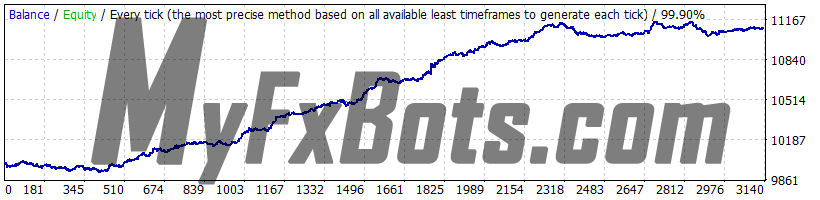
The sterling combination on real-spread tick data from Dukascopy, at the fifteen-minute horizon, with a fixed lot in place of the risk preset. Constant size removes compounding, so the run measures what the four modules produce on a volatile pair when the feed varies and the sizing does not.
Backtests Settings
Symbol
GBPUSD
Period
15 Minutes (M15), 2010.01.04 03:00 - 2021.12.31 01:45
Timeframe
M15
Model
Every tick
Parameters
- A="===================="
- Use_FXCOMBO_Scalping=true
- Use_FXCOMBO_Breakout=true
- Use_FXCOMBO_Reversal=true
- Use_FXCOMBO_EuroRange=true
- B="===================="
- Use_ECN_Execution=true
- Hidden_StopAndTarget=false
- No_Hedge_Trades=false
- NFA_Compatibility=false
- C="===================="
- CommentSys1="*** 1 ***"
- CommentSys2="*** 2 ***"
- CommentSys3="*** 3 ***"
- CommentSys4="*** 4 ***"
- D="===================="
- Magic1=111
- Magic2=222
- Magic3=333
- Magic4=444
- E="===================="
- MaxSPREAD=4
- Slippage=2
- AutoGMT_Offset=true
- ManualGMT_Offset=2
- Calculate_DST=true
- EMAIL_Notification=false
- PUSH_Notification=false
- MFR="==== Monday-Friday Rules ===="
- MondayStartHour=0
- FridayExit=false
- LastTradeHour=19
- ExitHour=20
- MMSys1="==== FXCOMBO Scalping MM Parameters ===="
- RecoveryMode1=false
- RecoveryMultiplier1=1.05
- FixedLots1=0.01
- AutoMM1=0
- AutoMM_Max1=10
- MaximalLots1=100
- MMSys2="==== FXCOMBO Breakout MM Parameters ===="
- RecoveryMode2=false
- RecoveryMultiplier2=1.05
- FixedLots2=0.01
- AutoMM2=0
- AutoMM_Max2=10
- MaximalLots2=100
- MMSys3="==== FXCOMBO Reversal MM Parameters ===="
- RecoveryMode3=false
- RecoveryMultiplier3=1.05
- FixedLots3=0.01
- AutoMM3=0
- AutoMM_Max3=10
- MaximalLots3=100
- MMSys4="==== FXCOMBO EuroRange MM Parameters ===="
- RecoveryMode4=false
- RecoveryMultiplier4=1.05
- FixedLots4=0.01
- AutoMM4=0
- AutoMM_Max4=10
- MaximalLots4=100
- Scalping="==== FXCOMBO Scalping System Parameters ===="
- StopLoss=0
- TakeProfit=0
- TREND_STR=0
- OSC_open=0
- OSC_close=0
- Breakout="==== FXCOMBO Breakout System Parameters ===="
- TakeProfit_II=0
- StopLoss_II=0
- MaxPipsTrailing2=0
- MinPipsTrailing2=0
- Break=0
- ATRTrailingFactor2=0
- F_TrailingProfit_II=0
- F_Trailing_II=0
- Use_Exp_Trailing_II=-1
- Exp_Trail_Factor_II=0
- Reversal="==== FXCOMBO Reversal System Parameters ===="
- BegHourSys_III=0
- EndHourSys_III=0
- TakeProfit_III=0
- StopLoss_III=0
- MaxPipsTrailing3=0
- MinPipsTrailing3=0
- F_TrailingProfit_III=0
- F_Trailing_III=0
- Use_Exp_Trailing_III=-1
- Exp_Trail_Factor_III=0
- EuroRange="==== FXCOMBO EuroRange System Parameters ===="
- MaxRangePips=0
- BreakPips=0
- TargetPercent=0
- StopLoss_IV=0
- Use_Exp_Trailing_IV=-1
- Exp_Trail_Factor_IV=0
- ReverseTF=0
- ExitProfit=0
- NF="==== News Filter Settings ===="
- Include_Medium_News=true
- Wait_Before_News=30
- Wait_After_News=30
- NewsFilterSys1=false
- NewsFilterSys2=false
- NewsFilterSys3=false
- NewsFilterSys4=false
Bars in test
299252
Ticks modelled
230113610
Modelling quality
99.90%
Initial Deposit
$10000.00
Spread
Variable
Backtests Results
Total net profit
5640.44
Gross profit
145173.89
Gross loss
-4539.69
Profit factor
1.24
Expected payoff
0.35
Absolute Bal DD
35.28
Maximal Bal DD
8405.08 (20.10%)
Relative Bal DD
20.10% (8405.08)
Total Trades
3128
Short positions
889 (68.28%)
Long positions
1465 (50.99%)
Profit trades
1593 (50.93%)
Loss trades
1535 (49.07%)
Largest Profit trade
39.94
Largest Loss trade
-7.19
Average Profit trade
3.54
Average Loss trade
-2.96
Maximum consecutive wins (profit in money)
11 (40.75)
Maximum consecutive losses (loss in money)
16 (-54.03)
Maximal consecutive profit (count of wins)
87.82 (3)
Maximal consecutive loss (count of losses)
-54.03 (16)
Avarage consecutive wins
2
Avarage consecutive losses
2
Its value is comparative on two axes at once — instrument and feed — and its nearest references are the fixed-lot history-centre sterling run and the risk-sized realistic-feed run. It models no commission or requotes. Read as a sizing-neutral robustness check rather than as a projected result.
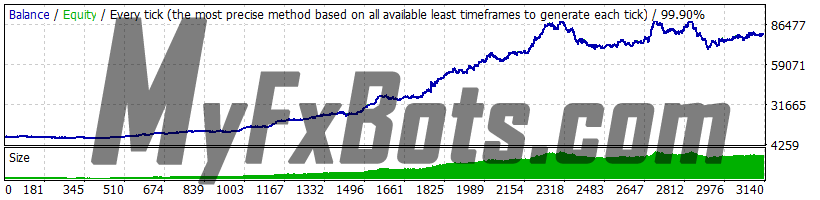
The combined configuration on GBPUSD at the fifteen-minute horizon, at the risk preset the vendor labels risk 2, on real-spread tick data from Dukascopy. This is the sterling counterpart of the realistic-feed euro run, and the comparison between the two is what the archive is built to support: same logic, same feed type, different instrument behaviour.
Backtests Settings
Symbol
GBPUSD
Period
15 Minutes (M15), 2010.01.04 03:00 - 2021.12.31 01:45
Timeframe
M15
Model
Every tick
Parameters
- A="===================="
- Use_FXCOMBO_Scalping=true
- Use_FXCOMBO_Breakout=true
- Use_FXCOMBO_Reversal=true
- Use_FXCOMBO_EuroRange=true
- B="===================="
- Use_ECN_Execution=true
- Hidden_StopAndTarget=false
- No_Hedge_Trades=false
- NFA_Compatibility=false
- C="===================="
- CommentSys1="*** 1 ***"
- CommentSys2="*** 2 ***"
- CommentSys3="*** 3 ***"
- CommentSys4="*** 4 ***"
- D="===================="
- Magic1=111
- Magic2=222
- Magic3=333
- Magic4=444
- E="===================="
- MaxSPREAD=4
- Slippage=2
- AutoGMT_Offset=true
- ManualGMT_Offset=2
- Calculate_DST=true
- EMAIL_Notification=false
- PUSH_Notification=false
- MFR="==== Monday-Friday Rules ===="
- MondayStartHour=0
- FridayExit=false
- LastTradeHour=19
- ExitHour=20
- MMSys1="==== FXCOMBO Scalping MM Parameters ===="
- RecoveryMode1=false
- RecoveryMultiplier1=1.05
- FixedLots1=0
- AutoMM1=2
- AutoMM_Max1=10
- MaximalLots1=100
- MMSys2="==== FXCOMBO Breakout MM Parameters ===="
- RecoveryMode2=false
- RecoveryMultiplier2=1.05
- FixedLots2=0
- AutoMM2=2
- AutoMM_Max2=10
- MaximalLots2=100
- MMSys3="==== FXCOMBO Reversal MM Parameters ===="
- RecoveryMode3=false
- RecoveryMultiplier3=1.05
- FixedLots3=0
- AutoMM3=2
- AutoMM_Max3=10
- MaximalLots3=100
- MMSys4="==== FXCOMBO EuroRange MM Parameters ===="
- RecoveryMode4=false
- RecoveryMultiplier4=1.05
- FixedLots4=0
- AutoMM4=2
- AutoMM_Max4=10
- MaximalLots4=100
- Scalping="==== FXCOMBO Scalping System Parameters ===="
- StopLoss=0
- TakeProfit=0
- TREND_STR=0
- OSC_open=0
- OSC_close=0
- Breakout="==== FXCOMBO Breakout System Parameters ===="
- TakeProfit_II=0
- StopLoss_II=0
- MaxPipsTrailing2=0
- MinPipsTrailing2=0
- Break=0
- ATRTrailingFactor2=0
- F_TrailingProfit_II=0
- F_Trailing_II=0
- Use_Exp_Trailing_II=-1
- Exp_Trail_Factor_II=0
- Reversal="==== FXCOMBO Reversal System Parameters ===="
- BegHourSys_III=0
- EndHourSys_III=0
- TakeProfit_III=0
- StopLoss_III=0
- MaxPipsTrailing3=0
- MinPipsTrailing3=0
- F_TrailingProfit_III=0
- F_Trailing_III=0
- Use_Exp_Trailing_III=-1
- Exp_Trail_Factor_III=0
- EuroRange="==== FXCOMBO EuroRange System Parameters ===="
- MaxRangePips=0
- BreakPips=0
- TargetPercent=0
- StopLoss_IV=0
- Use_Exp_Trailing_IV=-1
- Exp_Trail_Factor_IV=0
- ReverseTF=0
- ExitProfit=0
- NF="==== News Filter Settings ===="
- Include_Medium_News=true
- Wait_Before_News=30
- Wait_After_News=30
- NewsFilterSys1=false
- NewsFilterSys2=false
- NewsFilterSys3=false
- NewsFilterSys4=false
Bars in test
299252
Ticks modelled
230113610
Modelling quality
99.90%
Initial Deposit
$10000.00
Spread
Variable
Backtests Results
Total net profit
461371.25
Gross profit
208381.52
Gross loss
-391146.95
Profit factor
1.18
Expected payoff
22.45
Absolute Bal DD
35.50
Maximal Bal DD
9877.23 (21.86%)
Relative Bal DD
25.51% (1704.14)
Total Trades
3128
Short positions
1157 (63.96%)
Long positions
1465 (50.78%)
Profit trades
1590 (50.83%)
Loss trades
1538 (49.17%)
Largest Profit trade
3554.97
Largest Loss trade
-1272.41
Average Profit trade
290.17
Average Loss trade
-254.32
Maximum consecutive wins (profit in money)
11 (743.49)
Maximum consecutive losses (loss in money)
16 (-2828.91)
Maximal consecutive profit (count of wins)
7305.14 (3)
Maximal consecutive loss (count of losses)
-6712.36 (11)
Avarage consecutive wins
2
Avarage consecutive losses
2
It tests whether the four modules hold together on a more volatile pair once the feed stops being uniform. It includes no commission, swap or live-bridge latency, and it rests on a single tick archive. Its place in the set is the symbol-robustness check on realistic data, read with the equivalent euro statement.
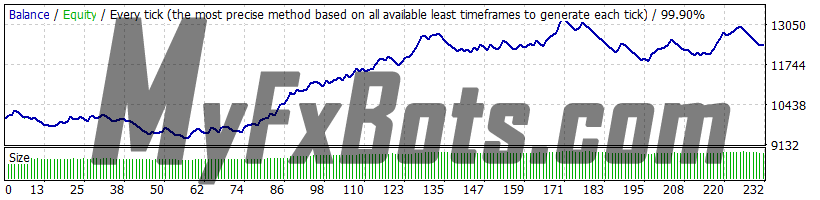
The range module alone on EURUSD at the fifteen-minute horizon, at the risk preset the vendor labels risk 2, on real-spread tick data from Dukascopy. Range logic depends on boundaries holding, and boundaries are where spreads widen, so this run tests whether the module's premise survives a variable cost base.
Backtests Settings
Symbol
EURUSD
Period
15 Minutes (M15), 2010.01.04 03:00 - 2021.12.31 01:45
Timeframe
M15
Model
Every tick
Parameters
- A="===================="
- Use_FXCOMBO_Scalping=false
- Use_FXCOMBO_Breakout=false
- Use_FXCOMBO_Reversal=false
- Use_FXCOMBO_EuroRange=true
- B="===================="
- Use_ECN_Execution=true
- Hidden_StopAndTarget=false
- No_Hedge_Trades=false
- NFA_Compatibility=false
- C="===================="
- CommentSys1="*** 1 ***"
- CommentSys2="*** 2 ***"
- CommentSys3="*** 3 ***"
- CommentSys4="*** 4 ***"
- D="===================="
- Magic1=111
- Magic2=222
- Magic3=333
- Magic4=444
- E="===================="
- MaxSPREAD=4
- Slippage=2
- AutoGMT_Offset=true
- ManualGMT_Offset=2
- Calculate_DST=true
- EMAIL_Notification=false
- PUSH_Notification=false
- MFR="==== Monday-Friday Rules ===="
- MondayStartHour=0
- FridayExit=false
- LastTradeHour=19
- ExitHour=20
- MMSys1="==== FXCOMBO Scalping MM Parameters ===="
- RecoveryMode1=false
- RecoveryMultiplier1=1.05
- FixedLots1=0
- AutoMM1=2
- AutoMM_Max1=10
- MaximalLots1=100
- MMSys2="==== FXCOMBO Breakout MM Parameters ===="
- RecoveryMode2=false
- RecoveryMultiplier2=1.05
- FixedLots2=0
- AutoMM2=2
- AutoMM_Max2=10
- MaximalLots2=100
- MMSys3="==== FXCOMBO Reversal MM Parameters ===="
- RecoveryMode3=false
- RecoveryMultiplier3=1.05
- FixedLots3=0
- AutoMM3=2
- AutoMM_Max3=10
- MaximalLots3=100
- MMSys4="==== FXCOMBO EuroRange MM Parameters ===="
- RecoveryMode4=false
- RecoveryMultiplier4=1.05
- FixedLots4=0
- AutoMM4=2
- AutoMM_Max4=10
- MaximalLots4=100
- Scalping="==== FXCOMBO Scalping System Parameters ===="
- StopLoss=0
- TakeProfit=0
- TREND_STR=0
- OSC_open=0
- OSC_close=0
- Breakout="==== FXCOMBO Breakout System Parameters ===="
- TakeProfit_II=0
- StopLoss_II=0
- MaxPipsTrailing2=0
- MinPipsTrailing2=0
- Break=0
- ATRTrailingFactor2=0
- F_TrailingProfit_II=0
- F_Trailing_II=0
- Use_Exp_Trailing_II=-1
- Exp_Trail_Factor_II=0
- Reversal="==== FXCOMBO Reversal System Parameters ===="
- BegHourSys_III=0
- EndHourSys_III=0
- TakeProfit_III=0
- StopLoss_III=0
- MaxPipsTrailing3=0
- MinPipsTrailing3=0
- F_TrailingProfit_III=0
- F_Trailing_III=0
- Use_Exp_Trailing_III=-1
- Exp_Trail_Factor_III=0
- EuroRange="==== FXCOMBO EuroRange System Parameters ===="
- MaxRangePips=0
- BreakPips=0
- TargetPercent=0
- StopLoss_IV=0
- Use_Exp_Trailing_IV=-1
- Exp_Trail_Factor_IV=0
- ReverseTF=0
- ExitProfit=0
- NF="==== News Filter Settings ===="
- Include_Medium_News=true
- Wait_Before_News=30
- Wait_After_News=30
- NewsFilterSys1=false
- NewsFilterSys2=false
- NewsFilterSys3=false
- NewsFilterSys4=false
Bars in test
299283
Ticks modelled
241986504
Modelling quality
99.90%
Initial Deposit
$10000.00
Spread
Variable
Backtests Results
Total net profit
12153.52
Gross profit
19182.16
Gross loss
-9751.50
Profit factor
1.25
Expected payoff
10.40
Absolute Bal DD
84.65
Maximal Bal DD
2642.66 (25.53%)
Relative Bal DD
25.53% (2642.66)
Total Trades
231
Short positions
264 (56.44%)
Long positions
109 (48.62%)
Profit trades
119 (51.52%)
Loss trades
112 (48.48%)
Largest Profit trade
245.96
Largest Loss trade
-108.78
Average Profit trade
102.13
Average Loss trade
-87.07
Maximum consecutive wins (profit in money)
7 (720.83)
Maximum consecutive losses (loss in money)
10 (-992.64)
Maximal consecutive profit (count of wins)
933.09 (6)
Maximal consecutive loss (count of losses)
-992.64 (10)
Avarage consecutive wins
2
Avarage consecutive losses
2
As a single-module record it isolates the range component under realistic spreads and pairs with the combined euro run for context. It does not model the news-driven spread spikes that most often break range assumptions, and it covers one symbol only. Read it as a robustness indicator rather than as evidence of return.
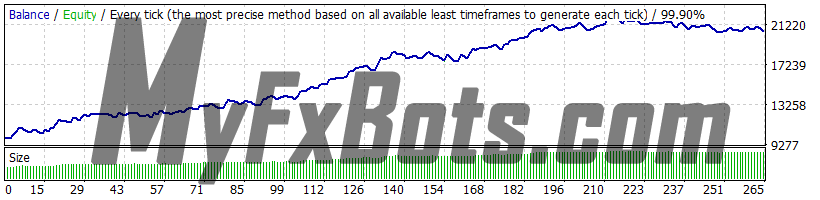
The counter-trend reversal component alone on EURUSD at the fifteen-minute horizon, at the risk preset the vendor labels risk 2, on real-spread tick data from Dukascopy. Reversal entries are placed against the prevailing move, where the book is often thinnest, so moving from a uniform spread to a variable one is the substantive change examined here.
Backtests Settings
Symbol
EURUSD
Period
15 Minutes (M15), 2010.01.04 03:00 - 2022.03.15 22:00
Timeframe
M15
Model
Every tick
Parameters
- A="===================="
- Use_FXCOMBO_Scalping=false
- Use_FXCOMBO_Breakout=false
- Use_FXCOMBO_Reversal=true
- Use_FXCOMBO_EuroRange=false
- B="===================="
- Use_ECN_Execution=true
- Hidden_StopAndTarget=false
- No_Hedge_Trades=false
- NFA_Compatibility=false
- C="===================="
- CommentSys1="*** 1 ***"
- CommentSys2="*** 2 ***"
- CommentSys3="*** 3 ***"
- CommentSys4="*** 4 ***"
- D="===================="
- Magic1=111
- Magic2=222
- Magic3=333
- Magic4=444
- E="===================="
- MaxSPREAD=4
- Slippage=2
- AutoGMT_Offset=true
- ManualGMT_Offset=2
- Calculate_DST=true
- EMAIL_Notification=false
- PUSH_Notification=false
- MFR="==== Monday-Friday Rules ===="
- MondayStartHour=0
- FridayExit=false
- LastTradeHour=19
- ExitHour=20
- MMSys1="==== FXCOMBO Scalping MM Parameters ===="
- RecoveryMode1=false
- RecoveryMultiplier1=1.05
- FixedLots1=0
- AutoMM1=2
- AutoMM_Max1=10
- MaximalLots1=100
- MMSys2="==== FXCOMBO Breakout MM Parameters ===="
- RecoveryMode2=false
- RecoveryMultiplier2=1.05
- FixedLots2=0
- AutoMM2=2
- AutoMM_Max2=10
- MaximalLots2=100
- MMSys3="==== FXCOMBO Reversal MM Parameters ===="
- RecoveryMode3=false
- RecoveryMultiplier3=1.05
- FixedLots3=0
- AutoMM3=2
- AutoMM_Max3=10
- MaximalLots3=100
- MMSys4="==== FXCOMBO EuroRange MM Parameters ===="
- RecoveryMode4=false
- RecoveryMultiplier4=1.05
- FixedLots4=0
- AutoMM4=2
- AutoMM_Max4=10
- MaximalLots4=100
- Scalping="==== FXCOMBO Scalping System Parameters ===="
- StopLoss=0
- TakeProfit=0
- TREND_STR=0
- OSC_open=0
- OSC_close=0
- Breakout="==== FXCOMBO Breakout System Parameters ===="
- TakeProfit_II=0
- StopLoss_II=0
- MaxPipsTrailing2=0
- MinPipsTrailing2=0
- Break=0
- ATRTrailingFactor2=0
- F_TrailingProfit_II=0
- F_Trailing_II=0
- Use_Exp_Trailing_II=-1
- Exp_Trail_Factor_II=0
- Reversal="==== FXCOMBO Reversal System Parameters ===="
- BegHourSys_III=0
- EndHourSys_III=0
- TakeProfit_III=0
- StopLoss_III=0
- MaxPipsTrailing3=0
- MinPipsTrailing3=0
- F_TrailingProfit_III=0
- F_Trailing_III=0
- Use_Exp_Trailing_III=-1
- Exp_Trail_Factor_III=0
- EuroRange="==== FXCOMBO EuroRange System Parameters ===="
- MaxRangePips=0
- BreakPips=0
- TargetPercent=0
- StopLoss_IV=0
- Use_Exp_Trailing_IV=-1
- Exp_Trail_Factor_IV=0
- ReverseTF=0
- ExitProfit=0
- NF="==== News Filter Settings ===="
- Include_Medium_News=true
- Wait_Before_News=30
- Wait_After_News=30
- NewsFilterSys1=false
- NewsFilterSys2=false
- NewsFilterSys3=false
- NewsFilterSys4=false
Bars in test
299283
Ticks modelled
241986504
Modelling quality
99.90%
Initial Deposit
$10000.00
Spread
Variable
Backtests Results
Total net profit
28185.60
Gross profit
25394.97
Gross loss
-17579.96
Profit factor
1.60
Expected payoff
40.17
Absolute Bal DD
73.08
Maximal Bal DD
1501.80 (10.63%)
Relative Bal DD
14.34% (881.55)
Total Trades
264
Short positions
169 (53.25%)
Long positions
124 (66.13%)
Profit trades
166 (62.88%)
Loss trades
98 (37.12%)
Largest Profit trade
610.48
Largest Loss trade
-266.01
Average Profit trade
169.79
Average Loss trade
-179.39
Maximum consecutive wins (profit in money)
13 (2110.14)
Maximum consecutive losses (loss in money)
4 (-538.82)
Maximal consecutive profit (count of wins)
2110.14 (13)
Maximal consecutive loss (count of losses)
-779.16 (3)
Avarage consecutive wins
3
Avarage consecutive losses
2
It shows how a counter-trend module behaves when spreads are allowed to vary, which is closer to live conditions. It cannot show fill quality at the turn, and with the other modules disabled it says nothing about how reversal trades offset breakout trades in the combined account. It is one component under one feed.
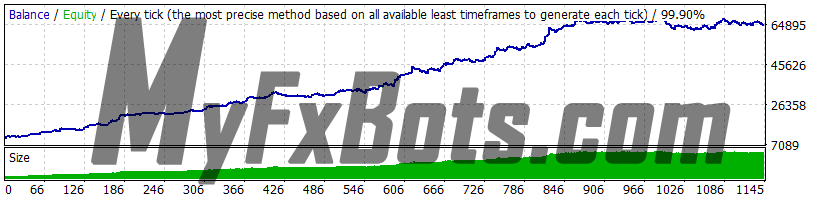
The Breakout module alone on EURUSD at the fifteen-minute horizon, at the risk preset the vendor labels risk 2, on real-spread tick data from Dukascopy. Because the module holds positions longer, the switch to a variable spread should disturb it less than the fast module; the run tests that expectation on the same symbol and window.
Backtests Settings
Symbol
EURUSD
Period
15 Minutes (M15), 2010.01.04 03:00 - 2022.03.15 20:30
Timeframe
M15
Model
Every tick
Parameters
- A="===================="
- Use_FXCOMBO_Scalping=false
- Use_FXCOMBO_Breakout=true
- Use_FXCOMBO_Reversal=false
- Use_FXCOMBO_EuroRange=false
- B="===================="
- Use_ECN_Execution=true
- Hidden_StopAndTarget=false
- No_Hedge_Trades=false
- NFA_Compatibility=false
- C="===================="
- CommentSys1="*** 1 ***"
- CommentSys2="*** 2 ***"
- CommentSys3="*** 3 ***"
- CommentSys4="*** 4 ***"
- D="===================="
- Magic1=111
- Magic2=222
- Magic3=333
- Magic4=444
- E="===================="
- MaxSPREAD=4
- Slippage=2
- AutoGMT_Offset=true
- ManualGMT_Offset=2
- Calculate_DST=true
- EMAIL_Notification=false
- PUSH_Notification=false
- MFR="==== Monday-Friday Rules ===="
- MondayStartHour=0
- FridayExit=false
- LastTradeHour=19
- ExitHour=20
- MMSys1="==== FXCOMBO Scalping MM Parameters ===="
- RecoveryMode1=false
- RecoveryMultiplier1=1.05
- FixedLots1=0
- AutoMM1=2
- AutoMM_Max1=10
- MaximalLots1=100
- MMSys2="==== FXCOMBO Breakout MM Parameters ===="
- RecoveryMode2=false
- RecoveryMultiplier2=1.05
- FixedLots2=0
- AutoMM2=2
- AutoMM_Max2=10
- MaximalLots2=100
- MMSys3="==== FXCOMBO Reversal MM Parameters ===="
- RecoveryMode3=false
- RecoveryMultiplier3=1.05
- FixedLots3=0
- AutoMM3=2
- AutoMM_Max3=10
- MaximalLots3=100
- MMSys4="==== FXCOMBO EuroRange MM Parameters ===="
- RecoveryMode4=false
- RecoveryMultiplier4=1.05
- FixedLots4=0
- AutoMM4=2
- AutoMM_Max4=10
- MaximalLots4=100
- Scalping="==== FXCOMBO Scalping System Parameters ===="
- StopLoss=0
- TakeProfit=0
- TREND_STR=0
- OSC_open=0
- OSC_close=0
- Breakout="==== FXCOMBO Breakout System Parameters ===="
- TakeProfit_II=0
- StopLoss_II=0
- MaxPipsTrailing2=0
- MinPipsTrailing2=0
- Break=0
- ATRTrailingFactor2=0
- F_TrailingProfit_II=0
- F_Trailing_II=0
- Use_Exp_Trailing_II=-1
- Exp_Trail_Factor_II=0
- Reversal="==== FXCOMBO Reversal System Parameters ===="
- BegHourSys_III=0
- EndHourSys_III=0
- TakeProfit_III=0
- StopLoss_III=0
- MaxPipsTrailing3=0
- MinPipsTrailing3=0
- F_TrailingProfit_III=0
- F_Trailing_III=0
- Use_Exp_Trailing_III=-1
- Exp_Trail_Factor_III=0
- EuroRange="==== FXCOMBO EuroRange System Parameters ===="
- MaxRangePips=0
- BreakPips=0
- TargetPercent=0
- StopLoss_IV=0
- Use_Exp_Trailing_IV=-1
- Exp_Trail_Factor_IV=0
- ReverseTF=0
- ExitProfit=0
- NF="==== News Filter Settings ===="
- Include_Medium_News=true
- Wait_Before_News=30
- Wait_After_News=30
- NewsFilterSys1=false
- NewsFilterSys2=false
- NewsFilterSys3=false
- NewsFilterSys4=false
Bars in test
299283
Ticks modelled
241986504
Modelling quality
99.90%
Initial Deposit
$10000.00
Spread
Variable
Backtests Results
Total net profit
192854.50
Gross profit
62239.92
Gross loss
-138028.57
Profit factor
1.40
Expected payoff
48.05
Absolute Bal DD
230.30
Maximal Bal DD
3530.82 (10.96%)
Relative Bal DD
11.90% (1599.66)
Total Trades
1141
Short positions
226 (32.30%)
Long positions
575 (44.35%)
Profit trades
534 (46.80%)
Loss trades
607 (53.20%)
Largest Profit trade
3354.73
Largest Loss trade
-466.14
Average Profit trade
361.15
Average Loss trade
-227.39
Maximum consecutive wins (profit in money)
10 (8225.25)
Maximum consecutive losses (loss in money)
6 (-1781.20)
Maximal consecutive profit (count of wins)
8225.25 (10)
Maximal consecutive loss (count of losses)
-2086.81 (5)
Avarage consecutive wins
2
Avarage consecutive losses
2
This is a component reading under realistic spreads and it complements the scalping record beside it, which is the useful pairing. It establishes nothing about slippage during the expansions the module trades, and it remains isolated from the three modules that share the account in the combined run.
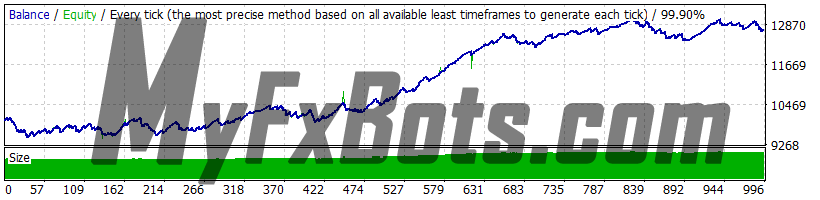
The Scalping module alone on EURUSD at the fifteen-minute horizon, at the risk preset the vendor labels risk 2, now on real-spread tick data from Dukascopy. Of all the components this is the one whose result depends most on the cost assumption, so the run exists to show what remains of the scalping edge once spreads vary as they do in a real book.
Backtests Settings
Symbol
EURUSD
Period
15 Minutes (M15), 2010.01.04 03:00 - 2022.03.15 18:45
Timeframe
M15
Model
Every tick
Parameters
- A="===================="
- Use_FXCOMBO_Scalping=true
- Use_FXCOMBO_Breakout=false
- Use_FXCOMBO_Reversal=false
- Use_FXCOMBO_EuroRange=false
- B="===================="
- Use_ECN_Execution=true
- Hidden_StopAndTarget=false
- No_Hedge_Trades=false
- NFA_Compatibility=false
- C="===================="
- CommentSys1="*** 1 ***"
- CommentSys2="*** 2 ***"
- CommentSys3="*** 3 ***"
- CommentSys4="*** 4 ***"
- D="===================="
- Magic1=111
- Magic2=222
- Magic3=333
- Magic4=444
- E="===================="
- MaxSPREAD=4
- Slippage=2
- AutoGMT_Offset=true
- ManualGMT_Offset=2
- Calculate_DST=true
- EMAIL_Notification=false
- PUSH_Notification=false
- MFR="==== Monday-Friday Rules ===="
- MondayStartHour=0
- FridayExit=false
- LastTradeHour=19
- ExitHour=20
- MMSys1="==== FXCOMBO Scalping MM Parameters ===="
- RecoveryMode1=false
- RecoveryMultiplier1=1.05
- FixedLots1=0
- AutoMM1=2
- AutoMM_Max1=10
- MaximalLots1=100
- MMSys2="==== FXCOMBO Breakout MM Parameters ===="
- RecoveryMode2=false
- RecoveryMultiplier2=1.05
- FixedLots2=0
- AutoMM2=2
- AutoMM_Max2=10
- MaximalLots2=100
- MMSys3="==== FXCOMBO Reversal MM Parameters ===="
- RecoveryMode3=false
- RecoveryMultiplier3=1.05
- FixedLots3=0
- AutoMM3=2
- AutoMM_Max3=10
- MaximalLots3=100
- MMSys4="==== FXCOMBO EuroRange MM Parameters ===="
- RecoveryMode4=false
- RecoveryMultiplier4=1.05
- FixedLots4=0
- AutoMM4=2
- AutoMM_Max4=10
- MaximalLots4=100
- Scalping="==== FXCOMBO Scalping System Parameters ===="
- StopLoss=0
- TakeProfit=0
- TREND_STR=0
- OSC_open=0
- OSC_close=0
- Breakout="==== FXCOMBO Breakout System Parameters ===="
- TakeProfit_II=0
- StopLoss_II=0
- MaxPipsTrailing2=0
- MinPipsTrailing2=0
- Break=0
- ATRTrailingFactor2=0
- F_TrailingProfit_II=0
- F_Trailing_II=0
- Use_Exp_Trailing_II=-1
- Exp_Trail_Factor_II=0
- Reversal="==== FXCOMBO Reversal System Parameters ===="
- BegHourSys_III=0
- EndHourSys_III=0
- TakeProfit_III=0
- StopLoss_III=0
- MaxPipsTrailing3=0
- MinPipsTrailing3=0
- F_TrailingProfit_III=0
- F_Trailing_III=0
- Use_Exp_Trailing_III=-1
- Exp_Trail_Factor_III=0
- EuroRange="==== FXCOMBO EuroRange System Parameters ===="
- MaxRangePips=0
- BreakPips=0
- TargetPercent=0
- StopLoss_IV=0
- Use_Exp_Trailing_IV=-1
- Exp_Trail_Factor_IV=0
- ReverseTF=0
- ExitProfit=0
- NF="==== News Filter Settings ===="
- Include_Medium_News=true
- Wait_Before_News=30
- Wait_After_News=30
- NewsFilterSys1=false
- NewsFilterSys2=false
- NewsFilterSys3=false
- NewsFilterSys4=false
Bars in test
299283
Ticks modelled
241986504
Modelling quality
99.90%
Initial Deposit
$10000.00
Spread
Variable
Backtests Results
Total net profit
2734.91
Gross profit
685014.64
Gross loss
-13712.34
Profit factor
1.20
Expected payoff
2.76
Absolute Bal DD
11.50
Maximal Bal DD
24703.99 (13.05%)
Relative Bal DD
15.17% (7007.66)
Total Trades
992
Short positions
1006 (66.40%)
Long positions
465 (75.05%)
Profit trades
743 (74.90%)
Loss trades
249 (25.10%)
Largest Profit trade
38.21
Largest Loss trade
-110.35
Average Profit trade
22.14
Average Loss trade
-55.07
Maximum consecutive wins (profit in money)
17 (466.98)
Maximum consecutive losses (loss in money)
4 (-51.23)
Maximal consecutive profit (count of wins)
466.98 (17)
Maximal consecutive loss (count of losses)
-254.76 (3)
Avarage consecutive wins
4
Avarage consecutive losses
1
This is the archive's main test of scalping fragility, and its natural comparator is the one-point history-centre version of the same module. It does not model commission, which a high-turnover routine pays most heavily, and it cannot reproduce rejected orders. Read it for direction of effect rather than for a return figure.
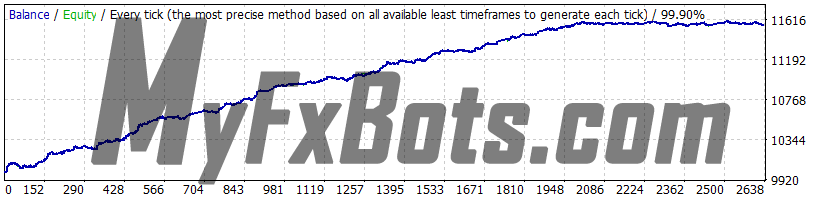
The same real-spread euro test with a fixed lot replacing the risk preset, on the fifteen-minute horizon, using tick data from Dukascopy. Holding size constant strips out compounding and makes the result comparable with the fixed-lot history-centre run, so the reader can see how much of the earlier curve was data quality and how much was sizing.
Backtests Settings
Symbol
EURUSD
Period
15 Minutes (M15), 2010.01.04 03:00 - 2021.12.31 01:45
Timeframe
M15
Model
Every tick
Parameters
- A="===================="
- Use_FXCOMBO_Scalping=true
- Use_FXCOMBO_Breakout=true
- Use_FXCOMBO_Reversal=true
- Use_FXCOMBO_EuroRange=true
- B="===================="
- Use_ECN_Execution=true
- Hidden_StopAndTarget=false
- No_Hedge_Trades=false
- NFA_Compatibility=false
- C="===================="
- CommentSys1="*** 1 ***"
- CommentSys2="*** 2 ***"
- CommentSys3="*** 3 ***"
- CommentSys4="*** 4 ***"
- D="===================="
- Magic1=111
- Magic2=222
- Magic3=333
- Magic4=444
- E="===================="
- MaxSPREAD=4
- Slippage=2
- AutoGMT_Offset=true
- ManualGMT_Offset=2
- Calculate_DST=true
- EMAIL_Notification=false
- PUSH_Notification=false
- MFR="==== Monday-Friday Rules ===="
- MondayStartHour=0
- FridayExit=false
- LastTradeHour=19
- ExitHour=20
- MMSys1="==== FXCOMBO Scalping MM Parameters ===="
- RecoveryMode1=false
- RecoveryMultiplier1=1.05
- FixedLots1=0.01
- AutoMM1=0
- AutoMM_Max1=10
- MaximalLots1=100
- MMSys2="==== FXCOMBO Breakout MM Parameters ===="
- RecoveryMode2=false
- RecoveryMultiplier2=1.05
- FixedLots2=0.01
- AutoMM2=0
- AutoMM_Max2=10
- MaximalLots2=100
- MMSys3="==== FXCOMBO Reversal MM Parameters ===="
- RecoveryMode3=false
- RecoveryMultiplier3=1.05
- FixedLots3=0.01
- AutoMM3=0
- AutoMM_Max3=10
- MaximalLots3=100
- MMSys4="==== FXCOMBO EuroRange MM Parameters ===="
- RecoveryMode4=false
- RecoveryMultiplier4=1.05
- FixedLots4=0.01
- AutoMM4=0
- AutoMM_Max4=10
- MaximalLots4=100
- Scalping="==== FXCOMBO Scalping System Parameters ===="
- StopLoss=0
- TakeProfit=0
- TREND_STR=0
- OSC_open=0
- OSC_close=0
- Breakout="==== FXCOMBO Breakout System Parameters ===="
- TakeProfit_II=0
- StopLoss_II=0
- MaxPipsTrailing2=0
- MinPipsTrailing2=0
- Break=0
- ATRTrailingFactor2=0
- F_TrailingProfit_II=0
- F_Trailing_II=0
- Use_Exp_Trailing_II=-1
- Exp_Trail_Factor_II=0
- Reversal="==== FXCOMBO Reversal System Parameters ===="
- BegHourSys_III=0
- EndHourSys_III=0
- TakeProfit_III=0
- StopLoss_III=0
- MaxPipsTrailing3=0
- MinPipsTrailing3=0
- F_TrailingProfit_III=0
- F_Trailing_III=0
- Use_Exp_Trailing_III=-1
- Exp_Trail_Factor_III=0
- EuroRange="==== FXCOMBO EuroRange System Parameters ===="
- MaxRangePips=0
- BreakPips=0
- TargetPercent=0
- StopLoss_IV=0
- Use_Exp_Trailing_IV=-1
- Exp_Trail_Factor_IV=0
- ReverseTF=0
- ExitProfit=0
- NF="==== News Filter Settings ===="
- Include_Medium_News=true
- Wait_Before_News=30
- Wait_After_News=30
- NewsFilterSys1=false
- NewsFilterSys2=false
- NewsFilterSys3=false
- NewsFilterSys4=false
Bars in test
299283
Ticks modelled
241986504
Modelling quality
99.90%
Initial Deposit
$10000.00
Spread
Variable
Backtests Results
Total net profit
1558.61
Gross profit
1302309.07
Gross loss
-3315.51
Profit factor
1.47
Expected payoff
0.59
Absolute Bal DD
11.50
Maximal Bal DD
52327.40 (17.30%)
Relative Bal DD
17.92% (12710.19)
Total Trades
2628
Short positions
1270 (64.33%)
Long positions
1273 (58.21%)
Profit trades
1566 (59.59%)
Loss trades
1062 (40.41%)
Largest Profit trade
31.94
Largest Loss trade
-6.17
Average Profit trade
3.11
Average Loss trade
-3.12
Maximum consecutive wins (profit in money)
16 (44.25)
Maximum consecutive losses (loss in money)
8 (-30.51)
Maximal consecutive profit (count of wins)
74.74 (9)
Maximal consecutive loss (count of losses)
-30.51 (8)
Avarage consecutive wins
3
Avarage consecutive losses
2
This is the cleanest fixed-size read on the euro combination under a realistic feed. It contains no commission, swap or broker-side latency, and it is still one instrument. Its role is to separate feed effects from sizing effects when the two euro runs are placed side by side.
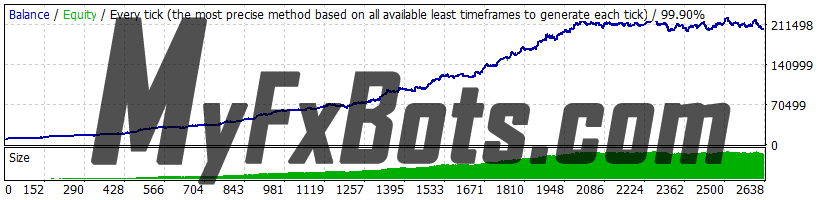
The combined four-module configuration on EURUSD at the fifteen-minute horizon, at the risk preset the vendor labels risk 2, but this time on real-spread tick data sourced from Dukascopy rather than a history-centre series. The change of feed is the substance: variable spreads and genuine tick arrival replace a uniform assumption, making this the closest the archive comes to a dealing-desk environment.
Backtests Settings
Symbol
EURUSD
Period
15 Minutes (M15), 2010.01.04 03:00 - 2022.03.14 03:15
Timeframe
M15
Model
Every tick
Parameters
- A="===================="
- Use_FXCOMBO_Scalping=true
- Use_FXCOMBO_Breakout=true
- Use_FXCOMBO_Reversal=true
- Use_FXCOMBO_EuroRange=true
- B="===================="
- Use_ECN_Execution=true
- Hidden_StopAndTarget=false
- No_Hedge_Trades=false
- NFA_Compatibility=false
- C="===================="
- CommentSys1="*** 1 ***"
- CommentSys2="*** 2 ***"
- CommentSys3="*** 3 ***"
- CommentSys4="*** 4 ***"
- D="===================="
- Magic1=111
- Magic2=222
- Magic3=333
- Magic4=444
- E="===================="
- MaxSPREAD=4
- Slippage=2
- AutoGMT_Offset=true
- ManualGMT_Offset=2
- Calculate_DST=true
- EMAIL_Notification=false
- PUSH_Notification=false
- MFR="==== Monday-Friday Rules ===="
- MondayStartHour=0
- FridayExit=false
- LastTradeHour=19
- ExitHour=20
- MMSys1="==== FXCOMBO Scalping MM Parameters ===="
- RecoveryMode1=false
- RecoveryMultiplier1=1.05
- FixedLots1=0
- AutoMM1=2
- AutoMM_Max1=10
- MaximalLots1=100
- MMSys2="==== FXCOMBO Breakout MM Parameters ===="
- RecoveryMode2=false
- RecoveryMultiplier2=1.05
- FixedLots2=0
- AutoMM2=2
- AutoMM_Max2=10
- MaximalLots2=100
- MMSys3="==== FXCOMBO Reversal MM Parameters ===="
- RecoveryMode3=false
- RecoveryMultiplier3=1.05
- FixedLots3=0
- AutoMM3=2
- AutoMM_Max3=10
- MaximalLots3=100
- MMSys4="==== FXCOMBO EuroRange MM Parameters ===="
- RecoveryMode4=false
- RecoveryMultiplier4=1.05
- FixedLots4=0
- AutoMM4=2
- AutoMM_Max4=10
- MaximalLots4=100
- Scalping="==== FXCOMBO Scalping System Parameters ===="
- StopLoss=0
- TakeProfit=0
- TREND_STR=0
- OSC_open=0
- OSC_close=0
- Breakout="==== FXCOMBO Breakout System Parameters ===="
- TakeProfit_II=0
- StopLoss_II=0
- MaxPipsTrailing2=0
- MinPipsTrailing2=0
- Break=0
- ATRTrailingFactor2=0
- F_TrailingProfit_II=0
- F_Trailing_II=0
- Use_Exp_Trailing_II=-1
- Exp_Trail_Factor_II=0
- Reversal="==== FXCOMBO Reversal System Parameters ===="
- BegHourSys_III=0
- EndHourSys_III=0
- TakeProfit_III=0
- StopLoss_III=0
- MaxPipsTrailing3=0
- MinPipsTrailing3=0
- F_TrailingProfit_III=0
- F_Trailing_III=0
- Use_Exp_Trailing_III=-1
- Exp_Trail_Factor_III=0
- EuroRange="==== FXCOMBO EuroRange System Parameters ===="
- MaxRangePips=0
- BreakPips=0
- TargetPercent=0
- StopLoss_IV=0
- Use_Exp_Trailing_IV=-1
- Exp_Trail_Factor_IV=0
- ReverseTF=0
- ExitProfit=0
- NF="==== News Filter Settings ===="
- Include_Medium_News=true
- Wait_Before_News=30
- Wait_After_News=30
- NewsFilterSys1=false
- NewsFilterSys2=false
- NewsFilterSys3=false
- NewsFilterSys4=false
Bars in test
299283
Ticks modelled
241986504
Modelling quality
99.90%
Initial Deposit
$10000.00
Spread
Variable
Backtests Results
Total net profit
193845.76
Gross profit
21932.61
Gross loss
-641835.17
Profit factor
1.30
Expected payoff
73.76
Absolute Bal DD
90.07
Maximal Bal DD
880.97 (11.69%)
Relative Bal DD
11.69% (880.97)
Total Trades
2628
Short positions
221 (57.92%)
Long positions
1273 (58.05%)
Profit trades
1562 (59.44%)
Loss trades
1066 (40.56%)
Largest Profit trade
10341.44
Largest Loss trade
-2677.58
Average Profit trade
535.01
Average Loss trade
-602.10
Maximum consecutive wins (profit in money)
16 (12687.47)
Maximum consecutive losses (loss in money)
8 (-1198.85)
Maximal consecutive profit (count of wins)
14625.92 (12)
Maximal consecutive loss (count of losses)
-7295.26 (4)
Avarage consecutive wins
3
Avarage consecutive losses
2
This is the more demanding version of the euro combination and should be read against the history-centre run with the same configuration: the difference between them is the value of the more realistic feed. It still assumes no commission and no requotes, and it is confined to one symbol.
The range module alone on GBPUSD at the fifteen-minute horizon, at the risk preset the vendor labels risk 2, over history-centre data at a fixed two-point spread, modelled every tick. Range entries sit closest to the market, so the cost assumption matters: the question is whether detection of non-trending conditions still produces a coherent curve on the pricier sterling data.
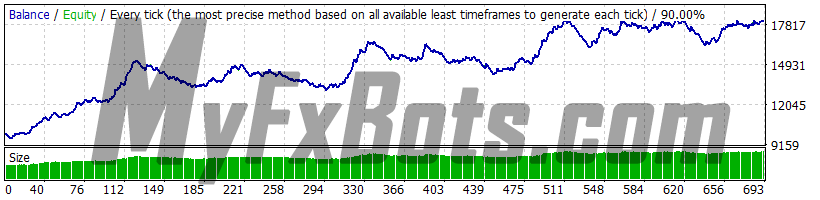
Backtests Settings
Symbol
GBPUSD
Period
15 Minutes (M15), 2010.01.04 - 2021.12.30
Timeframe
M15
Model
Every tick
Parameters
- A="===================="
- Use_FXCOMBO_Scalping=false
- Use_FXCOMBO_Breakout=false
- Use_FXCOMBO_Reversal=false
- Use_FXCOMBO_EuroRange=true
- B="===================="
- Use_ECN_Execution=true
- Hidden_StopAndTarget=false
- No_Hedge_Trades=false
- NFA_Compatibility=false
- C="===================="
- CommentSys1="*** 1 ***"
- CommentSys2="*** 2 ***"
- CommentSys3="*** 3 ***"
- CommentSys4="*** 4 ***"
- D="===================="
- Magic1=111
- Magic2=222
- Magic3=333
- Magic4=444
- E="===================="
- MaxSPREAD=4
- Slippage=2
- AutoGMT_Offset=true
- ManualGMT_Offset=2
- Calculate_DST=true
- EMAIL_Notification=false
- PUSH_Notification=false
- MFR="==== Monday-Friday Rules ===="
- MondayStartHour=0
- FridayExit=false
- LastTradeHour=19
- ExitHour=20
- MMSys1="==== FXCOMBO Scalping MM Parameters ===="
- RecoveryMode1=false
- RecoveryMultiplier1=1.05
- FixedLots1=0
- AutoMM1=2
- AutoMM_Max1=10
- MaximalLots1=100
- MMSys2="==== FXCOMBO Breakout MM Parameters ===="
- RecoveryMode2=false
- RecoveryMultiplier2=1.05
- FixedLots2=0
- AutoMM2=2
- AutoMM_Max2=10
- MaximalLots2=100
- MMSys3="==== FXCOMBO Reversal MM Parameters ===="
- RecoveryMode3=false
- RecoveryMultiplier3=1.05
- FixedLots3=0
- AutoMM3=2
- AutoMM_Max3=10
- MaximalLots3=100
- MMSys4="==== FXCOMBO EuroRange MM Parameters ===="
- RecoveryMode4=false
- RecoveryMultiplier4=1.05
- FixedLots4=0
- AutoMM4=2
- AutoMM_Max4=10
- MaximalLots4=100
- Scalping="==== FXCOMBO Scalping System Parameters ===="
- StopLoss=0
- TakeProfit=0
- TREND_STR=0
- OSC_open=0
- OSC_close=0
- Breakout="==== FXCOMBO Breakout System Parameters ===="
- TakeProfit_II=0
- StopLoss_II=0
- MaxPipsTrailing2=0
- MinPipsTrailing2=0
- Break=0
- ATRTrailingFactor2=0
- F_TrailingProfit_II=0
- F_Trailing_II=0
- Use_Exp_Trailing_II=-1
- Exp_Trail_Factor_II=0
- Reversal="==== FXCOMBO Reversal System Parameters ===="
- BegHourSys_III=0
- EndHourSys_III=0
- TakeProfit_III=0
- StopLoss_III=0
- MaxPipsTrailing3=0
- MinPipsTrailing3=0
- F_TrailingProfit_III=0
- F_Trailing_III=0
- Use_Exp_Trailing_III=-1
- Exp_Trail_Factor_III=0
- EuroRange="==== FXCOMBO EuroRange System Parameters ===="
- MaxRangePips=0
- BreakPips=0
- TargetPercent=0
- StopLoss_IV=0
- Use_Exp_Trailing_IV=-1
- Exp_Trail_Factor_IV=0
- ReverseTF=0
- ExitProfit=0
- NF="==== News Filter Settings ===="
- Include_Medium_News=true
- Wait_Before_News=30
- Wait_After_News=30
- NewsFilterSys1=false
- NewsFilterSys2=false
- NewsFilterSys3=false
- NewsFilterSys4=false
Bars in test
298138
Ticks modelled
208630526
Modelling quality
90.00%
Initial Deposit
$10000.00
Spread
2
Backtests Results
Total net profit
8118.97
Gross profit
41392.14
Gross loss
-38543.94
Profit factor
1.21
Expected payoff
11.77
Absolute Bal DD
1862.79
Maximal Bal DD
2309.54 (42.40%)
Relative Bal DD
42.40% (2309.54)
Total Trades
690
Short positions
706 (51.70%)
Long positions
336 (42.56%)
Profit trades
301 (43.62%)
Loss trades
389 (56.38%)
Largest Profit trade
467.39
Largest Loss trade
-142.53
Average Profit trade
155.03
Average Loss trade
-99.08
Maximum consecutive wins (profit in money)
8 (942.01)
Maximum consecutive losses (loss in money)
10 (-1120.30)
Maximal consecutive profit (count of wins)
1367.75 (6)
Maximal consecutive loss (count of losses)
-1120.30 (10)
Avarage consecutive wins
2
Avarage consecutive losses
2
As a single-module record it isolates the range logic and leaves the interaction question open. It also leaves open the behaviour of the module around news, when spreads widen fastest and range boundaries are least reliable. Its contribution is a cost-sensitivity reading on the second of the two pairs the vendor names first.
The counter-trend reversal component alone on GBPUSD at the fifteen-minute horizon, at the risk preset the vendor labels risk 2, over history-centre data at a fixed two-point spread, modelled every tick. Sterling's tendency to overshoot makes this the most demanding pairing in the archive for a reversal routine, and the cost assumption is deliberately less generous than the euro equivalent.
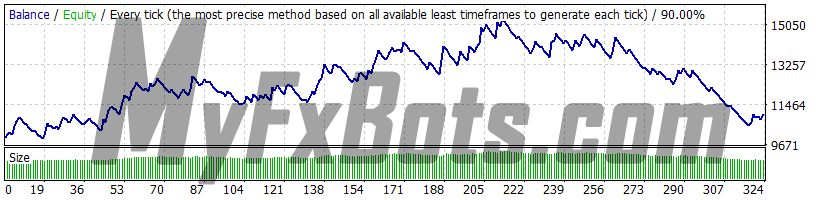
Backtests Settings
Symbol
GBPUSD
Period
15 Minutes (M15), 2010.01.04 - 2021.12.30
Timeframe
M15
Model
Every tick
Parameters
- A="===================="
- Use_FXCOMBO_Scalping=false
- Use_FXCOMBO_Breakout=false
- Use_FXCOMBO_Reversal=true
- Use_FXCOMBO_EuroRange=false
- B="===================="
- Use_ECN_Execution=true
- Hidden_StopAndTarget=false
- No_Hedge_Trades=false
- NFA_Compatibility=false
- C="===================="
- CommentSys1="*** 1 ***"
- CommentSys2="*** 2 ***"
- CommentSys3="*** 3 ***"
- CommentSys4="*** 4 ***"
- D="===================="
- Magic1=111
- Magic2=222
- Magic3=333
- Magic4=444
- E="===================="
- MaxSPREAD=4
- Slippage=2
- AutoGMT_Offset=true
- ManualGMT_Offset=2
- Calculate_DST=true
- EMAIL_Notification=false
- PUSH_Notification=false
- MFR="==== Monday-Friday Rules ===="
- MondayStartHour=0
- FridayExit=false
- LastTradeHour=19
- ExitHour=20
- MMSys1="==== FXCOMBO Scalping MM Parameters ===="
- RecoveryMode1=false
- RecoveryMultiplier1=1.05
- FixedLots1=0
- AutoMM1=2
- AutoMM_Max1=10
- MaximalLots1=100
- MMSys2="==== FXCOMBO Breakout MM Parameters ===="
- RecoveryMode2=false
- RecoveryMultiplier2=1.05
- FixedLots2=0
- AutoMM2=2
- AutoMM_Max2=10
- MaximalLots2=100
- MMSys3="==== FXCOMBO Reversal MM Parameters ===="
- RecoveryMode3=false
- RecoveryMultiplier3=1.05
- FixedLots3=0
- AutoMM3=2
- AutoMM_Max3=10
- MaximalLots3=100
- MMSys4="==== FXCOMBO EuroRange MM Parameters ===="
- RecoveryMode4=false
- RecoveryMultiplier4=1.05
- FixedLots4=0
- AutoMM4=2
- AutoMM_Max4=10
- MaximalLots4=100
- Scalping="==== FXCOMBO Scalping System Parameters ===="
- StopLoss=0
- TakeProfit=0
- TREND_STR=0
- OSC_open=0
- OSC_close=0
- Breakout="==== FXCOMBO Breakout System Parameters ===="
- TakeProfit_II=0
- StopLoss_II=0
- MaxPipsTrailing2=0
- MinPipsTrailing2=0
- Break=0
- ATRTrailingFactor2=0
- F_TrailingProfit_II=0
- F_Trailing_II=0
- Use_Exp_Trailing_II=-1
- Exp_Trail_Factor_II=0
- Reversal="==== FXCOMBO Reversal System Parameters ===="
- BegHourSys_III=0
- EndHourSys_III=0
- TakeProfit_III=0
- StopLoss_III=0
- MaxPipsTrailing3=0
- MinPipsTrailing3=0
- F_TrailingProfit_III=0
- F_Trailing_III=0
- Use_Exp_Trailing_III=-1
- Exp_Trail_Factor_III=0
- EuroRange="==== FXCOMBO EuroRange System Parameters ===="
- MaxRangePips=0
- BreakPips=0
- TargetPercent=0
- StopLoss_IV=0
- Use_Exp_Trailing_IV=-1
- Exp_Trail_Factor_IV=0
- ReverseTF=0
- ExitProfit=0
- NF="==== News Filter Settings ===="
- Include_Medium_News=true
- Wait_Before_News=30
- Wait_After_News=30
- NewsFilterSys1=false
- NewsFilterSys2=false
- NewsFilterSys3=false
- NewsFilterSys4=false
Bars in test
298138
Ticks modelled
208630526
Modelling quality
90.00%
Initial Deposit
$10000.00
Spread
2
Backtests Results
Total net profit
28586.33
Gross profit
145793.72
Gross loss
-27557.13
Profit factor
1.04
Expected payoff
3.19
Absolute Bal DD
588.63
Maximal Bal DD
11491.77 (16.88%)
Relative Bal DD
20.74% (1702.18)
Total Trades
323
Short positions
253 (79.84%)
Long positions
156 (35.90%)
Profit trades
112 (34.67%)
Loss trades
211 (65.33%)
Largest Profit trade
694.60
Largest Loss trade
-157.82
Average Profit trade
255.24
Average Loss trade
-130.60
Maximum consecutive wins (profit in money)
4 (1325.75)
Maximum consecutive losses (loss in money)
9 (-1114.07)
Maximal consecutive profit (count of wins)
1325.75 (4)
Maximal consecutive loss (count of losses)
-1114.07 (9)
Avarage consecutive wins
2
Avarage consecutive losses
3
The statement is a stress-oriented component test rather than a performance claim: it shows how the reversal logic copes with a wider cost base on a pair that trends hard. It cannot speak for fill quality at the moment of reversal, and it is isolated from the three modules that would normally share the account.
The Breakout module alone on GBPUSD at the fifteen-minute horizon, at the risk preset the vendor labels risk 2, over history-centre data at a fixed two-point spread, modelled every tick. Because the module holds positions longer, the wider spread should matter less here than in the scalping run; the record allows that expectation to be checked.
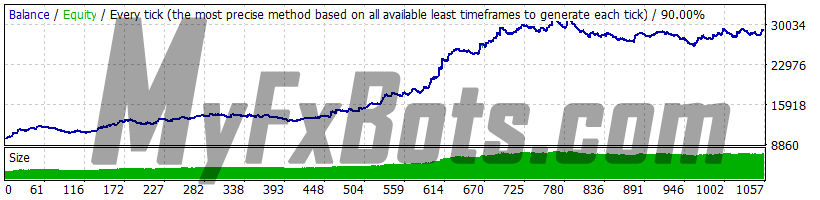
Backtests Settings
Symbol
GBPUSD
Period
15 Minutes (M15), 2010.01.04 - 2021.12.30
Timeframe
M15
Model
Every tick
Parameters
- A="===================="
- Use_FXCOMBO_Scalping=false
- Use_FXCOMBO_Breakout=true
- Use_FXCOMBO_Reversal=false
- Use_FXCOMBO_EuroRange=false
- B="===================="
- Use_ECN_Execution=true
- Hidden_StopAndTarget=false
- No_Hedge_Trades=false
- NFA_Compatibility=false
- C="===================="
- CommentSys1="*** 1 ***"
- CommentSys2="*** 2 ***"
- CommentSys3="*** 3 ***"
- CommentSys4="*** 4 ***"
- D="===================="
- Magic1=111
- Magic2=222
- Magic3=333
- Magic4=444
- E="===================="
- MaxSPREAD=4
- Slippage=2
- AutoGMT_Offset=true
- ManualGMT_Offset=2
- Calculate_DST=true
- EMAIL_Notification=false
- PUSH_Notification=false
- MFR="==== Monday-Friday Rules ===="
- MondayStartHour=0
- FridayExit=false
- LastTradeHour=19
- ExitHour=20
- MMSys1="==== FXCOMBO Scalping MM Parameters ===="
- RecoveryMode1=false
- RecoveryMultiplier1=1.05
- FixedLots1=0
- AutoMM1=2
- AutoMM_Max1=10
- MaximalLots1=100
- MMSys2="==== FXCOMBO Breakout MM Parameters ===="
- RecoveryMode2=false
- RecoveryMultiplier2=1.05
- FixedLots2=0
- AutoMM2=2
- AutoMM_Max2=10
- MaximalLots2=100
- MMSys3="==== FXCOMBO Reversal MM Parameters ===="
- RecoveryMode3=false
- RecoveryMultiplier3=1.05
- FixedLots3=0
- AutoMM3=2
- AutoMM_Max3=10
- MaximalLots3=100
- MMSys4="==== FXCOMBO EuroRange MM Parameters ===="
- RecoveryMode4=false
- RecoveryMultiplier4=1.05
- FixedLots4=0
- AutoMM4=2
- AutoMM_Max4=10
- MaximalLots4=100
- Scalping="==== FXCOMBO Scalping System Parameters ===="
- StopLoss=0
- TakeProfit=0
- TREND_STR=0
- OSC_open=0
- OSC_close=0
- Breakout="==== FXCOMBO Breakout System Parameters ===="
- TakeProfit_II=0
- StopLoss_II=0
- MaxPipsTrailing2=0
- MinPipsTrailing2=0
- Break=0
- ATRTrailingFactor2=0
- F_TrailingProfit_II=0
- F_Trailing_II=0
- Use_Exp_Trailing_II=-1
- Exp_Trail_Factor_II=0
- Reversal="==== FXCOMBO Reversal System Parameters ===="
- BegHourSys_III=0
- EndHourSys_III=0
- TakeProfit_III=0
- StopLoss_III=0
- MaxPipsTrailing3=0
- MinPipsTrailing3=0
- F_TrailingProfit_III=0
- F_Trailing_III=0
- Use_Exp_Trailing_III=-1
- Exp_Trail_Factor_III=0
- EuroRange="==== FXCOMBO EuroRange System Parameters ===="
- MaxRangePips=0
- BreakPips=0
- TargetPercent=0
- StopLoss_IV=0
- Use_Exp_Trailing_IV=-1
- Exp_Trail_Factor_IV=0
- ReverseTF=0
- ExitProfit=0
- NF="==== News Filter Settings ===="
- Include_Medium_News=true
- Wait_Before_News=30
- Wait_After_News=30
- NewsFilterSys1=false
- NewsFilterSys2=false
- NewsFilterSys3=false
- NewsFilterSys4=false
Bars in test
298138
Ticks modelled
208630526
Modelling quality
90.00%
Initial Deposit
$10000.00
Spread
2
Backtests Results
Total net profit
79803.20
Gross profit
49920.81
Gross loss
-60735.35
Profit factor
1.31
Expected payoff
18.11
Absolute Bal DD
285.71
Maximal Bal DD
1117.43 (19.16%)
Relative Bal DD
19.16% (1117.43)
Total Trades
1053
Short positions
440 (49.55%)
Long positions
497 (36.22%)
Profit trades
369 (35.04%)
Loss trades
684 (64.96%)
Largest Profit trade
1797.46
Largest Loss trade
-148.35
Average Profit trade
216.27
Average Loss trade
-88.79
Maximum consecutive wins (profit in money)
5 (895.49)
Maximum consecutive losses (loss in money)
17 (-2429.05)
Maximal consecutive profit (count of wins)
1853.50 (4)
Maximal consecutive loss (count of losses)
-2429.05 (17)
Avarage consecutive wins
1
Avarage consecutive losses
3
It tells the reader how a directional module on a volatile pair responds to a less favourable cost assumption, and it pairs naturally with the scalping statement on the same symbol and feed. It does not model slippage on entry during expansion, which is precisely when such logic is most likely to be filled badly.
The Scalping module alone on GBPUSD at the fifteen-minute horizon, at the risk preset the vendor labels risk 2, over history-centre data at a fixed two-point spread and modelled every tick. The wider spread assumption is the point: a high-frequency routine is the most cost-sensitive part of the design.
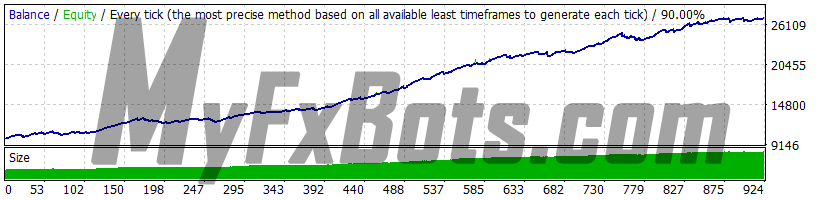
Backtests Settings
Symbol
GBPUSD
Period
15 Minutes (M15), 2010.01.04 - 2021.12.30
Timeframe
M15
Model
Every tick
Parameters
- A="===================="
- Use_FXCOMBO_Scalping=true
- Use_FXCOMBO_Breakout=false
- Use_FXCOMBO_Reversal=false
- Use_FXCOMBO_EuroRange=false
- B="===================="
- Use_ECN_Execution=true
- Hidden_StopAndTarget=false
- No_Hedge_Trades=false
- NFA_Compatibility=false
- C="===================="
- CommentSys1="*** 1 ***"
- CommentSys2="*** 2 ***"
- CommentSys3="*** 3 ***"
- CommentSys4="*** 4 ***"
- D="===================="
- Magic1=111
- Magic2=222
- Magic3=333
- Magic4=444
- E="===================="
- MaxSPREAD=4
- Slippage=2
- AutoGMT_Offset=true
- ManualGMT_Offset=2
- Calculate_DST=true
- EMAIL_Notification=false
- PUSH_Notification=false
- MFR="==== Monday-Friday Rules ===="
- MondayStartHour=0
- FridayExit=false
- LastTradeHour=19
- ExitHour=20
- MMSys1="==== FXCOMBO Scalping MM Parameters ===="
- RecoveryMode1=false
- RecoveryMultiplier1=1.05
- FixedLots1=0
- AutoMM1=2
- AutoMM_Max1=10
- MaximalLots1=100
- MMSys2="==== FXCOMBO Breakout MM Parameters ===="
- RecoveryMode2=false
- RecoveryMultiplier2=1.05
- FixedLots2=0
- AutoMM2=2
- AutoMM_Max2=10
- MaximalLots2=100
- MMSys3="==== FXCOMBO Reversal MM Parameters ===="
- RecoveryMode3=false
- RecoveryMultiplier3=1.05
- FixedLots3=0
- AutoMM3=2
- AutoMM_Max3=10
- MaximalLots3=100
- MMSys4="==== FXCOMBO EuroRange MM Parameters ===="
- RecoveryMode4=false
- RecoveryMultiplier4=1.05
- FixedLots4=0
- AutoMM4=2
- AutoMM_Max4=10
- MaximalLots4=100
- Scalping="==== FXCOMBO Scalping System Parameters ===="
- StopLoss=0
- TakeProfit=0
- TREND_STR=0
- OSC_open=0
- OSC_close=0
- Breakout="==== FXCOMBO Breakout System Parameters ===="
- TakeProfit_II=0
- StopLoss_II=0
- MaxPipsTrailing2=0
- MinPipsTrailing2=0
- Break=0
- ATRTrailingFactor2=0
- F_TrailingProfit_II=0
- F_Trailing_II=0
- Use_Exp_Trailing_II=-1
- Exp_Trail_Factor_II=0
- Reversal="==== FXCOMBO Reversal System Parameters ===="
- BegHourSys_III=0
- EndHourSys_III=0
- TakeProfit_III=0
- StopLoss_III=0
- MaxPipsTrailing3=0
- MinPipsTrailing3=0
- F_TrailingProfit_III=0
- F_Trailing_III=0
- Use_Exp_Trailing_III=-1
- Exp_Trail_Factor_III=0
- EuroRange="==== FXCOMBO EuroRange System Parameters ===="
- MaxRangePips=0
- BreakPips=0
- TargetPercent=0
- StopLoss_IV=0
- Use_Exp_Trailing_IV=-1
- Exp_Trail_Factor_IV=0
- ReverseTF=0
- ExitProfit=0
- NF="==== News Filter Settings ===="
- Include_Medium_News=true
- Wait_Before_News=30
- Wait_After_News=30
- NewsFilterSys1=false
- NewsFilterSys2=false
- NewsFilterSys3=false
- NewsFilterSys4=false
Bars in test
298138
Ticks modelled
208630526
Modelling quality
90.00%
Initial Deposit
$10000.00
Spread
2
Backtests Results
Total net profit
17035.98
Gross profit
127984.96
Gross loss
-19591.65
Profit factor
1.87
Expected payoff
18.52
Absolute Bal DD
12.50
Maximal Bal DD
3698.63 (7.70%)
Relative Bal DD
11.45% (651.40)
Total Trades
920
Short positions
1196 (74.00%)
Long positions
464 (79.31%)
Profit trades
732 (79.57%)
Loss trades
188 (20.43%)
Largest Profit trade
115.87
Largest Loss trade
-389.08
Average Profit trade
50.04
Average Loss trade
-104.21
Maximum consecutive wins (profit in money)
21 (833.29)
Maximum consecutive losses (loss in money)
5 (-112.08)
Maximal consecutive profit (count of wins)
1085.03 (12)
Maximal consecutive loss (count of losses)
-627.60 (2)
Avarage consecutive wins
5
Avarage consecutive losses
1
Against the same module on the cheaper euro assumption, it indicates how quickly a scalping edge erodes as the spread assumption widens. That is a useful sensitivity check, but it is still one broker's synthetic series without commission, and it says nothing about the combination.
GBPUSD at the fifteen-minute horizon with all four modules enabled and a fixed lot in place of a risk preset, on history-centre data at a fixed one-point spread, modelled every tick. Removing risk-based sizing makes the sterling run comparable with the fixed-lot euro run and shows the strategy's contribution without compounding.
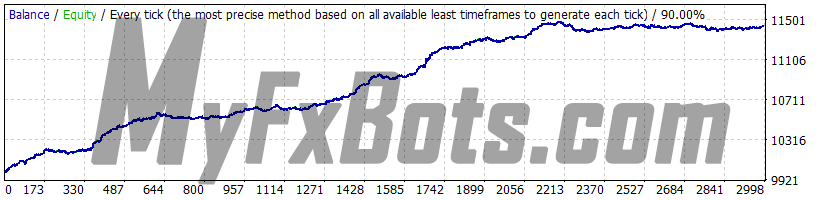
Backtests Settings
Symbol
GBPUSD
Period
15 Minutes (M15), 2010.01.04 - 2021.12.30
Timeframe
M15
Model
Every tick
Parameters
- A="===================="
- Use_FXCOMBO_Scalping=true
- Use_FXCOMBO_Breakout=true
- Use_FXCOMBO_Reversal=true
- Use_FXCOMBO_EuroRange=true
- B="===================="
- Use_ECN_Execution=true
- Hidden_StopAndTarget=false
- No_Hedge_Trades=false
- NFA_Compatibility=false
- C="===================="
- CommentSys1="*** 1 ***"
- CommentSys2="*** 2 ***"
- CommentSys3="*** 3 ***"
- CommentSys4="*** 4 ***"
- D="===================="
- Magic1=111
- Magic2=222
- Magic3=333
- Magic4=444
- E="===================="
- MaxSPREAD=4
- Slippage=2
- AutoGMT_Offset=true
- ManualGMT_Offset=2
- Calculate_DST=true
- EMAIL_Notification=false
- PUSH_Notification=false
- MFR="==== Monday-Friday Rules ===="
- MondayStartHour=0
- FridayExit=false
- LastTradeHour=19
- ExitHour=20
- MMSys1="==== FXCOMBO Scalping MM Parameters ===="
- RecoveryMode1=false
- RecoveryMultiplier1=1.05
- FixedLots1=0.01
- AutoMM1=0
- AutoMM_Max1=10
- MaximalLots1=100
- MMSys2="==== FXCOMBO Breakout MM Parameters ===="
- RecoveryMode2=false
- RecoveryMultiplier2=1.05
- FixedLots2=0.01
- AutoMM2=0
- AutoMM_Max2=10
- MaximalLots2=100
- MMSys3="==== FXCOMBO Reversal MM Parameters ===="
- RecoveryMode3=false
- RecoveryMultiplier3=1.05
- FixedLots3=0.01
- AutoMM3=0
- AutoMM_Max3=10
- MaximalLots3=100
- MMSys4="==== FXCOMBO EuroRange MM Parameters ===="
- RecoveryMode4=false
- RecoveryMultiplier4=1.05
- FixedLots4=0.01
- AutoMM4=0
- AutoMM_Max4=10
- MaximalLots4=100
- Scalping="==== FXCOMBO Scalping System Parameters ===="
- StopLoss=0
- TakeProfit=0
- TREND_STR=0
- OSC_open=0
- OSC_close=0
- Breakout="==== FXCOMBO Breakout System Parameters ===="
- TakeProfit_II=0
- StopLoss_II=0
- MaxPipsTrailing2=0
- MinPipsTrailing2=0
- Break=0
- ATRTrailingFactor2=0
- F_TrailingProfit_II=0
- F_Trailing_II=0
- Use_Exp_Trailing_II=-1
- Exp_Trail_Factor_II=0
- Reversal="==== FXCOMBO Reversal System Parameters ===="
- BegHourSys_III=0
- EndHourSys_III=0
- TakeProfit_III=0
- StopLoss_III=0
- MaxPipsTrailing3=0
- MinPipsTrailing3=0
- F_TrailingProfit_III=0
- F_Trailing_III=0
- Use_Exp_Trailing_III=-1
- Exp_Trail_Factor_III=0
- EuroRange="==== FXCOMBO EuroRange System Parameters ===="
- MaxRangePips=0
- BreakPips=0
- TargetPercent=0
- StopLoss_IV=0
- Use_Exp_Trailing_IV=-1
- Exp_Trail_Factor_IV=0
- ReverseTF=0
- ExitProfit=0
- NF="==== News Filter Settings ===="
- Include_Medium_News=true
- Wait_Before_News=30
- Wait_After_News=30
- NewsFilterSys1=false
- NewsFilterSys2=false
- NewsFilterSys3=false
- NewsFilterSys4=false
Bars in test
298138
Ticks modelled
208630526
Modelling quality
90.00%
Initial Deposit
$10000.00
Spread
1
Backtests Results
Total net profit
5796.86
Gross profit
137683.76
Gross loss
-4348.58
Profit factor
1.33
Expected payoff
0.49
Absolute Bal DD
67.29
Maximal Bal DD
1932.87 (12.87%)
Relative Bal DD
25.98% (1762.39)
Total Trades
2986
Short positions
2585 (64.26%)
Long positions
1453 (51.69%)
Profit trades
1518 (50.84%)
Loss trades
1468 (49.16%)
Largest Profit trade
39.94
Largest Loss trade
-7.18
Average Profit trade
3.82
Average Loss trade
-2.96
Maximum consecutive wins (profit in money)
10 (24.72)
Maximum consecutive losses (loss in money)
8 (-31.16)
Maximal consecutive profit (count of wins)
87.82 (3)
Maximal consecutive loss (count of losses)
-31.16 (8)
Avarage consecutive wins
2
Avarage consecutive losses
2
This is the sizing-neutral version of the sterling combination, useful for judging signal quality and for comparing with the risk-sized record beside it. It remains a synthetic-feed exercise without commission, and it does not show whether the modules would have survived the wider spreads sterling quotes in fast conditions.
The combined configuration repeated on GBPUSD at the fifteen-minute horizon, at the risk preset the vendor labels risk 2, using history-centre data at a fixed one-point spread with every-tick modelling. Sterling carries wider typical ranges than the euro, so this is the first test in the archive of whether the four modules behave comparably on a more volatile instrument.
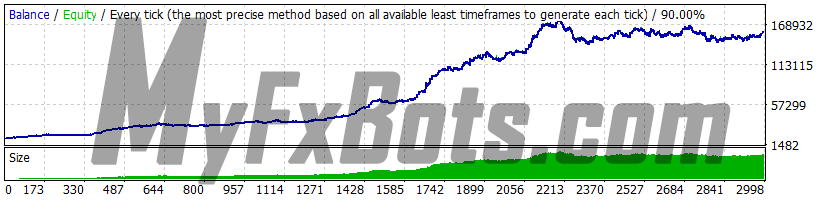
Backtests Settings
Symbol
GBPUSD
Period
15 Minutes (M15), 2010.01.04 - 2021.12.30
Timeframe
M15
Model
Every tick
Parameters
- A="====================" Use_FXCOMBO_Scalping=true Use_FXCOMBO_Breakout=true Use_FXCOMBO_Reversal=true Use_FXCOMBO_EuroRange=true B="====================" Use_ECN_Execution=true Hidden_StopAndTarget=false No_Hedge_Trades=false NFA_Compatibility=false C="====================" CommentSys1="*** 1 ***" CommentSys2="*** 2 ***" CommentSys3="*** 3 ***" CommentSys4="*** 4 ***" D="====================" Magic1=111 Magic2=222 Magic3=333 Magic4=444 E="====================" MaxSPREAD=4 Slippage=2 AutoGMT_Offset=true ManualGMT_Offset=2 Calculate_DST=true EMAIL_Notification=false PUSH_Notification=false MFR="==== Monday-Friday Rules ====" MondayStartHour=0 FridayExit=false LastTradeHour=19 ExitHour=20 MMSys1="==== FXCOMBO Scalping MM Parameters ====" RecoveryMode1=false RecoveryMultiplier1=1.05 FixedLots1=0 AutoMM1=2 AutoMM_Max1=10 MaximalLots1=100 MMSys2="==== FXCOMBO Breakout MM Parameters ====" RecoveryMode2=false RecoveryMultiplier2=1.05 FixedLots2=0 AutoMM2=2 AutoMM_Max2=10 MaximalLots2=100 MMSys3="==== FXCOMBO Reversal MM Parameters ====" RecoveryMode3=false RecoveryMultiplier3=1.05 FixedLots3=0 AutoMM3=2 AutoMM_Max3=10 MaximalLots3=100 MMSys4="==== FXCOMBO EuroRange MM Parameters ====" RecoveryMode4=false RecoveryMultiplier4=1.05 FixedLots4=0 AutoMM4=2 AutoMM_Max4=10 MaximalLots4=100 Scalping="==== FXCOMBO Scalping System Parameters ====" StopLoss=0 TakeProfit=0 TREND_STR=0 OSC_open=0 OSC_close=0 Breakout="==== FXCOMBO Breakout System Parameters ====" TakeProfit_II=0 StopLoss_II=0 MaxPipsTrailing2=0 MinPipsTrailing2=0 Break=0 ATRTrailingFactor2=0 F_TrailingProfit_II=0 F_Trailing_II=0 Use_Exp_Trailing_II=-1 Exp_Trail_Factor_II=0 Reversal="==== FXCOMBO Reversal System Parameters ====" BegHourSys_III=0 EndHourSys_III=0 TakeProfit_III=0 StopLoss_III=0 MaxPipsTrailing3=0 MinPipsTrailing3=0 F_TrailingProfit_III=0 F_Trailing_III=0 Use_Exp_Trailing_III=-1 Exp_Trail_Factor_III=0 EuroRange="==== FXCOMBO EuroRange System Parameters ====" MaxRangePips=0 BreakPips=0 TargetPercent=0 StopLoss_IV=0 Use_Exp_Trailing_IV=-1 Exp_Trail_Factor_IV=0 ReverseTF=0 ExitProfit=0 NF="==== News Filter Settings ====" Include_Medium_News=true Wait_Before_News=30 Wait_After_News=30 NewsFilterSys1=false NewsFilterSys2=false NewsFilterSys3=false NewsFilterSys4=false
Bars in test
298138
Ticks modelled
208630526
Modelling quality
90.00%
Initial Deposit
$10000.00
Spread
1
Backtests Results
Total net profit
150419.55
Gross profit
8777717.03
Gross loss
-722836.11
Profit factor
1.21
Expected payoff
50.37
Absolute Bal DD
129.14
Maximal Bal DD
274864.00 (11.31%)
Relative Bal DD
32.79% (10005.37)
Total Trades
2986
Short positions
2585 (64.26%)
Long positions
1453 (51.55%)
Profit trades
1516 (50.77%)
Loss trades
1470 (49.23%)
Largest Profit trade
6990.11
Largest Loss trade
-2354.96
Average Profit trade
576.03
Average Loss trade
-491.73
Maximum consecutive wins (profit in money)
10 (7405.48)
Maximum consecutive losses (loss in money)
8 (-9762.58)
Maximal consecutive profit (count of wins)
13508.53 (3)
Maximal consecutive loss (count of losses)
-9762.58 (8)
Avarage consecutive wins
2
Avarage consecutive losses
2
It allows a like-for-like comparison with the EURUSD combination on the same feed, which is its main use. It adds no evidence on execution, commission or the spread actually available on sterling, and it covers one broker's historical series only. Read it as a robustness check on the symbol dimension.
The range module alone is enabled on EURUSD at the fifteen-minute horizon, at the risk preset the vendor labels risk 2, over history-centre data at a fixed one-point spread, modelled every tick. The vendor's premise is that a large share of trading time is non-trending, so this run asks what the range logic produces away from the three trend-oriented modules.
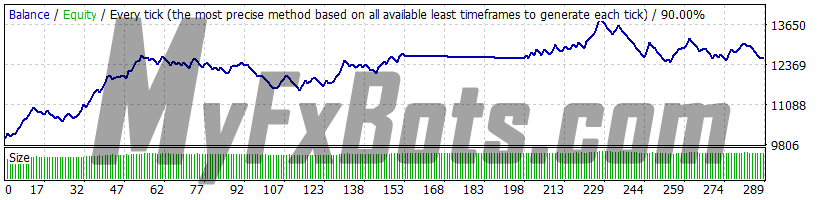
Backtests Settings
Symbol
EURUSD
Period
15 Minutes (M15), 2010.01.04 - 2021.12.30
Timeframe
M15
Model
Every tick
Parameters
- A="====================" Use_FXCOMBO_Scalping=false Use_FXCOMBO_Breakout=false Use_FXCOMBO_Reversal=false Use_FXCOMBO_EuroRange=true B="====================" Use_ECN_Execution=true Hidden_StopAndTarget=false No_Hedge_Trades=false NFA_Compatibility=false C="====================" CommentSys1="*** 1 ***" CommentSys2="*** 2 ***" CommentSys3="*** 3 ***" CommentSys4="*** 4 ***" D="====================" Magic1=111 Magic2=222 Magic3=333 Magic4=444 E="====================" MaxSPREAD=4 Slippage=2 AutoGMT_Offset=true ManualGMT_Offset=2 Calculate_DST=true EMAIL_Notification=false PUSH_Notification=false MFR="==== Monday-Friday Rules ====" MondayStartHour=0 FridayExit=false LastTradeHour=19 ExitHour=20 MMSys1="==== FXCOMBO Scalping MM Parameters ====" RecoveryMode1=false RecoveryMultiplier1=1.05 FixedLots1=0 AutoMM1=2 AutoMM_Max1=10 MaximalLots1=100 MMSys2="==== FXCOMBO Breakout MM Parameters ====" RecoveryMode2=false RecoveryMultiplier2=1.05 FixedLots2=0 AutoMM2=2 AutoMM_Max2=10 MaximalLots2=100 MMSys3="==== FXCOMBO Reversal MM Parameters ====" RecoveryMode3=false RecoveryMultiplier3=1.05 FixedLots3=0 AutoMM3=2 AutoMM_Max3=10 MaximalLots3=100 MMSys4="==== FXCOMBO EuroRange MM Parameters ====" RecoveryMode4=false RecoveryMultiplier4=1.05 FixedLots4=0 AutoMM4=2 AutoMM_Max4=10 MaximalLots4=100 Scalping="==== FXCOMBO Scalping System Parameters ====" StopLoss=0 TakeProfit=0 TREND_STR=0 OSC_open=0 OSC_close=0 Breakout="==== FXCOMBO Breakout System Parameters ====" TakeProfit_II=0 StopLoss_II=0 MaxPipsTrailing2=0 MinPipsTrailing2=0 Break=0 ATRTrailingFactor2=0 F_TrailingProfit_II=0 F_Trailing_II=0 Use_Exp_Trailing_II=-1 Exp_Trail_Factor_II=0 Reversal="==== FXCOMBO Reversal System Parameters ====" BegHourSys_III=0 EndHourSys_III=0 TakeProfit_III=0 StopLoss_III=0 MaxPipsTrailing3=0 MinPipsTrailing3=0 F_TrailingProfit_III=0 F_Trailing_III=0 Use_Exp_Trailing_III=-1 Exp_Trail_Factor_III=0 EuroRange="==== FXCOMBO EuroRange System Parameters ====" MaxRangePips=0 BreakPips=0 TargetPercent=0 StopLoss_IV=0 Use_Exp_Trailing_IV=-1 Exp_Trail_Factor_IV=0 ReverseTF=0 ExitProfit=0 NF="==== News Filter Settings ====" Include_Medium_News=true Wait_Before_News=30 Wait_After_News=30 NewsFilterSys1=false NewsFilterSys2=false NewsFilterSys3=false NewsFilterSys4=false
Bars in test
298120
Ticks modelled
189163934
Modelling quality
90.00%
Initial Deposit
$10000.00
Spread
1
Backtests Results
Total net profit
13730.28
Gross profit
49462.09
Gross loss
-11135.18
Profit factor
1.23
Expected payoff
9.01
Absolute Bal DD
63.54
Maximal Bal DD
1310.46 (20.98%)
Relative Bal DD
20.98% (1310.46)
Total Trades
288
Short positions
581 (58.86%)
Long positions
163 (37.42%)
Profit trades
127 (44.10%)
Loss trades
161 (55.90%)
Largest Profit trade
271.46
Largest Loss trade
-110.19
Average Profit trade
108.11
Average Loss trade
-69.16
Maximum consecutive wins (profit in money)
9 (919.29)
Maximum consecutive losses (loss in money)
46 (-172.21)
Maximal consecutive profit (count of wins)
981.28 (6)
Maximal consecutive loss (count of losses)
-1028.52 (10)
Avarage consecutive wins
2
Avarage consecutive losses
3
As with its siblings, this is a component test on one symbol and one data assumption. It shows whether the range module can carry a curve on its own and how its quiet and active periods line up with the others. It does not address the interaction the vendor sells, nor the spread widening range entries are most exposed to.
Only the counter-trend reversal component is active on EURUSD at the fifteen-minute horizon, at the risk preset the vendor labels risk 2, on history-centre data at a fixed one-point spread with every-tick modelling. The vendor presents this module as the one that captures exhausted trends, so the reader should watch how it behaves when the feed is smooth and fills are unhindered.
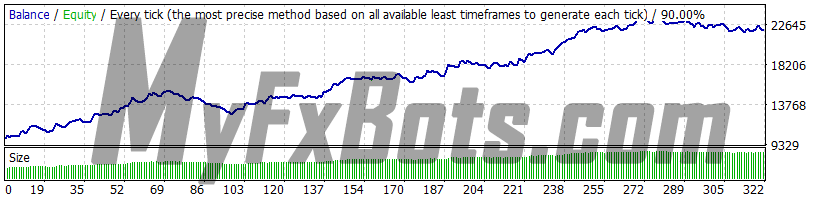
Backtests Settings
Symbol
EURUSD
Period
15 Minutes (M15), 2010.01.04 - 2021.12.30
Timeframe
M15
Model
Every tick
Parameters
- A="====================" Use_FXCOMBO_Scalping=false Use_FXCOMBO_Breakout=false Use_FXCOMBO_Reversal=true Use_FXCOMBO_EuroRange=false B="====================" Use_ECN_Execution=true Hidden_StopAndTarget=false No_Hedge_Trades=false NFA_Compatibility=false C="====================" CommentSys1="*** 1 ***" CommentSys2="*** 2 ***" CommentSys3="*** 3 ***" CommentSys4="*** 4 ***" D="====================" Magic1=111 Magic2=222 Magic3=333 Magic4=444 E="====================" MaxSPREAD=4 Slippage=2 AutoGMT_Offset=true ManualGMT_Offset=2 Calculate_DST=true EMAIL_Notification=false PUSH_Notification=false MFR="==== Monday-Friday Rules ====" MondayStartHour=0 FridayExit=false LastTradeHour=19 ExitHour=20 MMSys1="==== FXCOMBO Scalping MM Parameters ====" RecoveryMode1=false RecoveryMultiplier1=1.05 FixedLots1=0 AutoMM1=2 AutoMM_Max1=10 MaximalLots1=100 MMSys2="==== FXCOMBO Breakout MM Parameters ====" RecoveryMode2=false RecoveryMultiplier2=1.05 FixedLots2=0 AutoMM2=2 AutoMM_Max2=10 MaximalLots2=100 MMSys3="==== FXCOMBO Reversal MM Parameters ====" RecoveryMode3=false RecoveryMultiplier3=1.05 FixedLots3=0 AutoMM3=2 AutoMM_Max3=10 MaximalLots3=100 MMSys4="==== FXCOMBO EuroRange MM Parameters ====" RecoveryMode4=false RecoveryMultiplier4=1.05 FixedLots4=0 AutoMM4=2 AutoMM_Max4=10 MaximalLots4=100 Scalping="==== FXCOMBO Scalping System Parameters ====" StopLoss=0 TakeProfit=0 TREND_STR=0 OSC_open=0 OSC_close=0 Breakout="==== FXCOMBO Breakout System Parameters ====" TakeProfit_II=0 StopLoss_II=0 MaxPipsTrailing2=0 MinPipsTrailing2=0 Break=0 ATRTrailingFactor2=0 F_TrailingProfit_II=0 F_Trailing_II=0 Use_Exp_Trailing_II=-1 Exp_Trail_Factor_II=0 Reversal="==== FXCOMBO Reversal System Parameters ====" BegHourSys_III=0 EndHourSys_III=0 TakeProfit_III=0 StopLoss_III=0 MaxPipsTrailing3=0 MinPipsTrailing3=0 F_TrailingProfit_III=0 F_Trailing_III=0 Use_Exp_Trailing_III=-1 Exp_Trail_Factor_III=0 EuroRange="==== FXCOMBO EuroRange System Parameters ====" MaxRangePips=0 BreakPips=0 TargetPercent=0 StopLoss_IV=0 Use_Exp_Trailing_IV=-1 Exp_Trail_Factor_IV=0 ReverseTF=0 ExitProfit=0 NF="==== News Filter Settings ====" Include_Medium_News=true Wait_Before_News=30 Wait_After_News=30 NewsFilterSys1=false NewsFilterSys2=false NewsFilterSys3=false NewsFilterSys4=false
Bars in test
298120
Ticks modelled
189163934
Modelling quality
90.00%
Initial Deposit
$10000.00
Spread
1
Backtests Results
Total net profit
35173.36
Gross profit
158936.43
Gross loss
-23180.17
Profit factor
1.52
Expected payoff
37.36
Absolute Bal DD
183.34
Maximal Bal DD
3872.64 (6.79%)
Relative Bal DD
22.68% (2165.78)
Total Trades
321
Short positions
503 (55.86%)
Long positions
154 (61.04%)
Profit trades
188 (58.57%)
Loss trades
133 (41.43%)
Largest Profit trade
627.44
Largest Loss trade
-284.14
Average Profit trade
187.09
Average Loss trade
-174.29
Maximum consecutive wins (profit in money)
9 (1331.10)
Maximum consecutive losses (loss in money)
7 (-849.32)
Maximal consecutive profit (count of wins)
1547.45 (6)
Maximal consecutive loss (count of losses)
-849.32 (7)
Avarage consecutive wins
2
Avarage consecutive losses
2
Isolated counter-trend trading is the least forgiving of the four components in live conditions, since it depends on exiting into strength or weakness; this run cannot show that, because the feed is uniform. Its value is comparative: how much of the combined curve the reversal work accounts for, and whether that contribution is steady or clustered.
Only the Breakout component runs here, on EURUSD at the fifteen-minute horizon, at the risk preset the vendor labels risk 2 over history-centre data at a fixed one-point spread, modelled every tick. The run tests how a directional expansion engine behaves when entries are taken on a uniform feed, and how its holding times compare with the faster module.
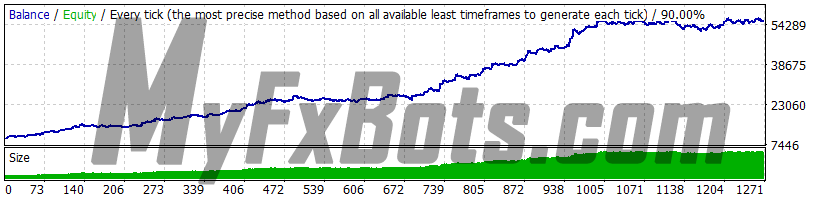
Backtests Settings
Symbol
EURUSD
Period
15 Minutes (M15), 2010.01.04 - 2021.12.30
Timeframe
M15
Model
Every tick
Parameters
- A="====================" Use_FXCOMBO_Scalping=false Use_FXCOMBO_Breakout=true Use_FXCOMBO_Reversal=false Use_FXCOMBO_EuroRange=false B="====================" Use_ECN_Execution=true Hidden_StopAndTarget=false No_Hedge_Trades=false NFA_Compatibility=false C="====================" CommentSys1="*** 1 ***" CommentSys2="*** 2 ***" CommentSys3="*** 3 ***" CommentSys4="*** 4 ***" D="====================" Magic1=111 Magic2=222 Magic3=333 Magic4=444 E="====================" MaxSPREAD=4 Slippage=2 AutoGMT_Offset=true ManualGMT_Offset=2 Calculate_DST=true EMAIL_Notification=false PUSH_Notification=false MFR="==== Monday-Friday Rules ====" MondayStartHour=0 FridayExit=false LastTradeHour=19 ExitHour=20 MMSys1="==== FXCOMBO Scalping MM Parameters ====" RecoveryMode1=false RecoveryMultiplier1=1.05 FixedLots1=0 AutoMM1=2 AutoMM_Max1=10 MaximalLots1=100 MMSys2="==== FXCOMBO Breakout MM Parameters ====" RecoveryMode2=false RecoveryMultiplier2=1.05 FixedLots2=0 AutoMM2=2 AutoMM_Max2=10 MaximalLots2=100 MMSys3="==== FXCOMBO Reversal MM Parameters ====" RecoveryMode3=false RecoveryMultiplier3=1.05 FixedLots3=0 AutoMM3=2 AutoMM_Max3=10 MaximalLots3=100 MMSys4="==== FXCOMBO EuroRange MM Parameters ====" RecoveryMode4=false RecoveryMultiplier4=1.05 FixedLots4=0 AutoMM4=2 AutoMM_Max4=10 MaximalLots4=100 Scalping="==== FXCOMBO Scalping System Parameters ====" StopLoss=0 TakeProfit=0 TREND_STR=0 OSC_open=0 OSC_close=0 Breakout="==== FXCOMBO Breakout System Parameters ====" TakeProfit_II=0 StopLoss_II=0 MaxPipsTrailing2=0 MinPipsTrailing2=0 Break=0 ATRTrailingFactor2=0 F_TrailingProfit_II=0 F_Trailing_II=0 Use_Exp_Trailing_II=-1 Exp_Trail_Factor_II=0 Reversal="==== FXCOMBO Reversal System Parameters ====" BegHourSys_III=0 EndHourSys_III=0 TakeProfit_III=0 StopLoss_III=0 MaxPipsTrailing3=0 MinPipsTrailing3=0 F_TrailingProfit_III=0 F_Trailing_III=0 Use_Exp_Trailing_III=-1 Exp_Trail_Factor_III=0 EuroRange="==== FXCOMBO EuroRange System Parameters ====" MaxRangePips=0 BreakPips=0 TargetPercent=0 StopLoss_IV=0 Use_Exp_Trailing_IV=-1 Exp_Trail_Factor_IV=0 ReverseTF=0 ExitProfit=0 NF="==== News Filter Settings ====" Include_Medium_News=true Wait_Before_News=30 Wait_After_News=30 NewsFilterSys1=false NewsFilterSys2=false NewsFilterSys3=false NewsFilterSys4=false
Bars in test
298120
Ticks modelled
189163934
Modelling quality
90.00%
Initial Deposit
$10000.00
Spread
1
Backtests Results
Total net profit
45627.68
Gross profit
78962.30
Gross loss
-121744.90
Profit factor
1.37
Expected payoff
36.04
Absolute Bal DD
922.22
Maximal Bal DD
2210.59 (6.62%)
Relative Bal DD
19.25% (972.03)
Total Trades
1266
Short positions
436 (30.50%)
Long positions
628 (44.11%)
Profit trades
575 (45.42%)
Loss trades
691 (54.58%)
Largest Profit trade
2801.50
Largest Loss trade
-387.89
Average Profit trade
291.08
Average Loss trade
-176.19
Maximum consecutive wins (profit in money)
9 (6754.28)
Maximum consecutive losses (loss in money)
7 (-1180.35)
Maximal consecutive profit (count of wins)
6754.28 (9)
Maximal consecutive loss (count of losses)
-1747.53 (6)
Avarage consecutive wins
2
Avarage consecutive losses
2
The statement is a component test, not a product result: it excludes the scalping, reversal and range work the combined run carries. It does show the module's own character — fewer, longer-held positions — and how much of the combined curve depends on it, though the single data assumption and absent commission limit what can be concluded.
A single-module run: only Scalping is enabled on EURUSD at the fifteen-minute horizon, sized by the risk preset the vendor labels risk 2, on history-centre data at a fixed one-point spread with every-tick modelling. The interest is the shape of a high-frequency, small-target routine on a cheap feed.
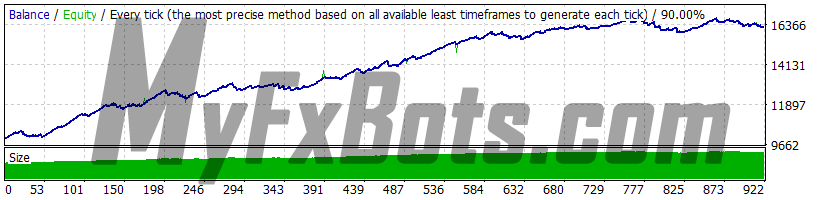
Backtests Settings
Symbol
EURUSD
Period
15 Minutes (M15), 2010.01.04 - 2021.12.30
Timeframe
M15
Model
Every tick
Parameters
- A="====================" Use_FXCOMBO_Scalping=true Use_FXCOMBO_Breakout=false Use_FXCOMBO_Reversal=false Use_FXCOMBO_EuroRange=false B="====================" Use_ECN_Execution=true Hidden_StopAndTarget=false No_Hedge_Trades=false NFA_Compatibility=false C="====================" CommentSys1="*** 1 ***" CommentSys2="*** 2 ***" CommentSys3="*** 3 ***" CommentSys4="*** 4 ***" D="====================" Magic1=111 Magic2=222 Magic3=333 Magic4=444 E="====================" MaxSPREAD=4 Slippage=2 AutoGMT_Offset=true ManualGMT_Offset=2 Calculate_DST=true EMAIL_Notification=false PUSH_Notification=false MFR="==== Monday-Friday Rules ====" MondayStartHour=0 FridayExit=false LastTradeHour=19 ExitHour=20 MMSys1="==== FXCOMBO Scalping MM Parameters ====" RecoveryMode1=false RecoveryMultiplier1=1.05 FixedLots1=0 AutoMM1=2 AutoMM_Max1=10 MaximalLots1=100 MMSys2="==== FXCOMBO Breakout MM Parameters ====" RecoveryMode2=false RecoveryMultiplier2=1.05 FixedLots2=0 AutoMM2=2 AutoMM_Max2=10 MaximalLots2=100 MMSys3="==== FXCOMBO Reversal MM Parameters ====" RecoveryMode3=false RecoveryMultiplier3=1.05 FixedLots3=0 AutoMM3=2 AutoMM_Max3=10 MaximalLots3=100 MMSys4="==== FXCOMBO EuroRange MM Parameters ====" RecoveryMode4=false RecoveryMultiplier4=1.05 FixedLots4=0 AutoMM4=2 AutoMM_Max4=10 MaximalLots4=100 Scalping="==== FXCOMBO Scalping System Parameters ====" StopLoss=0 TakeProfit=0 TREND_STR=0 OSC_open=0 OSC_close=0 Breakout="==== FXCOMBO Breakout System Parameters ====" TakeProfit_II=0 StopLoss_II=0 MaxPipsTrailing2=0 MinPipsTrailing2=0 Break=0 ATRTrailingFactor2=0 F_TrailingProfit_II=0 F_Trailing_II=0 Use_Exp_Trailing_II=-1 Exp_Trail_Factor_II=0 Reversal="==== FXCOMBO Reversal System Parameters ====" BegHourSys_III=0 EndHourSys_III=0 TakeProfit_III=0 StopLoss_III=0 MaxPipsTrailing3=0 MinPipsTrailing3=0 F_TrailingProfit_III=0 F_Trailing_III=0 Use_Exp_Trailing_III=-1 Exp_Trail_Factor_III=0 EuroRange="==== FXCOMBO EuroRange System Parameters ====" MaxRangePips=0 BreakPips=0 TargetPercent=0 StopLoss_IV=0 Use_Exp_Trailing_IV=-1 Exp_Trail_Factor_IV=0 ReverseTF=0 ExitProfit=0 NF="==== News Filter Settings ====" Include_Medium_News=true Wait_Before_News=30 Wait_After_News=30 NewsFilterSys1=false NewsFilterSys2=false NewsFilterSys3=false NewsFilterSys4=false
Bars in test
298120
Ticks modelled
189163934
Modelling quality
90.00%
Initial Deposit
$10000.00
Spread
1
Backtests Results
Total net profit
20180.61
Gross profit
70424.44
Gross loss
-13880.25
Profit factor
1.45
Expected payoff
6.86
Absolute Bal DD
43.82
Maximal Bal DD
2729.23 (8.59%)
Relative Bal DD
10.19% (2152.50)
Total Trades
918
Short positions
994 (82.19%)
Long positions
467 (76.23%)
Profit trades
712 (77.56%)
Loss trades
206 (22.44%)
Largest Profit trade
56.33
Largest Loss trade
-141.46
Average Profit trade
28.34
Average Loss trade
-67.38
Maximum consecutive wins (profit in money)
23 (757.34)
Maximum consecutive losses (loss in money)
3 (-352.98)
Maximal consecutive profit (count of wins)
757.34 (23)
Maximal consecutive loss (count of losses)
-352.98 (3)
Avarage consecutive wins
4
Avarage consecutive losses
1
It isolates one component and therefore says little about the combination the vendor sells; nor does it model commission, which matters most to a routine that trades often. Against the combined run on the same data it indicates what the other three modules add, and it does not show that the trade frequency survives live spreads.
The same combined configuration on EURUSD at the fifteen-minute horizon, sized by a fixed lot instead of a risk preset, so compounding is removed from the picture. Data are the vendor's history-centre series at a fixed one-point spread with every-tick modelling; the purpose is to separate the strategy's raw edge from the effect of position sizing.
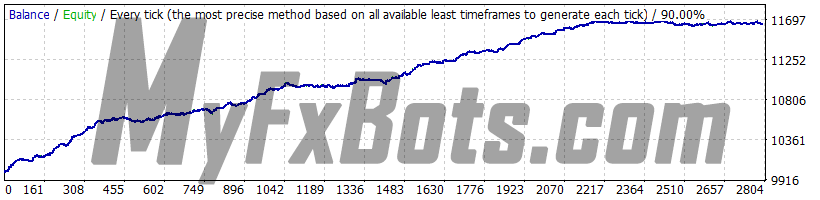
Backtests Settings
Symbol
EURUSD
Period
15 Minutes (M15), 2010.01.04 - 2021.12.30
Timeframe
M15
Model
Every tick
Parameters
- A="===================="
- Use_FXCOMBO_Scalping=true
- Use_FXCOMBO_Breakout=true
- Use_FXCOMBO_Reversal=true
- Use_FXCOMBO_EuroRange=true
- B="===================="
- Use_ECN_Execution=true
- Hidden_StopAndTarget=false
- No_Hedge_Trades=false
- NFA_Compatibility=false
- C="===================="
- CommentSys1="*** 1 ***"
- CommentSys2="*** 2 ***"
- CommentSys3="*** 3 ***"
- CommentSys4="*** 4 ***"
- D="===================="
- Magic1=111
- Magic2=222
- Magic3=333
- Magic4=444
- E="===================="
- MaxSPREAD=4
- Slippage=2
- AutoGMT_Offset=true
- ManualGMT_Offset=2
- Calculate_DST=true
- EMAIL_Notification=false
- PUSH_Notification=false
- MFR="==== Monday-Friday Rules ===="
- MondayStartHour=0
- FridayExit=false
- LastTradeHour=19
- ExitHour=20
- MMSys1="==== FXCOMBO Scalping MM Parameters ===="
- RecoveryMode1=false
- RecoveryMultiplier1=1.05
- FixedLots1=0.01
- AutoMM1=0
- AutoMM_Max1=10
- MaximalLots1=100
- MMSys2="==== FXCOMBO Breakout MM Parameters ===="
- RecoveryMode2=false
- RecoveryMultiplier2=1.05
- FixedLots2=0.01
- AutoMM2=0
- AutoMM_Max2=10
- MaximalLots2=100
- MMSys3="==== FXCOMBO Reversal MM Parameters ===="
- RecoveryMode3=false
- RecoveryMultiplier3=1.05
- FixedLots3=0.01
- AutoMM3=0
- AutoMM_Max3=10
- MaximalLots3=100
- MMSys4="==== FXCOMBO EuroRange MM Parameters ===="
- RecoveryMode4=false
- RecoveryMultiplier4=1.05
- FixedLots4=0.01
- AutoMM4=0
- AutoMM_Max4=10
- MaximalLots4=100
- Scalping="==== FXCOMBO Scalping System Parameters ===="
- StopLoss=0
- TakeProfit=0
- TREND_STR=0
- OSC_open=0
- OSC_close=0
- Breakout="==== FXCOMBO Breakout System Parameters ===="
- TakeProfit_II=0
- StopLoss_II=0
- MaxPipsTrailing2=0
- MinPipsTrailing2=0
- Break=0
- ATRTrailingFactor2=0
- F_TrailingProfit_II=0
- F_Trailing_II=0
- Use_Exp_Trailing_II=-1
- Exp_Trail_Factor_II=0
- Reversal="==== FXCOMBO Reversal System Parameters ===="
- BegHourSys_III=0
- EndHourSys_III=0
- TakeProfit_III=0
- StopLoss_III=0
- MaxPipsTrailing3=0
- MinPipsTrailing3=0
- F_TrailingProfit_III=0
- F_Trailing_III=0
- Use_Exp_Trailing_III=-1
- Exp_Trail_Factor_III=0
- EuroRange="==== FXCOMBO EuroRange System Parameters ===="
- MaxRangePips=0
- BreakPips=0
- TargetPercent=0
- StopLoss_IV=0
- Use_Exp_Trailing_IV=-1
- Exp_Trail_Factor_IV=0
- ReverseTF=0
- ExitProfit=0
- NF="==== News Filter Settings ===="
- Include_Medium_News=true
- Wait_Before_News=30
- Wait_After_News=30
- NewsFilterSys1=false
- NewsFilterSys2=false
- NewsFilterSys3=false
- NewsFilterSys4=false
Bars in test
298120
Ticks modelled
189163934
Modelling quality
90.00%
Initial Deposit
$10000.00
Spread
1
Backtests Results
Total net profit
1648.48
Gross profit
122662.73
Gross loss
-3588.93
Profit factor
1.46
Expected payoff
0.59
Absolute Bal DD
104.82
Maximal Bal DD
1217.82 (5.62%)
Relative Bal DD
9.52% (1119.47)
Total Trades
2793
Short positions
2514 (62.61%)
Long positions
1412 (55.88%)
Profit trades
1605 (57.47%)
Loss trades
1188 (42.53%)
Largest Profit trade
31.95
Largest Loss trade
-6.33
Average Profit trade
3.26
Average Loss trade
-3.02
Maximum consecutive wins (profit in money)
14 (56.91)
Maximum consecutive losses (loss in money)
48 (-12.17)
Maximal consecutive profit (count of wins)
58.95 (13)
Maximal consecutive loss (count of losses)
-32.25 (9)
Avarage consecutive wins
3
Avarage consecutive losses
2
With the lot fixed, this is the cleaner read on trade quality, and the natural comparison is the risk-sized run beside it: any difference in shape comes from sizing, not from signals. It remains single-symbol and commission-free, so it establishes relative behaviour rather than achievable return.
The combined run: all four modules active on EURUSD at the fifteen-minute horizon, sized by the risk preset the vendor labels risk 2, on history-centre data at a fixed one-point spread with every-tick modelling. The question is interaction — whether the four equity streams offset one another when the feed is uniform and inexpensive.
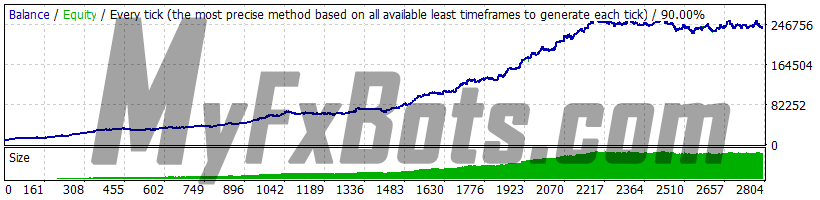
Backtests Settings
Symbol
EURUSD
Period
15 Minutes (M15), 2010.01.04 - 2021.12.30
Timeframe
M15
Model
Every tick
Parameters
- A="===================="
- Use_FXCOMBO_Scalping=true
- Use_FXCOMBO_Breakout=true
- Use_FXCOMBO_Reversal=true
- Use_FXCOMBO_EuroRange=true
- B="===================="
- Use_ECN_Execution=true
- Hidden_StopAndTarget=false
- No_Hedge_Trades=false
- NFA_Compatibility=false
- C="===================="
- CommentSys1="*** 1 ***"
- CommentSys2="*** 2 ***"
- CommentSys3="*** 3 ***"
- CommentSys4="*** 4 ***"
- D="===================="
- Magic1=111
- Magic2=222
- Magic3=333
- Magic4=444
- E="===================="
- MaxSPREAD=4
- Slippage=2
- AutoGMT_Offset=true
- ManualGMT_Offset=2
- Calculate_DST=true
- EMAIL_Notification=false
- PUSH_Notification=false
- MFR="==== Monday-Friday Rules ===="
- MondayStartHour=0
- FridayExit=false
- LastTradeHour=19
- ExitHour=20
- MMSys1="==== FXCOMBO Scalping MM Parameters ===="
- RecoveryMode1=false
- RecoveryMultiplier1=1.05
- FixedLots1=0 AutoMM1=2
- AutoMM_Max1=10
- MaximalLots1=100
- MMSys2="==== FXCOMBO Breakout MM Parameters ===="
- RecoveryMode2=false
- RecoveryMultiplier2=1.05
- FixedLots2=0
- AutoMM2=2
- AutoMM_Max2=10
- MaximalLots2=100
- MMSys3="==== FXCOMBO Reversal MM Parameters ===="
- RecoveryMode3=false
- RecoveryMultiplier3=1.05
- FixedLots3=0
- AutoMM3=2
- AutoMM_Max3=10
- MaximalLots3=100
- MMSys4="==== FXCOMBO EuroRange MM Parameters ===="
- RecoveryMode4=false
- RecoveryMultiplier4=1.05
- FixedLots4=0
- AutoMM4=2
- AutoMM_Max4=10
- MaximalLots4=100
- Scalping="==== FXCOMBO Scalping System Parameters ===="
- StopLoss=0
- TakeProfit=0
- TREND_STR=0
- OSC_open=0
- OSC_close=0
- Breakout="==== FXCOMBO Breakout System Parameters ===="
- TakeProfit_II=0
- StopLoss_II=0
- MaxPipsTrailing2=0
- MinPipsTrailing2=0
- Break=0
- ATRTrailingFactor2=0
- F_TrailingProfit_II=0
- F_Trailing_II=0
- Use_Exp_Trailing_II=-1
- Exp_Trail_Factor_II=0
- Reversal="==== FXCOMBO Reversal System Parameters ===="
- BegHourSys_III=0
- EndHourSys_III=0
- TakeProfit_III=0
- StopLoss_III=0
- MaxPipsTrailing3=0
- MinPipsTrailing3=0
- F_TrailingProfit_III=0
- F_Trailing_III=0
- Use_Exp_Trailing_III=-1
- Exp_Trail_Factor_III=0
- EuroRange="==== FXCOMBO EuroRange System Parameters ===="
- MaxRangePips=0
- BreakPips=0
- TargetPercent=0
- StopLoss_IV=0
- Use_Exp_Trailing_IV=-1
- Exp_Trail_Factor_IV=0
- ReverseTF=0
- ExitProfit=0
- NF="==== News Filter Settings ===="
- Include_Medium_News=true
- Wait_Before_News=30
- Wait_After_News=30
- NewsFilterSys1=false
- NewsFilterSys2=false
- NewsFilterSys3=false
- NewsFilterSys4=false
Bars in test
298120
Ticks modelled
189163934
Modelling quality
90.00%
Initial Deposit
$10000.00
Spread
1
Backtests Results
Total net profit
230339.74
Gross profit
26425471.40
Gross loss
-756469.62
Profit factor
1.30
Expected payoff
82.47
Absolute Bal DD
103.63
Maximal Bal DD
795079.55 (11.33%)
Relative Bal DD
21.53% (24768.44)
Total Trades
2793
Short positions
2514 (62.53%)
Long positions
1412 (55.81%)
Profit trades
1602 (57.36%)
Loss trades
1191 (42.64%)
Largest Profit trade
12074.48
Largest Loss trade
-3142.99
Average Profit trade
615.99
Average Loss trade
-635.16
Maximum consecutive wins (profit in money)
14 (18676.03)
Maximum consecutive losses (loss in money)
48 (-1786.85)
Maximal consecutive profit (count of wins)
18676.03 (14)
Maximal consecutive loss (count of losses)
-7155.44 (3)
Avarage consecutive wins
3
Avarage consecutive losses
2
It shows what the modules produce together under one clean data assumption, not what each contributes; the sibling statements carry that. It also omits commission, slippage and any spread widening, so it is a reference point for the single-module runs rather than evidence of achievable return.
Read as a whole, the set is a sensitivity study rather than a series of confirmations. It varies symbol, timeframe, data source, spread assumption, sizing and clock convention, and it is strongest where changes are like-for-like: the same module on history-centre and on real-spread data, or the same combination with automatic and fixed offsets. It is weakest where generations are compared directly, because the five-minute reports come from a demo server with a fixed spread and no commission, while the fifteen-minute reports rest on a single tick archive. Nothing models commission, swap, requotes or a live bridge, and the modelling quality stated on the older reports is a further limit. The archive establishes that the logic runs and produces coherent curves under several assumptions; it does not establish the return any particular account would have earned.
Forex Combo System's Trading Strategy
The design is a set of complementary behaviours rather than one rule. The Scalping routine looks for frequent, small-target entries on tight spreads. The breakout engine waits for evidence of a sustained move and holds longer. The counter-trend component trades against an exhausted move, taking the other side of the same condition. The range module detects a non-trending market and adjusts its entry logic accordingly; the vendor argues that a large share of trading time is non-trending, which is why the fourth module exists.
Sizing and risk control
Each module carries its own money-management block: fixed lots, an optional automatic mode with a cap, a maximum lot ceiling and a recovery multiplier that is off by default. Because sizing is per module, the exposure of one component can be changed without touching the others. The vendor also describes stop-loss logic that is meant to avoid premature exits while prices remain statistically favourable, and a filter that keeps the system out of gappy, sharply volatile conditions.
Execution controls and housekeeping
- Per-module switches, comments and magic numbers, so the system can run alongside other expert advisors or manual trades without touching them.
- ECN execution switch, maximum spread cap, slippage setting, automatic or manual GMT offset and a daylight-saving calculation.
- A news filter with configurable wait windows before and after releases and an option to include medium-impact events.
- Email and mobile push notifications on opening and closing trades.
The vendor states compatibility with any broker offering MT4 and supplies an install wizard rather than a manual file copy.
Forex Combo System's MetaTrader Parameters
The vendor's strategy-tester reports print the full input list for the four-in-one build. The defaults below are reproduced as shown in those reports; the pages reviewed do not publish a separate manual of defaults, so where a value is absent, it is marked accordingly.
| Input | Default | Note |
|---|---|---|
| Use_FXCOMBO_Scalping | true | Module switch |
| Use_FXCOMBO_Breakout | false | Module switch |
| Use_FXCOMBO_Reversal | false | Module switch |
| Use_FXCOMBO_EuroRange | false | Module switch |
| Use_ECN_Execution | true | Execution mode |
| Hidden_StopAndTarget | false | — |
| No_Hedge_Trades | false | FIFO-style control |
| NFA_Compatibility | false | US-rule mode |
| Magic1 / Magic2 / Magic3 / Magic4 | 111 / 222 / 333 / 444 | Trade identification |
| MaxSPREAD | 4 | Spread cap |
| Slippage | 2 | Execution |
| AutoGMT_Offset | true | Clock handling |
| ManualGMT_Offset | 2 | Used when automatic is off |
| Calculate_DST | true | Daylight saving |
| EMAIL_Notification | false | Alerts |
| RecoveryMode1–4 | false | Per module |
| RecoveryMultiplier1–4 | 1.05 | Per module |
| FixedLots1–4 | 1 | Per module |
| AutoMM1–4 | 0 | Per module |
| AutoMM_Max1–4 | 10 | Per module |
| MaximalLots1–4 | 100 | Per module |
| StopLoss / TakeProfit (module 1) | 0 / 0 | Internal defaults |
| TakeProfit_II / StopLoss_II (module 2) | 0 / 0 | Internal defaults |
| TakeProfit_III / StopLoss_III (module 3) | 0 / 0 | Internal defaults |
| BegHourSys_III / EndHourSys_III | 0 / 0 | Trading window |
| MaxRangePips / BreakPips (module 4) | 0 / 0 | Range logic |
| StopLoss_IV / Exp_Trail_Factor_IV | 0 / 0 | Module 4 |
| Include_Medium_News | true | News filter |
| Wait_Before_News / Wait_After_News | 30 / 30 | Minutes |
| NewsFilterSys1–4 | false | Per module |
The risk preset used in the later reports (labelled risk 2) is set through the automatic money-management inputs rather than through a single field, and its mapping to a percentage is not published.
Forex Combo System's Review Bottom Line
Forex Combo System is a mature, feature-complete MT4 system: four distinct modules with independent switches, magic numbers and money management, a configurable news filter, spread and slippage limits, clock handling, notifications and an installer, wrapped in a lifetime-update and refund promise. Its documentation is unusually complete for the category, and the vendor publishes both a long backtest archive and live tracking. The reservation is evidential rather than technical: the strongest published results come from fixed-spread, commission-free simulations with compounding, the realistic-feed runs are more modest, and the live record is two accounts at one broker without deposit or leverage disclosure. The product is best assessed on how its modules behave under variable costs, which the archive does allow a reader to examine, rather than on its headline figures.
Promotional Video (by the Vendor)
Other Forex Robots from FXAutomater
The vendor's case rests on diversification of method rather than a single signal: quiet, spread-bound conditions are left to Scalping, directional moves to the breakout engine, exhausted trends to the reversal component and sideways markets to the range module. Each module is enabled and sized separately, so the system is presented as able to hold exposure in conditions that defeat a single-strategy robot.

The robot forms a directional view from its Market Bias reading and enters with pending stop and limit orders rather than at market. Stop loss and take profit are calculated per trade, a Profit Protection layer manages open positions, and a high-impact news filter keeps it out of scheduled releases. Money management is selectable, with fixed-lot and automatic modes both referenced in the vendor's reports; the formulas behind the bias reading are not published.

Omega Trend is designed on well-established rules that enable it to run both in up and down markets. Its core algorithm is based on the fundamental trading truism: Volatility equals profits.

Forex Diamond rests on the premise that no single signal survives every regime, so three run at once: a trend-retracement engine entering after an impulse pulls back, a countertrend engine taking reversals, and a small-move engine harvesting short bursts. The claimed edge is coverage rather than forecast — whichever regime prevails, one engine is meant to be trading with it. FXAutomater frames the blend as diversification, not prediction.

Volatility Factor Pro trades by opening a basket of 4 positions maximum depending on market volatility, taking profit at 20 pips with hard StopLoss of 50 pips, this means that touching the SL for the 4 basket trades would mean a drawdown (4 * 50 = 200), this is a so much safer if compared to the older version which drawdowns could be in excess of 1500 pips of (380 * 4 = 1520) pips.

No exotic or speculative techniques are applied in Forex Trend Detector and it's not a slippage or spread dependent.
It detects the final moments of a volatile market trend or session, identifies the volatility limits below which the dominant market trend is, and don't ignore the special situations when those volatility limits occur near important market levels, predict price levels that should capitalize when the market is readjusted after the volatility breakout has occurred, and finally it sets an order based on that prediction.
It detects the final moments of a volatile market trend or session, identifies the volatility limits below which the dominant market trend is, and don't ignore the special situations when those volatility limits occur near important market levels, predict price levels that should capitalize when the market is readjusted after the volatility breakout has occurred, and finally it sets an order based on that prediction.

Forex Gold Investor trades by the use of precise entry and exit trading algorithms with drawdown protection system, intelligent money-management system, revolutionary "Go Long" trading system, and broker SPY module.

Best Free Scalper Pro is a powerful automated Forex scalping system, one of the FXAutomater family. A reputable ECN Forex broker with very tight spreads, low commissions, and minimal slippage is required as it can confirm the difference between a winning and losing trading system, especially scalping strategy ones.

The Gold Scalper PRO strategy's principle is to enter in a distinctive market impulse direction and follow correction. A principle that has been around for as long as the markets have existed.
Gold Scalper PRO is not a grid, martingale, or using any other risky strategies, it just employs a classical trading strategy by a textbook using reasonable Stop Loss levels and a prosperous entry and exit trading logic beside an optional money management ATR based algorithm.

Strictly ruled grid-based trading technique with safety "high frequency" scalping element.


Smart Scalper PRO is very simple, but it is based on the most proven trading principle since the markets exist – enter the market in the direction of a strong market impulse after a reasonable correction is detected.

Pips Master Pro has a Strong, pure and simple trading logic, Reasonable TP and SL levels, High spread, slippage and broker protection, Multiple currency pairs support, Low drawdown, and New, improved, highly effective exit logic.

Using Trend Matrix EA, traders can identify and profit from market trends. It offers a safe and reliable way to navigate the forex market with its Next Generation Loss Recovery System and reliable risk management tools.

Chat GPT and Gemini (developed by Google) are the two most powerful AI engines available. The Gemini AI handles real-time trading data better than Chat GPT. However, Chat GPT excels at managing complex conversation threads even though it is trained only on past data. Combining Chat GPT and Gemini AI leads to the most accurate and current trading forecasts.
AI alone, can't be reliable - a proven, solid strategy must back it up. FXAutomater deliver results that stand out with their AI-powered strategy Infinity Trader!

The trading idea behind Crypto Investor EA is to harness real-time AI to capitalize on Bitcoin’s dynamic movements. It promptly scans markets, identifies opportunities, and executes trades under both high-profit, moderate-risk and low-risk, conservative setups.

This recovery-focused expert advisor tracks drawdowns and, upon a loss, deploys successive trades with increasing lot sizes until all positions close together in net profit. It leverages AutoMM risk control, optional high-impact news filtering, and a broker-spy module to minimize slippage and protect equity during volatile drawdown periods.

WallStreet ASIA targets low-volatility windows in Asian hours by waiting for short retracements to reject and then placing tight pending orders. It captures small scalps with dynamic SL/TP, adjusts for real-time spread shifts, and suspends trading when broker spreads or slippage exceed user-defined limits.

WallStreet CRYPTO exploits recurring micro-trends in crypto markets by filtering out extreme volatility bursts. It places tight pending orders on retracements, uses dynamic SL/TP levels to lock small gains, and dynamically adjusts lot sizes via AutoMM to cap risk in high-volatility environments.

WallStreet GOLD Trader hunts micro-swings in gold by waiting for tight retracements and placing precision pending orders. It aligns entries with institutional momentum, applies dynamic SL/TP to secure quick gains, and suspends trading when spreads exceed user-defined thresholds.
Tags
Valery Trading
Tickmill
Algocrat AI
FXAutomater
WallStreet Forex Robot 3.0 Domination
Tick Data Suite
Waka Waka
Perceptrader AI
IC Markets
StrategyQuant X
Forex Diamond
Volatility Factor Pro
RoboForex
XM
HF Markets
InstaForex
Alpari
FX Scalper X
Forex Combo System
GPS Forex Robot
Golden Pickaxe
Forex Trend Detector
GrandCapital
Automated Forex Tools
Omega Trend
Broker Arbitrage
TradingFX VPS
AMarkets
Telegram Signal Copier
SMRT Algo
EasyAlgos AI
Quant Analyzer
AlgoCloud
Forex Trend Hunter
FXVM
Forex Gold Investor
Binance
Infinity Trader
Gold Miner
Sentinel AI
RayBOT
Gold Scalper PRO
LeapFX Trading Academy
ForexSignals.com
FxPro
ACY Securities
Zone Hunter Robot
Elirox
FX-Builder
Quant Data Manager
Commercial Network Services
FXCharger
News Scope EA PRO
Happy Forex
FXTM
BlackBull
Libertex
Smart Scalper PRO
Happy Bitcoin
Pump Trader Robot
WallStreet Recovery PRO
SlingShot
Dark Kronos
Vortex Trader PRO
Swing Trader PRO
Pepperstone
VPS Forex Trader
QHoster
FX Secret Club
Best Free Scalper Pro
Magnetic Exchange
Exness
StarTrader
Forex VPS
MTeletool
Trend Matrix EA
Trade Copier Station
Forex Robot Academy
Forex Robot Factory (Expert Advisor Generator)
ByBit
Database Mart
Gold Breaker
DARKEAS
Quant Tekel Funded
XAUBOT
ChartPrime
easyVPS
EGPForex
Risk
Forex trading can involve the risk of loss beyond your initial deposit. It is not suitable for all investors and you should make sure you understand the risks involved, seeking independent advice if necessary.
Forex accounts typically offer various degrees of leverage and their elevated profit potential is counterbalanced by an equally high level of risk. You should never risk more than you are prepared to lose and you should carefully take into consideration your trading experience.
Past performance and simulated results are not necessarily indicative of future performance. All the content on this site represents the sole opinion of the author and does not constitute an express recommendation to purchase any of the products described in its pages.
Sponsored By




Get Funded







Search Queries Cloud
BTC
in control
best free forex robot
أفضل إكسبرت
fx fx scalper
Fx scalper
waka waka
Fx stabilizer
原騰國際
UABTIC
fx scalper x
wallstreet forex
ProFX
forex diamond
pfx scalper
waka
Forex vps
switchback
algo pro
recovery
cross pro
discount
porsaj
Trailing stop
futuretrading
waka waka news filter is disabled
RENKO EA AUTO TRADER
trade copier
Copy trade
happy gold
future indikatoren
wall street
data
ARBITRAGE
Evening Scalper Pro
Forex inControl 3.0 Review
alpha striker
vision scalper
Me ta trader 5
Download Trailing Stop Forex Robot